 Original Broadway Cast, 1977 (Columbia/Sony)
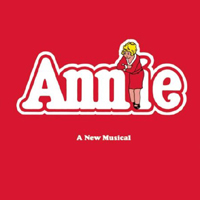
  (3 / 5) Ironically, Charles Strouse’s biggest hit is one of his less interesting efforts. Thomas Meehan’s book capably adapts the adventures of comic-strip icon Little Orphan Annie to the stage, focusing on how she got together with billionaire Daddy Warbucks. The music by Strouse and lyrics by Martin Charnin (who also directed) sometimes have a slightly by-the-numbers quality; still, it’s a landmark show, boasting the preternatural belting of 13-year-old Andrea McArdle as Annie and the hilarious Dorothy Loudon as the vengeful, alcoholic orphanage keeper, Miss Hannigan. Loudon’s rendition of “Little Girls” (“Some day I’ll step on their freckles / Some night I’ll straighten their curls!”) is a classic. Reid Shelton and Sandy Faison are pleasant as Daddy Warbucks and his assistant, Grace, while Robert Fitch is amusingly sleazy as Rooster, Miss Hannigan’s ex-con brother. The bouncy production number “NYC” features the late Laurie Beechman, whose astonishing belt made her a legend among Broadway musical aficionados. Generally, the more sophisticated numbers are the best. They include “We’d Like to Thank You, Herbert Hoover,” sung by a gang of sardonic Depression-era bums; “Easy Street,” in which Miss Hannigan and cohorts scheme to defraud Daddy Warbucks; and “You’re Never Fully Dressed Without a Smile,” a charming parody sung by a radio crooner, then reprised by Annie’s orphan friends. There are many uninspired items, too, especially “Something Was Missing,” “You Won’t Be an Orphan for Long,” and “I Don’t Need Anything but You,” all of which suffer from plodding melodies and obvious lyrics. But Philip J. Lang’s orchestrations give every number extra sparkle, and if you can still listen to “Tomorrow” without wanting to blow your brains out, McArdle’s rendition is tops. The latest CD reissue features cuts from an early backers’ audition with Charnin and Strouse performing seven numbers written for the show, of which only “Tomorrow” survived. The others are lame and, in one case, appalling; even Charnin admits in the CD booklet notes that they were on the wrong track. — David Barbour
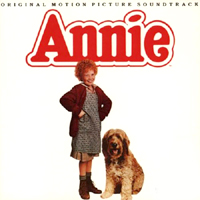 Film Soundtrack, 1982 (Columbia/Sony) 0 stars; not recommended. For those of you who never miss a John Huston musical, this disaster is a must. Everyone else should stay away. In the time-honored tradition of hack Hollywood adaptations, several numbers from the show score were dropped for the film (including “We’d Like to Thank You, Herbert Hoover”). Even the weakest item from the original is better than the mediocre new entries, which include “Sandy,” a love song for Annie to her favorite dog, and “Let’s Go to the Movies,” a contrivance to get Annie, Daddy Warbucks, and Grace Farrell to Radio City Music Hall. Carol Burnett is an amusingly glum Miss Hannigan, but Albert Finney is a dull Warbucks. Tim Curry and Bernadette Peters are wasted as Rooster and Lily, and Ann Reinking is miscast as Grace. Although Aileen Quinn is perfectly fine in the title role, even hard-core Annie fans will be bemused by this lackluster disc. — D.B.
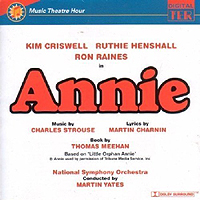 London Studio Cast, 1998 (TER/JAY) (3 / 5) Since the original Broadway cast recording of Annie has never been out of print, a studio cast album hardly seemed necessary. Still, this accomplished edition offers a slightly expanded version of the score, including reprises of “Little Girls” and “Easy Street.” The cast includes Ruthie Henshall as an excellent Grace and Ron Raines as a stentorian Daddy Warbucks. Kim Criswell channels the spirit of Dorothy Loudon as Miss Hannigan, and Sarah French is an acceptable Annie. Overall, the recording suffers from slow tempi and a lack of personality. — D.B.
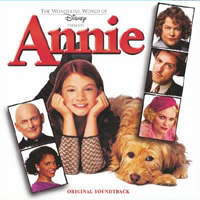 Television Film Soundtrack, 1999 (Sony) (3 / 5) “We’d Like to Thank You, Herbert Hoover” is once again missing in action, along with a couple of lesser numbers, but what’s left is beautifully served by an all-star cast in this Disney television adaptation. Alicia Morton is the best Annie since Andrea McArdle, and is well matched by Victor Garber’s warmer-than-usual Daddy Warbucks. As Grace, Rooster, and Lily (respectively), Audra McDonald, Alan Cumming, and Kristin Chenoweth are almost laughably overqualified, and they all deliver commensurately. Kathy Bates is a blunt, funny Miss Hannigan with a surprisingly effective singing voice. As a bonus, Andrea McArdle appears in “NYC,” taking Laurie Beechman’s original role. In what may be a Hollywood first, Martin Erskine’s ebullient orchestrations rival and, in some cases, surpass Philip J. Lang’s Broadway originals. — D.B.
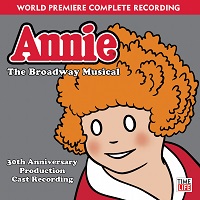 30th Anniversary National Tour Cast, 2008 (Time-Life Records; 2CDs)
  (2 / 5) You can tell these orphans ain’t from NYC; this recording is notable for a leisurely pace on several of the songs, especially a sluggish “It’s the Hard-Knock Life.” While the orchestra sounds full and lovely, and “We’d Like To Thank You, Herbert Hoover” is fun, there’s nothing on disc 1 of the two-disc set that you can’t find elsewhere. Marissa O’Donnell (Annie), Alene Robertson (Miss Hannigan), and Conrad John Schuck (Oliver Warbucks) offer solid, cookie-cutter performances, but who has time to listen to a slow-motion Annie? Things get really weird on the album’s second disc, a studio recording of the explosively doomed stage sequel Annie 2: Miss Hannigan’s Revenge, narrated in between songs by Carol Burnett in character as Miss Hannigan. The dozen songs heard here, largely orphan-less, demonstrate why children weren’t flocking to the out-of-town tryouts. (Most 10-year-olds just don’t laugh at lines like “When the hammers aren’t hammering/It’s financial Götterdämmerung.”) Sung by performers from various Broadway and national tour casts of Annie and from the company of the show’s other, somewhat less disastrous stage sequel, Annie Warbucks, it’s a fairly delirious curiosity; the most valuable players are Gary Beach as Miss Hannigan’s crooked pal Lionel and lyricist Martin Charnin as Warbucks’ butler. Shelly Burch, as Grace, gets the best song, the bitter “He Doesn’t Know I’m Alive.” Committing the 10-minute “Coney Island” sequence to a cast album, complete with an extended tap solo, is an act of impressive producing hubris. But most delightful, as explained in tongue-in-cheek recorded commentary by Charnin, are the three tracks in a row presenting the three sets of lyrics that Annie sang — while locked in a trunk — throughout the run of Annie 2, as the creative team flailingly attempted to fix the show. (Original Annie Andrea McArdle gets the third and best version, “My Daddy.”) The dreadful finale, “Tomorrow Is Now,” consists of couplets rhyming titles of songs from the original musical. And that’s not even the end of the album: There are three bonus tracks of songs written for subsequent productions of Annie and the televised Annie Christmas Show, including one featuring Kathie Lee Gifford as Miss Hannigan. Truly, this album is only for the hard-core obsessive. — Dan Rubins
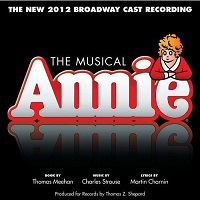 Broadway Cast, 2013 (Shout! Factory) (2 / 5) With its plentiful reprises, the 2012 Broadway cast album aims for a comprehensive showcase of Annie’s score, but it features performances that send Little Orphan Annie and her friends right back to their cartoon roots. In the title role, Lilla Crawford can belt with the best of them, but she sings with a New York accent so heavy it sometimes turns Cockney; no matter how impressive her vocals, this misstep in vocal direction presents a staggering distraction throughout. The often-moving scene wherein the members of Roosevelt’s cabinet join Annie in singing “Tomorrow” plays here like a Saturday Night Live sketch, draining the moment of its musical theater fantasy uplift. Katie Finneran’s Miss Hannigan is well cast but similarly silly. (In three bonus tracks, Jane Lynch, who replaced Finneran later in the run, offers a grouchier, more specific Miss Hannigan.) Anthony Warlow stands out as a sturdy Oliver Warbucks. Michael Starobin’s orchestrations sound terrific; they especially elevate “A New Deal for Christmas” with jazzy originality, also the bows music, even if listeners will sometimes miss the brassy depth of the originals. Combining the title song in counterpoint with the film’s “We Got Annie” doesn’t make up for either song’s thinness, but the inclusion of instrumental intros and other small musical surprises gives this cast recording added value for the curious collector. — D.R.
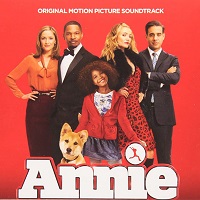 Film Soundtrack, 2014 (Roc Nation/Overbrook Entertainment/Madison Gate Reords/RCA) 0 stars; not recommended. The first few tracks on this recording are relatively innocuous, even pleasant. After a silly mashup overture and a sweet enough “Maybe” and “Tomorrow,” reconceived with lightly contemporary arrangements, the first major signs of anarchy arrive with “I Think I’m Gonna Like It Here,” an extraordinary travesty that basically samples the original song for a few musical moments while actually resetting most of the lyrics (including the title phrase) to a new, joyless, obnoxious melody; the warped “rhymes” within this new version include “fingertips/wish list.” This same kind of disaster occurs in four other numbers: “You’re Never Fully Dressed Without A Smile” (sung here by Sia), “Little Girls” (in which even the scant quotes of Charles Strouse’s original melody aren’t quite right), “Easy Street,” and “I Don’t Need Anything But You.” Among the several new songs, only Jamie Foxx’s smooth vocals on “The City’s Yours” offer redemption. Quevenzhane Wallis, delightful as Annie on camera, battles aggressive auto-tuning that squelches all the emotion from her voice, and as Miss Hannigan, the woefully miscast Cameron Diaz should have known better. Adding a hip-hop beat to “Tomorrow” and “Hard-Knock Life” works well enough, but there’s something cruel about the repeated fake-out of presenting what initially sounds like a song from Annie, then replacing the tune and harmonies with dull pop progressions and swapping out the words for nonsense. In one of the soundtrack’s most meaningless, deadliest moments of revision, Sia sings: “Now look at us/We pick it up/We set it on fire/‘Cause you know you’re never fully dressed without a smile.” As an act of musical theater arson, few cast recordings or soundtrack albums burn it all down quite like this one. — D.R.
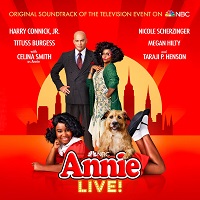 Television Cast, 2021 (Masterworks)
  (4 / 5) NBC’s live musicals are awkward affairs on screen for their unsettling artificiality and halting momentum whenever the shows pause for commercial breaks. But despite making little impression when it first aired, Annie Live! yielded a surprisingly enjoyable album, with excellent performances backed by stellar orchestrations. Celina Smith, in the title role, announces herself as a young superstar; she has a warmer, rounder tone than the stereotypical Annie, and she reaches glorious vocal heights without ever risking a grating sound. Taraji P. Henson sounds phenomenal on “Little Girls,” and her Miss Hannigan is so much fun that even “Sign,” the duet with Warbucks that was added to the Annie score for the first film version, comes across as a hit. Harry Connick, Jr.’s “Something Was Missing” is a standout stand-alone track, even if his Daddy Warbucks croons with a not-quite-paternal smolder. Other celebrity appearances include Tituss Burgess and Megan Hilty as Rooster and Lily. Jeff Kready adds a delightful twist to “You’re Never Fully Dressed Without A Smile,” jumping the octave up when singing as the ventriloquist’s dummy. The recording isn’t faultless: “We Got Annie,” sung by the over-cool Nicole Scherzinger as Grace, is a misstep, and the sound mix for the adult ensemble isn’t great, with some hooty soprano voices. But Smith’s and Henson’s takes on their roles are the best we have on record since the original Broadway cast album, and Stephen Oremus’ stunning new orchestrations help make this album a must-listen. — D.R.

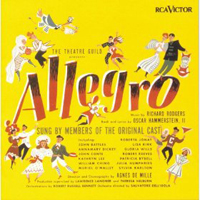
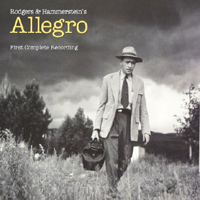
 (5 / 5) At last, after decades of waiting, the powers-that-be got on the ball and gave us a stem-to-stern Allegro so glorious that even R&H haters have to be impressed. The recording is almost three times more generous than the original, 100 heavenly minutes and 15 lovely seconds spanning two discs. And perhaps this should be described as a work by Rodgers and Hammerstein and Rittman, for the illustrious dance music arranger Trude Rittman offers 20-plus minutes of her brilliant work here. Disc One promises quite a show right from the overture. You’ll hear a bit of a song you hadn’t heard on the original cast album, “A Darn Fine Campus, ” and that’s just the first hint of all the additional material: There’s more from the chorus on Joe’s birth and his time as an infant, a dance representing what Joe and his classmates did in nursery school, and a less joyous sequence after his beloved grandmother dies. Collegiate Joe does seem to be happy to be in “A Darn Nice Campus” –- until he comes to the conclusion that he’s homesick. (“Poor Joe,” sings the chorus.) When Joe marries Jennie, we hear more of the wedding and his best friend Charlie’s feelings that he’d prefer to stay single. Disc Two starts with an Entr’acte that reminds us of four pleasant songs we’ve already heard. There’s also the mindless-chatter song “Yatata,” which at least one etymologist has insisted was the precursor of today’s “Yada, yada, yada.” And the title song is augmented with much more music, as is the finale. There are terrific performances from Patrick Wilson as Joseph Taylor, Jr.; Laura Benanti as the base-metal Jennie, who sounds as if she has enough acid in her veins to fill the batteries in a fleet of automobiles; Norbert Leo Butz as Joe’s best friend; Audra McDonald as Joe’s mom; and Maureen Brennan, Danny Burstein, Liz Callaway, and Judy Kuhn in other roles. Add to that Stephen Sondheim in a brief appearance during the finale. (Yes, that Stephen Sondheim. He was, after all, there at 17 with the original production where, as he writes in the liner notes for this recording, he “typed scripts, got coffee, listened to Agnes de Mille maltreat singers, and watched this quite remarkable show come to life. I think I might not be so attracted to experimental musicals if I hadn’t wet my feet with Allegro.” ) While the original orchestra had 35 pieces, here esteemed conductor Larry Blank leads no fewer than 50, with nary a synthesizer among them. Listening to the 1947 recording and then this one demonstrates how cast recordings have come — to quote one of Oscar Hammerstein’s lyrics from this show — so far. — P.F.

 (1 / 5) The show’s a smash hit, so somebody must love it. On disc, however, shorn of spectacle and the leads’ good looks, Aida comes across as an extremely morose collection of Elton John power ballads. Amazingly, it took three writers — Linda Woolverton, Robert Falls (who also directed), and David Henry Hwang — to come up with the libretto, adapted from the classic opera. In their version, it’s a teen triangle with vague political overtones: Adam Pascal is Radames, captain of the Egyptian army, engaged to the air-headed clotheshorse Princess Amneris (Sherie Rene Scott). After subduing the nation of Nubia, Radames brings back the Princess Aida (Heather Headley), with whom he promptly falls in love. The three of them proceed to scream their heads off for two acts — lamenting cruel fate, etc., etc. There are a couple of catchy pop hooks in “The Gods Love Nubia” and “Written in the Stars,” but Tim Rice’s bone-headed lyrics drag everything down, as in the clunky “Elaborate Lives.” All three leads provide vocal thrills in abundance, especially Headley, whose intensely dramatic singing made her an instant star. Pascal does solid work throughout and Scott manages to keep her dignity even while performing the bizarre “My Strongest Suit,” in which Amneris exposes her extreme dedication to fashion.Still,this is one of the dullest entries in the pop-opera genre. –– D.B.