

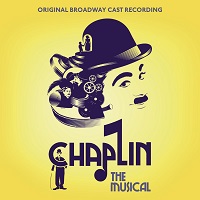
 Original Broadway Cast, 2012 (Masterworks Broadway)
  (2 / 5) In “Just Another Day in Hollywood,” the ensemble of Chaplin sings of “Stars on the rise / Stars on the fall / Stars you forget / Stars you recall.” For all its potential in dramatizing The Little Tramp’s rise and fall in stage musical form, Chaplin turns out to be largely forgettable. Composer-lyricist Christopher Curtis has some neat ideas: for example, an early diegetic number, “Whatcha Gonna Do?”, sung by Charlie Chaplin’s music hall performer mother (Christianne Noll), gradually evolves into a threatening anthem for the McCarthyist columnist Hedda Hopper (Jenn Colella) who tries to bring down Chaplin (Rob McClure) by branding him as a Communist. But Curtis’s songs do little either to develop character or counteract the show’s breakneck race through Chaplin’s life, and most of the first act is a movie-making montage with pastiche songs that don’t evoke the era of the action precisely enough. Often, the score tries to rev up emotional intensity that the storytelling hasn’t earned; one musical sequence, “The Exile,” is almost hilariously melodramatic, as Larry Hochman’s orchestrations follow Curtis’s music in somehow being simultaneously undercooked and overwrought. Elsewhere, thankfully, as in Charlie’s ballad “The Life That You Wished For,” the orchestrations calm down enough to be genuinely stirring. Colella’s belting is impressive, as are Erin Mackey’s very lovely, shimmery singing and Michael McCormick’s avuncular take on Mack Sennett — yes, the same guy from Mack and Mabel! Though McClure in the title role doesn’t have great material to work with, he’s particularly enlivening in the driving “Tramp Shuffle — Pt. 2,” and quite moving in portraying an elderly Chaplin returning to the Oscars at the start of the finale. — Dan Rubins
Half a Sixpence
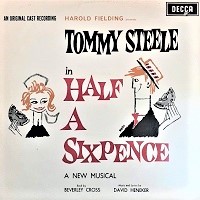 Original London Cast, 1963 (Decca/Must Close Saturday)
  (3 / 5) There’s no question that Half A Sixpence, the musical adaptation of the H. G. Wells novel Kipps, was all about spotlighting Tommy Steele, the British singer, guitarist, and banjo boy who won teenage hearts in the late 1950s before turning to theater. Steele brings gregarious energy to the role of Arthur Kipps, a hard-working orphan who inherits a surprise fortune that leads him astray. (You can almost hear his grin through your speakers.) But although he may be the scene-Steeler here, the real star is David Heneker’s utterly lovely, music hall-inspired score, buoyed by the sweeping orchestrations of Arthur Wilkinson and Peter Knight and well conducted by Kenneth Alwyn. Marti Webb plays Arthur’s down-to-earth childhood sweetheart Ann with Cockney brassiness; the role would diminish a bit in subsequent productions, but Webb makes a meal of the substantial material she’s given here. Anna Barry as Ann’s rival, Helen, has a quirky operatic song, “The Oak and the Ash,” which would be gone by the time the show reached Broadway. And though this original London cast album doesn’t give us the most electric of Steele’s recorded performances in the role, it preserves a number of songs that aren’t available anywhere else in their original form, such as the Blue Danubey waltz “The Old Military Canal,” the gently bouncing duet “The One That’s Run Away” (which would be repurposed for the 2016 revisal), and a lengthy, two-part counterpoint number, “I’ll Build A Palace”/”I Only Want A Little House,” that seems like a British precursor to “An Old-Fashioned Wedding,” written by Irving Berlin for the 1966 Lincoln Center revival of Annie Get Your Gun. — Dan Rubins
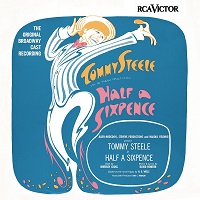 Original Broadway Cast, 1965 (RCA)
  (4 / 5) Judging from the cast album, the original London production of Half a Sixpence already seemed like The Tommy Steele Show, and the cuts and additions made for Broadway took that to the next level: Steele sings in all but one song on this recording. Once again, charm ripples across David Heneker’s melodies — now with even more gorgeous orchestrations from Jim Tyler, best known for La Cage aux Folles — especially in the lilting title song and a sweet ballad, “Long Ago,” for Arthur and Ann (Polly James). While the show is overstuffed with ensemble numbers (“The Party’s On The House,” added for the Broadway production and including a weirdly American-sounding swing section, is least essential), most of them are pleasant listens, with dance arrangements and orchestrations by Robert Prince. “If the Rain’s Gonna Fall” is an especially jubilant, strolling tune that showcases Heneker’s lyric-writing aptitude, so jovial that the occasional oddball rhyme can be forgiven. “What could be wetter or damper / Than to sit on a picnic hamper / Sipping a sasparilla / Underneath the leaky umbrella?” croon Steele and the cast, and it’s totally delightful. Equally rewarding are the instrumental gems scattered throughout the album — for example, Steele’s dextrous banjo solo in “Money to Burn,” a touching flute and violin duet in the middle of “Long Ago,” and the short but sumptuous overture. — D.R.
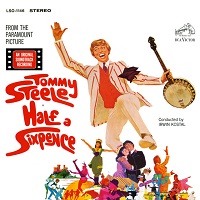 Film Soundtrack, 1968 (RCA; no CD) No stars, not recommended. All the joys of this score and in Tommy Steele’s performance can be found on the original Broadway cast recording, so there’s no need to brave the bloated soundtrack of the 1967 film adaptation in which Steele resurrected his banjo-toting Arthur Kipps. Here, every production number is extended towards eternity — “Money to Burn,” “If the Rain’s Got to Fall,” and “Flash, Bang, Wallop!” are now each seven minutes long — and whatever cinematographic choices merited such garish supersizing are obviously absent from the listening experience. Meanwhile, several songs have been cut and replaced, but of the new material, only Steele’s jaunty “Lady Botting’s Boating Regatta Cup Racing Song,” co-written by the legendary orchestrator Irwin Kostal, is worth checking out. Otherwise, Kostal’s jangly arrangements — far from his finest work — feature extensive circus and martial sounds, marching bands, and a tacky a cappella choral opening. Marti Webb, the original Ann in London, dubs Julia Foster’s singing in that role, but her soundtrack performance lacks grit: “I Know What I Am,” for instance, is plaintive and whimpery instead of boldly assertive. As for co-star Cyril Ritchard, a hammy upside of the film, his voice is basically unidentifiable on this album. Even Steele’s banjo solos here sound more interminable than impressive. — D.R.
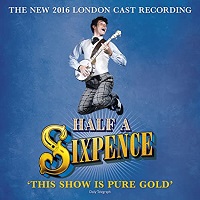 London Cast, 2016 (Exallshow Ltd)
  (1 / 5) Captured as a live recording, the aggressive revisal of Half a Sixpence that opened in 2016 at the Chichester Festival in England and later transferred to London’s West End largely drained the score of its sweet wittiness. As George Stiles and Anthony Drew had done with the stage adaptation of Mary Poppins a few years earlier, the team here again added numerous songs of their own to a pre-existing score while revising many of the originals. (There was also a brand-new book, by Downton Abbey’s Julian Fellowes.) Unfortunately, the new songs sound quite a bit like the ones that Stiles and Drew came up with for Poppins (the first two new numbers, “Look Alive” and “Believe In Yourself,” are almost rip-offs of “Cherry Tree Lane” and “Anything Can Happen”) but not at all like the work of David Heneker. And the eight and a half songs that do survive from the 1960s (“I Know Who I Am” is sadly truncated) are largely stripped of their warmth; William David Brohn’s orchestrations radiate slick bombast but seldom the tender charm of the originals. Charlie Stemp had a giddily agile presence and exuded a mix of puppy-dog innocence and deer-in-the-headlights bewilderment as Arthur Kipps on stage, but on record, he lacks the dynamic energy — not to mention the banjo skills — of Tommy Steele. Because this is a live album compiled from multiple performances during the show’s Chichester Festival Theatre run, before the West End transfer, each number is followed by lengthy applause that detracts from the listening experience, as does audience laughter at staging we can’t see. — D.R.
Cinderella (Andrew Lloyd Webber)
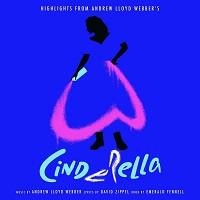 Studio Cast, 2021 (Polydor) 0 stars, not recommended. What’s there to write about Andrew Lloyd Webber’s Cinderella that hasn’t already been written and/or said? Though this “modern twist” on the fairy tale premiered in the West End to a forgivingly warm reception as one of the first shows to open after the lengthy shutdown for the COVID-19 pandemic, the musical has since been plagued by bad press and public ridicule that only intensified when it opened on Broadway under the new title Bad Cinderella, giving critics and the internet plenty of fodder for its drubbing. No stage cast recording of the score exists, only this concept album, which was recorded before the show began performances in London. It would be easy to say that the album is a flat-out disaster — and it would probably be more entertaining if it were. To be clear, there is a lot of bad material here; but on the whole, the recording is just dull, with every song sounding like a first draft. A few of the performers who would go on to appear in the West End production are on hand. As Cinderella’s Stepmother, Victoria Hamilton-Barritt goes for glorified camp and does an uncanny Joanna Lumley impression, though with diminishing returns as the album continues. And in the title role, Carrie Hope Fletcher gives as close to a fully formed performance as the material will allow. While Webber is still capable of writing a decent ear worm (“Only You, Lonely You” “I Know I Have a Heart”), every song lasts far too long, until the melodies become white noise. Plus, Webber is back in his ’80s style of musicalizing scenes that don’t need it (“So Long,” “Unfair”). The orchestrations are thin, and the lyrics, by the usually reliable David Zippel, sound like placeholders for something wittier to be written later. In an attempt to give the listener an idea of the musical’s new story line, a fair amount of dialogue is sprinkled throughout the album, but the plot is so confusing and messy that you may feel it’s easier to make sense out of a James Joyce novel. Due to the harshly negative reception of the Broadway production, a new recording of (Bad) Cinderella is unlikely, making this one a must-have for all flop collectors as a token of what will probably come to be known as the biggest failure of Andrew Lloyd Webber’s career. For anyone else, there are far better Cinderellas out there. Best to take one of them for a spin on the dance floor and leave this recording out in the pumpkin patch. — Matt Koplik
Shucked
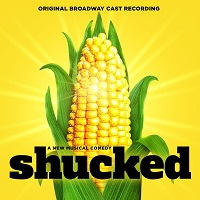 Original Broadway Cast, 2023 (Masterworks Broadway) (3 / 5) Not every musical starts its cast album with the pre-show announcement. But, for better and for worse, Shucked is not every musical. The score, penned by country music veterans Brandy Clark and Shane MacAnally for their first Broadway outing, uses unabashed exposition throughout the first two songs to begin this musical tale set in Cobb County — a small town “that time forgot,” whose main import, export, and hobby is corn. The tone for the show is established in a peppy ode to that very vegetable. (Sample lyric: “It’s the same comin’ in as goin’ out!”) The main disappointment of this recording is that it can’t include the hilarious book by Robert Horn, filled to the brim with puns and one-liners, and hence loses much of the show’s charm. After the two narrators, who sarcastically help set up and comment on the story in a manner akin to Janis and Damian in Mean Girls (Grey Henson, who originated the role of Damian, even portrays Narrator 2), the first character we meet is the innocent heroine, Maizy. (Get it? I thought you might.) Caroline Innerbichler, who plays this role, has a singing voice with a charming, open twang that nicely fits the genre. The first act zips through a farcical story about a hack doctor whom Maizy brings from Tampa to Cobb County to “save the corn,” which for some reason started dying as soon as she was to get married. Plotting is not one of the strengths of Shucked, but listeners can surely lose themselves in the dreamy, husky (no pun intended) voice of Andrew Durand as Maizy’s love interest, Beau, and in the thrilling delivery of “Independently Owned” by Alex Newell as her cousin Lulu. While it’s true that the score for the first act is comprised almost entirely of “I am” and “I want” songs for the various characters, these performers are so uniquely talented that they make it all work. It’s the penultimate song of Act I, “Maybe Love,” that reveals a major problem ahead; in it, the writers begin to fully fall back on country-western cliches. As such, Act II is unfortunately bland, and although Newell’s return seems to promise more delights, he proves to be better at selling a solo number than holding up his half of a duet. The show’s conclusion is somewhat predictable, but a twist was not to be expected from this self-consciously folksy story. Bonus tracks offer the songwriters performing the two most thoroughly country-style numbers in the score; they put them across perfectly, but musical comedy writing is clearly not this team’s forte. — Charles Kirsch
Charlie and the Chocolate Factory
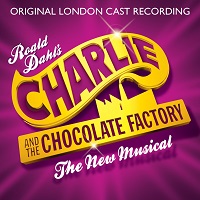 Original London Cast, 2013 (Watertower Music) (1 / 5) The first stage iteration of Marc Shaiman and Scott Wittman’s musical adaptation of Roald Dahl’s children’s novel preserves only one of Leslie Bricusse and Anthony Newley’s songs from the film Willy Wonka and the Chocolate Factory — “Pure Imagination” — but the entire album seems to hold its breath until that track arrives very late in the proceedings. Nothing else in the new score sounds anything like it, and Shaiman and Wittman fail to crack the code on converting the episodic structure of Dahl’s book to musical theater form. Jack Costello’s Charlie is charming in the opening number, “Almost Nearly Perfect,” but the other four kids who win a tour of Willy Wonka’s factory are as madly annoying as they’re meant to be, resulting in a quartet of bad songs introducing each child in the first act and a quartet of worse songs getting rid of each child in the second. Shaiman writes music in different styles for the four families — a polka for the Gloops, an English patter song for the Salts, a poppy rap for the Beauregardes, and electronic cacophony for the Teavees — so the score never gets a chance to advance beyond Russian Roulette-style genre-jumping. Nor does the show comfortably translate Dahl’s self-aware rudeness for a contemporary audience. Augustus Gloop’s fat-shaming yodel is cringe-worthy, but the lyrics for “Vidiots,” the Oompa Loompas’ condemnation of kids who play video games, are the album’s nadir: “Alas, alas, poor Mike Teavee / For OMG, he’s ADD.” (Credit Iris Roberts for making a strong, frantic impression as Mike’s harried mother.) The songs for Wonka (Douglas Hodge) are insubstantial, too, until he finally arrives at “Pure Imagination” and listeners can breathe a sigh of relief. — Dan Rubins
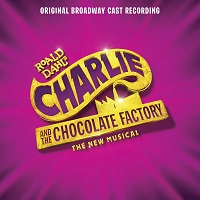 Original Broadway Cast, 2017 (Masterworks) (2 / 5) This Broadway recording is a marked improvement over the London cast album, not least for the reintroduction of most of the songs from the 1971 film Willy Wonka and the Chocolate Factory: “Candy Man,” “I’ve Got A Golden Ticket,” and “Oompa Loompa” all join “Pure Imagination.” Christian Borle has greater range than Douglas Hodge as Willy Wonka, and his opening rendition of “The Candy Man” sets a clearer tone for the character. The album generously rotates through the three young actors who played Charlie on Broadway, with Jake Ryan Flynn making a particularly terrific impression in a new, joyous waltz, “Willy Wonka! Willy Wonka!” and also in “The View From Here,” a sweet ballad with rousing counterpoint. Most of the other kids’ songs, including the deadly “Vidiots,” remain in some form; but a major casting change, with adults playing all the children except Charlie, makes the show’s added cruelties towards these characters somewhat more tolerable. That said, a notorious scene from this production, in which squirrels tear Veruca Salt (now inexplicably Russian) to pieces, is commemorated on the album in “Veruca’s Nutcracker Sweet,” which contains tasteless couplets such as “Veruca Salt was once en pointe / But watch as we dislocate each joint.” On the plus side, Trista Dollison is especially good in “The Queen of Pop,” Violet’s intro song, which recalls Shaiman and Wittman’s far superior work for Hairspray. The new, discomfiting song “When Willy Meets Oompa” seems to double down on the Oompa Loompa plot line’s colonial undercurrents, but there’s enough inoffensive sweetness elsewhere — courtesy of the three Charlies, John Rubinstein’s Grandpa Joe, and Borle’s ballads — to make this a listenable album. — D.R.
Willy Wonka and the Chocolate Factory
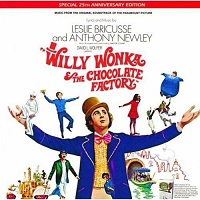 Film Soundtrack, 1971 (Geffen) (3 / 5) This slim film soundtrack — featuring six full songs by Leslie Bricusse and Anthony Newley, plus some reprises and several lovely instrumentals also credited to the pair — grounds itself in the film’s most sensational song, “Pure Imagination.” As Wonka, Gene Wilder delivers that song with leisurely grace, but the album’s richest tracks, “The Wondrous Boat Ride” and “Wonkavator/End Title,” offer the melody in a few different iterations with orchestral majesty. (Walter Scharf was the film’s music arranger and conductor.) Among the other highlights to be found here are an endearing rendition of “Cheer Up, Charlie” by Diana Lee, dubbing for Diana Sowle in the role of Charlie’s mother, and the amazingly demonic Julie Dawn Cole as Veruca Salt tearing her way through “I Want It Now.” “The Candy Man” is a too-treacly classic, but the goofy, oft-reprised “Oompa Loompa” theme earns its iconic status. Several underscored spoken dialogue scenes are included on the album as a reminder of some of the film’s less-celebrated performances. [Ed. Note: For reviews of the two cast recordings of the stage musical inspired by this film and its source material, Charlie and the Chocolate Factory, see the separate entry under that title.] — Dan Rubins
Soft Power
 Original Off-Broadway Cast, 2020 (Ghostlight) (2 / 5) If this cast album confuses some listeners, that may be because they don’t understand the show’s central conceit, and can you blame them? It’s pretty much impossible to glean from the recording. This reviewer had to read several synopses of Soft Power before understanding that, essentially, the content of the show and the album is the result of a fever dream had by DHH — a character unsubtly named after the show’s librettist/lyricist, David Henry Hwang, and played here by Francis Jue. After being commissioned by a Chinese producer, Xue Xing, to write a musical, DHH gets stabbed in an act of racial violence, as Hwang did in real life, and goes into a coma in which he imagines a reverse King and I wherein a fictionalized Xue Xing comes to America and falls in love with (who else?) Hillary Clinton. This gimmicky concept could probably hold up for the length of, say, a Saturday Night Live skit; but Hwang and the show’s composer, Jeanine Tesori, here parodying the expansive style of the golden age Broadway musical, have trouble sustaining it for almost the entirety of the piece. At the beginning, the comical “Welcome to America,” featuring a painfully awkward rap that references Dirty Harry and Rolex, may elicit a few chuckles, and “Election Night,” which attempts to explain the messiness of the Electoral College system in Schoolhouse Rock-like fashion, might prompt a smile or two. But “It Takes Time,” a belabored parody of “Shall We Dance?” in which Xue attempts to teach Hillary the basic points of Mandarin, and “The New Silk Road,” an overlong battle cry in which Xue convinces the American people to lay down their guns and learn from China’s example, will likely make the listener feel as if the concept has gone on way too long. One of the strengths of this recording, though, is Conrad Ricamora, who lends a velvety, confident voice to the role of Xue and single-handedly holds the album together. Alyse Alan Louis does an admirable job of voicing Hillary, although she can’t quite sell the watered-down, bluesy “Rose’s Turn” takeoff titled “Song of the Campaign.” It could be largely because of the difference in perspective from 2023 (when this review was written) as compared to 2020 (when Soft Power was produced and this album was recorded), but all of the references to America’s “Dear Leader” now feel more like sad punches in the gut than incisive, comic observations. In the final and perhaps most jarring tonal shift, the show’s closing number, “Democracy” seems to be almost congratulating the audience on their progress and promising them a better future, thereby undermining the cynicism of the entire piece. In sum, this cast album has the soft power to occasionally entertain but lacks the ability to send a serious message. — Charles Kirsch
Dessa Rose
 Original Off-Broadway Cast, 2005 (JAY) (4 / 5) Based on Sherley Anne Williams’ 1986 novel about the intertwined stories and gradual friendship of a Black woman and a white woman in the Antebellum South, Dessa Rose remains Lynn Ahrens and Stephen Flaherty’s most sweeping, ambitious score since Ragtime. It also makes for an epic cast album with a whopping 68 tracks and over two hours of material, including all dialogue (also by Ahrens) and all the necessary sound effects to convey the show’s dramatic events. Since Dessa Rose is heavily narrated by the title character (LaChanze) and Ruth (Rachel York), reminiscing in their old age, it’s easy to follow the plot from the recording once the two women meet and the show shakes loose its early flashback-within-a-flashback knottiness. As Dessa Rose, an enslaved woman willing to do anything to fight for her freedom, LaChanze, an early Ahrens and Flaherty muse (as in Once On This Island, a score that’s occasionally referenced here in some livelier ensemble moments), offers a gripping performance, especially in her Act One solos, “Something Of My Own” and “Twelve Children.” York is a terrific counterbalance as a prim Southern belle who opens her home and her heart to Dessa Rose and her companions fleeing slavery. Norm Lewis also gives a warmly winning performance as Nathan, who falls for Ruth, and Kecia Lewis sings the ballad “White Milk, Red Blood” movingly. Though the first act is rather exposition-heavy, and the longer soliloquies interrupt the album’s often-propulsive momentum, the show takes off in the second act once the two women turn against each other in a fiery pair of numbers, “Better If I Died” and “Just Over the Line.” It’s occasionally obvious that Dessa Rose shares its composer with Ragtime, but Flaherty ultimately carves out a tensely operatic sound for the score that stands alone among his works, powered by banjo-rich orchestrations courtesy of William David Brohn and Christopher Jahnke. (The rousing vocal arrangements are by Flaherty himself.) With its audio play expansiveness, the Dessa Rose cast recording makes for a compelling, powerful listen. — Dan Rubins
Rocky
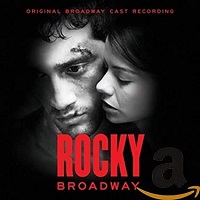 Original Broadway Cast, 2014 (UMe) (3 / 5) Rocky finds Lynn Ahrens and Stephen Flaherty writing to order. At the center of this adaptation are two songs, from the film on which the musical is based and one of its sequels, that A&F had nothing to do with creating: ”Gonna Fly Now,” the iconic Rocky theme, and “Eye of the Tiger,” a big hit from Rocky III. The rest of the score seems forced to coalesce around those famous workout anthems. Most of the songs about boxing are undistinguished and indistinguishable from one another, recalling the film soundtracks as best they can. It’s a small miracle, then, that Ahrens and Flaherty, carve out space for a lovely collection of other songs charting the tender, tentative relationship of the down-on-his-luck boxer Rocky Balboa (Andy Karl) and the traumatized Adrian (Margo Seibert). As heard on the cast album, Seibert is stunning in the brief self-empowerment ballad “I’m Done,” and the pair are sweetly hesitant in the skating rink waltz “The Flip Side.” A&F gave themselves an additional challenge in writing so much material for the under-educated and semi-literate Rocky; for example, the halting “Adrian” feelingly showcases the pair’s gifts at writing for specific characters as it tests the limits of the protagonist’s self-expression. That said, the highlight of the score is Adrian’s “Raining,” one of Ahrens’ most haunting lyrics set to a surging, churning melody, tinged with electric guitar licks, that sounds unlike anything else Flaherty has penned. Too often, this score treads water until the next training montage, but with so much distraction in the ring, credit the writers with landing at least one knockout punch. — Dan Rubins
The Glorious Ones
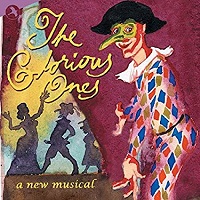 Original Off-Broadway Cast, 2008 (JAY) (3 / 5) The commedia dell’arte players who are the characters in Lynn Ahrens and Stephen Flaherty’s musical The Glorious Ones declare in the titular opening number that they will perform “with one hand on the crotch and one hand on the heart.” But Ahrens and Flaherty, from Once On This Island to Ragtime to Seussical, have been all blissful heart, and the songs in this score that strive for coarseness (“Making Love,” “Armanda’s Tarantella”) come across as semi-apologetic gropes. Flaherty’s flexible compositional voice usually molds artfully around the setting and style of each show, but The Glorious Ones never quite embraces a Flahertian version of 17th-century Italy. For example, the vaudevillian “Comedy of Love” and “Rise and Fall” sound a lot like Ragtime’s turn-of-the-century showbiz scenes. What is consistent about the score is the use of triple meter; like A Little Night Music, almost every song is in some variation of waltz time, although the lovely ballad “The World She Writes,” a metrical exception featuring the lush-voiced Erin Davie, is the album’s best track. By the time we arrive at the show’s apex, the impresario Flaminio Scala’s post-mortem soliloquy “I Was Here,” that song in three-quarter time rhythmically blends into too much of what’s come before. Still, Flaherty is a masterful melodist, and Ahrens is ever-thoughtful and clear in her lyrics, so the score never grates. As Flaminio and his lover Columbina, Marc Kudisch and Natalie Venetia Belcon get the meatiest music, but Julyana Soelistyo as the dwarf Armanda, leading the potent “Armanda’s Sack,” makes the most lasting impression. Michael Starobin’s orchestrations shimmer characteristically, especially in his gentle brass writing. The album features a few bonus tracks, including a brief orchestral suite. — Dan Rubins
Between the Lines
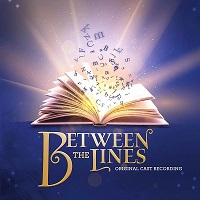 Original Off-Broadway Cast, 2022 (Ghostlight) (3 / 5) Are you ever too old to fall in love with a fairytale? Or a fairytale prince? This question is the basis for Between the Lines, a musical by Elyssa Samsel and Kate Anderson that premiered Offf-Broadway in 2022. The show centers on troubled teen Delilah McPhee, who has to navigate life as a target of school bullies and the daughter of a divorced, broke, single mother. In order to survive her situation, Delilah has to find a way out, and she does that by falling in love with the prince from a fairytale book she has recently begun to read, the only copy of which happens to be in her school library. As the location of the show switches back and forth between reality and the fantasy world of the book, it’s easy for the cast album listener to get lost, all the more so because no interstitial dialogue is recorded here. For example, does Will Burton’s charming soft-shoe “Out of Character” come off as well if you don’t realize until the end of the song that he’s playing a dog? Or will you understand that, when Vicki Lewis performs “Can’t Get ‘Em Out,” she is playing the book’s author rather than a therapist or one of the few other characters she portrays in the show? As for the score itself, the main problem it that it suffers from a lack of originality. Since there are comparatively few teenage musicals, it’s impossible not to draw comparisons between this show’s high school outcast anthem “Allie McAndrews” and “I’d Rather Be Me” from Mean Girls, or between “Leaps and Bounds,” the nostalgic ballad heartbreakingly performed here by Julia Murney as Delilah’s mother, and, say, “Stop, Time” from Big. None of this is meant to suggest that Between the Lines is without its merits, the greatest ones being the catchiness of the tunes, whether melancholy or up-tempo, and the charming vocal performance by Jake David Smith as the handsome prince. Arielle Jacobs’ portrayal of Delilah is also compelling, and if some of the challenging score lies a bit outside of her vocal range, she has the acting chops to make up for it. Because of the many nice opportunities this show affords its cast in addition to the relatable story, it almost cries out for regional productions, and one can easily imagine that some of the score’s solo ballads will become audition room standards. So, ultimately, Between the Lines is worth your time, even if it’s a story you may feel you have read before. –– Charles Kirsch
Kimberly Akimbo
 Original Broadway Cast, 2023 (Ghostlight)
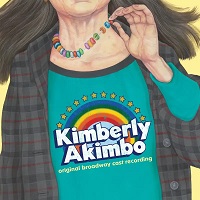
  (5 / 5) Based on David Lindsay-Abaire’s play of the same title, Kimberly Akimbo tells the story of Kimberly Levaco (Victoria Clark), a girl with a rare disease that causes her body to age rapidly, causing her to look 65 at the age of 16. Despite this major setback, Kimberly is determined to enjoy as much of her life as she can, since she’s unsure just how much longer her life will last. It’s that blend of sardonic edge and heartfelt optimism that ultimately makes this such a special musical. In their second collaboration, Lindsay-Abaire and composer Jeanine Tesori have created an unassuming work that hides its creativity and complexity in plain sight. Abaire’s lyrics are exceptionally intelligent, sometimes taking twisted turns (the hilarious “Better”) and sometimes deeply earnest (the quietly devastating “Before I Go”), but always organic to the story and characters, and never calling attention to themselves. Tesori, meanwhile, proves once again that she is one of the most versatile musical theater composers around. She has created here a score filled with pastiches of numerous song genres (’90s folk, ’70s disco, blues, current pop, faux-classical), yet the score never has the feeling of oscillating from one style to the other; rather, it seamlessly blends. The cast is exceptional. Steven Boyer and Alli Mauzey are appropriately narcissistic as Kimberly’s parents, getting a chance to show their characters’ messiness (in Boyer’s “Happy for Her” and Mauzey’s “Hello Darling” and reprises) while also displaying some depth (in “Hello Baby” and “Father Time”). Bonnie Milligan is a scene stealer as Kimberly’s delinquent aunt Debra, whose latest scheme consumes much of the plot of Act Two. Given the most off kilter humor of the show, Milligan offers dry delivery of dialogue and barn raising vocals that ground Abaire’s comedy, keeping songs such as “Better” and “How to Wash a Check” from going off the rails. Justin Cooley is incredibly charming as Kimberly’s classmate Seth, who has a passion for making anagrams (the show’s title is a blend of Kimberly’s name and the anagram Seth makes out of it). At the center of it all, Clark is other-worldly good in the title role. In songs like “Anagram” and “Make a Wish,” one can hear her communicate Kimberly’s teenage spirit while also embracing the character’s elderly body and voice, but Clark refuses to go broad or become a caricature. Like the musical itself, the simplicity of her performance is what makes it so profound. Happily, the audio quality of this recording is so crisp and clear that listeners can hear every nuance of the vocal performances, as well as John Clancy’s multi-faceted orchestrations and Tesori’s tight vocal arrangements for the teenage ensemble. One could keep going on about every minute aspect of this cast album, but the ultimate praise is to tell you to just go ahead and listen. And then listen again. And again. — Matt Koplik
Mr. Saturday Night
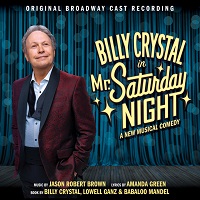 Original Broadway Cast, 2022 (Craft Recordings) (2 / 5) The highlight of many a Golden Age musicals is the “11 o’clock number.” Mr. Saturday Night, a Golden Age pastiche, has at least four of them — without earning even one. This show was written as a vehicle for Billy Crystal, star of the movie that served as its source material. It tells the story of aging comedian Buddy Young, Jr., who is reduced to playing nursing homes until an “in memoriam” section of an awards show lists him as dead and inspires a career renaissance. This is a character we’re supposed to fall in love with, but lyricist Amanda Green (here writing in the style of her father Adolph) and composer Jason Robert Brown make it hard to do so. Right from his first song, “A Little Joy,” it’s clear that Buddy is a bitter, nasty man — beaten down by bad breaks, sure, but spiteful, and funny only in his anger. Shoshana Bean as his recovering alcoholic daughter expresses her frustration with him in the show’s third song, “There’s A Chance,” compounding the case against him. The essential problem here is that nothing about Buddy redeems him — at least, nothing that’s expressed on the cast album. That proviso is necessary because some of the funniest moments in the show were contained in the book, co-written by Crystal with Lowell Ganz and Babaloo Mandel. For this reviewer, the highlight was a montage in which Buddy humiliated himself on various game shows, meanwhile endearing himself to the audience. Also, as heard on the album, Mr. Saturday Night can feel disjointed; an unexpectedly long flashback sequence (which, due to a lack of interstitial dialogue on the recording, may not even be obvious as a flashback to listeners) does include one of the score’s few truly funny songs, “At Farber’s,” but still seems like an excuse to draw out the skimpy plot. Two of the strongest numbers come towards the end: “Broken,” acted beautifully by David Paymer as Buddy’s long-suffering brother, which adds some variety to the overall sound of the score; and “My Wonderful Pain in the Ass,” a genuinely sweet duet between Buddy and his wife, Elaine (Randy Graff), that’s reminiscent of “Do You Love Me?” from Fiddler on the Roof. Overall, though, Shoshana Bean’s songs prove to be the highlights of the show. In the finale, “Stick Around,” Bean as Buddy’s daughter tells the audience to “stick around — though you sometimes may wonder why.” When you’re listening to this recording and the better songs aren’t playing, those words may seem very well chosen. — Charles Kirsch
Busker Alley
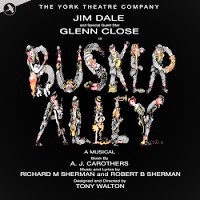 Studio Cast, 2007 (JAY) (1 / 5) Busker Alley never made it to Broadway, but it sure came close, first with a Tommy Tune-led national tour in 1995 (felled by Tune’s broken foot) and then with the York Theatre Company’s 2006 benefit concert starring Jim Dale (intended for a Broadway transfer that never happened). It’s the latter iteration that’s captured on this recording, including the one-night-only luxury casting of Glenn Close as the grown-up version of Libby, a pickpocket-turned-London busker-turned film star who abandons her lover and fellow street performer Charlie Baxter (Dale) in exchange for fame and fortune. Close introduces Charlie’s story in a spoken prologue and then returns at the end to sing, quite beautifully, “He Had A Way,” the gentle highlight of the album. Given the subject matter, many of the songs by the Sherman brothers (Mary Poppins, Over Here, etc.) are cloying street numbers, diegetic to the buskers’ world. The cast approaches these tunes with aggressive Cockney accents married to unnecessarily grating vocals meant to demonstrate, apparently, that these are resilient paupers down on their luck. Dale is fine, if ill-served by thin material, and he’s in his prime when farthest removed from the abiding, overzealous performance style, as in an angry reprise of the ballad “How Long Have I Loved Libby?” and in the short, sweet “Charlie the Busker.” As the younger Libby, Jessica Grové offers an endearing “He Has A Way,” but her Eliza Doolittle drawl is unsubtly distracting. Brevity here is not necessarily the soul of either wit or rich character development, and many of the songs are so brisk that it’s hard to glean much of a dramatic through-line. The street numbers also quickly become indistinguishable from one another (only the lively “Paddle Your Own Canoe” stands out), not helped by the repetitive arrangements for piano and drums. For the completist, it’s nice to have this score recorded, but this album doesn’t make a convincing case that the disappearance of Busker Alley was any great loss. — Dan Rubins
The Visitor
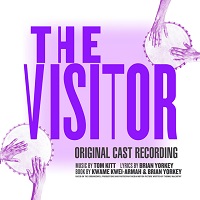 Original Off-Broadway Cast, 2022 (Craft Recordings) (2 / 5) “A few djembe lessons and like that I am enlightened,” sings Walter (David Hyde Pierce), a grumpy economics professor who learns to play percussion — and finds out all about America’s cruel immigration policies — from an undocumented Syrian immigrant named Tarek (Ahmad Maksoud), who has been squatting with his girlfriend, Zainab (Alysha Deslorieux), in Walter’s vacant apartment. The cast album of The Visitor, in the absence of Kwame Kwei-Armah and Brian Yorkey’s squirmy book, does a better job than the show did onstage of distracting from the story’s troubling focus on how the suffering of a family in the clutches of the immigration system reanimates a middle-aged white guy, but there’s still that uncomfortable undercurrent. This is a Tom Kitt score, so the vocal arrangements are reliably superb, and Kitt creates some riveting grooves, enhanced by the orchestrations of Jamshied Sharifi (The Band’s Visit). The score cleverly suggests the way that music is all around us — hear, for example, the rhythmic shushing and rustling of papers in the song “In The Middle of The Middle Row” — all of which works effectively on the recording. But there’s little subtlety or sensitivity in Yorkey’s lyrics, as when Zainab describes her harrowing journey to the U.S., in ungraceful phrases such as: “But the price of the voyage was steep/They would touch me when I was asleep.” Thankfully, though, Deslorieux is marvelous. Her impassioned “Zainab’s Apology” and an undulating duet for Zainab and Tarek, “My Love Is Free,” merit multiple listens. Hyde Pierce also gives a moving, committed performance, even if his songs become progressively worse as Walter sheds his misanthropy. (“Better Angels” is a particularly cringe-inducing anthem bellowed at uncaring ICE agents.) He does his loveliest work, alongside Jacqueline Antamarian as Tarek’s fraught mother, in the unassuming “What Little I Can Do.” This album can’t redeem a deeply flawed musical, but the strong singing and engaging arrangements make this a score worth a listen. — Dan Rubins
Flying Over Sunset
 Original Broadway Cast, 2022 (Masterworks Broadway) (2 / 5) One thing that can be said for Flying Over Sunset is that it’s certainly ambitious. Conceived and directed by James Lapine, the musical tells of a fictional meeting between movie star Cary Grant (Tony Yazbeck), novelist/philosopher Aldous Huxley (Henry Hadden-Paton), and playwright/politician Clare Boothe Luce (Carmen Cusack), during which the three experiment with the psychological benefits and detriments of LSD — something all three did in real life, but separately. In an effort to theatricalize the effects of the drug and its ability to remove its revelers from reality, all of the songs in this show occur during the characters’ hallucinations. While this allows composer Tom Kitt to create lush compositions, elegantly orchestrated by Michael Starobin, the score only succeeds intermittently. As was the case with her turn in Bright Star, Cusack is once again here given the best material, and she elevates it with her vocal luster and nuanced acting. The ultimate highlight of the recording is the title number, sung during Luce’s first LSD trip as she hallucinates and harmonizes with her deceased mother and daughter. Other elements of the score, however, are just odd. Songs like “Rocket Ship” and “Three Englishmen,” though well performed by Yazbeck, Hadden-Paton, and Robert Sella (as the group’s LSD guru), may prompt one to question whether some of the content of this show is intended to be camp. Listening to Flying Over Sunset, musical theater fans will learn, along with the show’s trio, that for every beautiful high there’s usually a disorienting low. — Matt Koplik
All in Love
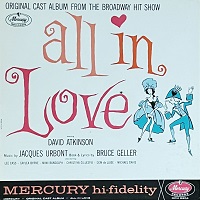 Original Off-Broadway Cast, 1961 (Mercury/Stage Door) (2 / 5) With its lithe but insubstantial score, preserved nearly complete on the cast album, All In Love turned Richard Brinsley Sheridan’s classic farce The Rivals into a jaunty musical comedy. Featuring music by Jacques Urbont and lyrics by Bruce Geller, the show ran Off-Broadway briefly in 1961, though the album cover misleadingly declares that it was a “Broadway Hit Show.” The plot: Wealthy Captain Jack Absolute (David Atkinson) must disguise himself in pursuing Lydia Languish (Gaylea Byrne) because she desperately wants to marry a poor man. (“He can’t be all bad if he’s good and poor,” she sings in the opening number.) Urbont’s melodies are solidly good-natured but unmemorable throughout; the best of them include Atkinson’s ballad “I Love A Fool” (in which Jack praises Lydia’s “refined imbecility”) and the chipper “I Found Him,” sung by Christina Gillespie as the enamored servant Lucy. The composer ventures towards harmonic ambition only in “Why Wives?,” a vocally intricate but thematically dubious ensemble piece in which the men air their frustrations with monogamy. Geller’s lyrics could be wittier, but his love songs aren’t bad. For example, at one point Lucy exclaims: “I want everyone to know/That, just a miracle ago, I found him.” Lee Cass stands out among the singers, showing off his exquisite bass timbre in “The Lady Was Made To Be Loved.” The Rivals is now probably best known for introducing the character Mrs. Malaprop, Lydia’s twisty-tongued aunt; Mimi Randolph in that role delivers an appropriately silly number, “A More Than Ordinary Glorious Vocabulary,” in which she drops such jumbled wisdom as “Men are never contraceptive to a well-turned phrase.” All in Love is notable for the involvement of actor Dom DeLuise, who appeared in this show three years before his film debut, and orchestrator Jonathan Tunick. DeLuise’s only major moment on the album comes when he leads “Odds,” a goofy, disposable novelty number about cursing. But Tunick’s work glows throughout, emulating the best of his Golden Age forebears in using a large orchestral palette while en route to his game-changing collaborations with Burt Bacharach and Stephen Sondheim — Dan Rubins
Mrs. Doubtfire
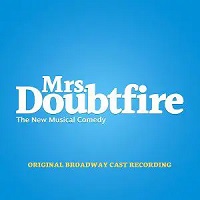 Original Broadway Cast, 2022 (Sh-K-Boom) (2 / 5) A 1993 film comedy in which Robin Williams as divorced dad Daniel cons his way back into his children’s lives by disguising himself as a Scottish nanny, Mrs. Doubtfire seemed to have the bones for a delightful stage musical adaptation. But despite some spunky performances and Ethan Popp’s lively orchestrations, the cast album basically distills what was disappointing about the final product that audiences saw onstage when the show, with a score by Wayne and Karey Kirkpatrick, finally opened on Broadway in 2021 after a long pandemic delay. While the Kirkpatricks’ first show, Something Rotten, grounded its playful musical vernacular in references to the Broadway catalog and, occasionally, the Renaissance, Mrs. Doubtfire’s score stylistically hopscotches from rock to jazz to flamenco without much sense of dramatic purpose or consistent tone. Leading the cast, Rob McClure and Jenn Gambatese are too often hampered by sleepy, self-serious ballads (“I Want To Be There,” “Let Go”) that contain watery platitudes such as “Time can heal, all is not lost / As long as there is love.” The extended production numbers, which seemed designed to pad out the show’s runtime on Broadway — including “Make Me A Woman” (the makeover), “Easy Peasy” (a cooking tutorial), and “You’ve Been Playing With Fire” (a dream sequence, featuring pyrotechnic vocals from Charity Angél Dawson) — feel even less necessary when stripped of their staging. One exception is a comic confrontation (“Big Fat No”) between McClure as Mrs. D. and Mark Evans as the doting gym rat who’s courting Daniel’s ex; the pseudo-bossa-nova groove of this number is appealingly silly, there are some clever tongue-in-cheek ensemble asides, and it’s pretty much the only sequence where McClure actually gets to sing as Mrs. Doubtfire rather than as Daniel. The best song in the score goes to the kids: “What the Hell,” a punchy pop dissection of the impact of divorce, spotlights Avery Sell and Jake Ryan Flynn as Daniel’s youngest children. But it’s the sardonic, aching voice of Analise Scarpaci, playing the eldest daughter, Lydia, that soars highest on this recording. Scarpaci imbues Lydia with an emotional intelligence that lends much-needed specificity to the opening number, “What’s Wrong With This Picture,” and a gloopy second-act duet with McClure, “Just Pretend.” [Note: As it happens, Scarpaci released her own album of original music, Pathetic Little Dreamer, in 2021 while waiting for Mrs Doubtfire to reopen. She’s even better served by her own writing. ] — Dan Rubins
A Beautiful Noise
 Original Broadway Cast, 2023 (UMe) (3 / 5) This recording differs from the cast albums of many other jukebox musicals, including biomusicals such as Jersey Boys and Beautiful, in that the arrangements and orchestrations here are not close copies of those heard in these songs as originally written and recorded — in this case by Neil Diamond, the subject of this show. A Beautiful Noise exhibits more creativity in that regard, with fresh arrangements (by Sonny Paladino) and orchestrations (by Brian Usifer, Bob Gaudio, and Paladino) that recall the originals just closely enough to keep Diamond fans happy without sounding like carbon copies of the old charts. There’s also a delightful “Opening Montage” featuring snippets of a large handful of Diamond hits in piquant choral arrangements for the ensemble. Another plus for the album is the stellar work of Will Swenson, who somehow manages to very credibly channel Neil Diamond’s husky rock baritone in such hits as “Sweet Caroline,” “Cracklin’ Rosie,” “Love on The Rocks,” etc., etc., even though the natural timbre of Swenson’s singing voice as heard in other shows and on other recordings is considerably lighter and higher. A persuasive argument for experiencing this show through the cast album, rather than actually attending a performance on Broadway, is that the audio-only option means you don’t have to suffer through the sometimes ridiculous setups for these pop songs as they have been placed within the book that Anthony McCarten has written around them — none more egregious than the setup for “You Don’t Bring Me Flowers,” here presented as a bittersweet farewell sung by Neil and his second wife, Marcia Murphey (Robyn Hurder), even though the lyrics have nothing to do with the issues that actually broke up their marriage. Recorded with no dialogue introduction whatsoever, this song may be thoroughly enjoyed out of context, along with all the rest on the album. — Michael Portantiere
& Juliet
 Original London Cast, 2019 (3 / 5) & Juliet is, yes, another musical twist on Shakespeare, but one that’s worthy of joining the large canon that already includes such shows as Kiss Me, Kate, West Side Story, Your Own Thing, and Two Gentlemen of Verona. The plot revolves around Shakespeare’s wife Anne Hathaway -– an annoyingly affected Cassidy Janson on this recording — trying to convince her begrudging husband, suavely sung by Oliver Tompsett, to change the ending of his new play, Romeo & Juliet, to let the leading lady live and reclaim her power. The story is told in a very modern way by using the music of pop songwriter Max Martin, who has penned hits for Britney Spears, Katy Perry, Taylor Swift, et al. These songs fit very smoothly into the plot but, of course, you won’t get much of a sense of that from the cast album. On that note, any recording of a jukebox musical prompts the same question: Without a script attached, is it worth hearing musical theater artists perform pop songs that we already know and love in their original versions? In one case here, at least, the answer is very much “yes”: From the first time we hear Miriam Teak-Lee as Juliet in the album’s third track, “…Baby One More Time,” to her final, soaring harmonies in “Roar,” it’s clear that she possesses the ability to wrap her voice around the riffs and the admittedly 1D emotions of these songs. Other performers, especially the butter-voiced Jordan Luke Gage as Romeo, do well also, though the comically exaggerated performances of Melanie LaBarrie as the Nurse and David Bedella as Lance De Bois, the strict father of Juliet’s new love interest, seem to have gotten a bit lost in translation to the medium of an audio recording. A bonus cover of “One More Try” by Jessie J accents the disparity between pop and theater voices that only Teak-Lee bridges with complete success. If this cast album can’t offer a good picture of the wit, the positive themes, or the spectacle of & Juliet, what it does offer is a veritable candy box of rich orchestrations and strong singers that may leave listeners saying, to quote a song that’s repeated throughout the show, “I want it that way.” — Charles Kirsch
 Original Broadway Cast, 2022 (Atlantic) (4 / 5) Other than the accents, the biggest difference between the two recordings of & Juliet is the use of interstitial dialogue on the Broadway album – or, more accurately, the Toronto album, as that’s where this one was recorded pre-Broadway. (Katy Geraghty, who left the show before it arrived at the Stephen Sondheim Theatre, is still credited here in the role of Lucy). The improvement is tangible, as the snippets of the book that are included give us the context in which the hit songs are used and also play up one of the elements that makes the show as a whole so enjoyable: its humor. Pop song lyrics tend to be somewhat banal, a fact that’s unfortunately accented here because of the slightly more subdued tone of this album as compared to the London one. This is partially due to the sound mixing, which makes the voices slightly softer; but also because of the cast, which, to paraphrase a different show, has its aces in very different places. While Lorna Courtney as Juliet is very talented and adds her own, individual spark to the songs, she’s not quite the exploding firecracker that Miriam Teak-Lee is. Instead, Betsy Wolfe as Anne Hathaway becomes the focus of this album; not only is she a splendid singer, she adds a taste of her enormous acting talent in several sections of spoken dialogue, enough to elevate the material. More happy news is that Philippe Arroyo and Justin David Sullivan as the show’s (arguably) central couple, Francois and May, shine brighter than their London counterparts. Since Wolfe, Arroyo, and Sullivan get to sing most of the quieter pop songs in the score, those moments become the highlights of this recording. (That fact does highlight a structural problem with the album: you’ll often hear one bombastic number right after another, followed by a section in which all you get is the characters’ musical thoughts on frustrated love or identity, the most glaring example being the sequence of songs that stretches from “Whataya Want from Me” to “That’s the Way It Is.”) Melanie La Barrie, the only holdover from the London cast, fares better here, giving slightly subtler and more charming renditions of “Domino” and “Fuckin’ Perfect.” Ben Jackson Walker as Romeo is somewhat generic if inoffensive, and Paulo Szot’s out-of-place operatic voice makes the comedy of Lance really pop. While Stark Sands as a comically smug Shakespeare riffs a bit shakily at the start, in the end he gives a perfectly sweet performance. Fittingly, there’s a new pop-star cover for this album: “Since U Been Gone” as sung by Kelly Clarkson (joined by Lorna Courtney). As of this writing, & Juliet seems to have become a hit on Broadway. Since it’s likely to earn a place alongside Jersey Boys and Beautiful among the most successful of the “jukebox musicals,” any theater fan should get to know it now — and they’re advised to use this recording to help. — C.K.