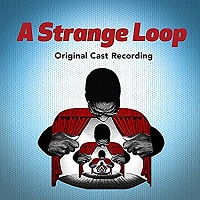
 Original Off-Broadway Cast, 2019 (Yellow Sound)
  (4 / 5) How to describe A Strange Loop, the Pulitzer-Prize winning musical that gets its title from both a cognitive science term and a Liz Phair song? It’s messy, it’s brilliant, and every theater fan should pay attention to it. Written by Michael R. Jackson, this semi-autobiographical work has no structured plot and is chock-full of content so gleefully explicit, and often discomforting, that it makes shows like Spring Awakening and Book of Mormon look like after-school specials. The show focuses on Usher (Larry Owens), a self-described “fat, black and queer” aspiring musical theater writer who’s working on his newest musical — which also happens to be called “A Strange Loop” and just so happens to be about a fat, black, queer musical theater writer who’s writing a musical about a fat, black, queer musical theater writer. As he struggles with the creative process, Usher wonders if his lack of success as a writer and in acquiring a romantic partner is due to the cruelty and prejudice of the entertainment industry and the world at large, or due to his own trauma and lack of self worth. Jackson uses the musical as a large canvas to explore these and other matters with humor, humanity, and brutal honesty. Songs such as “Exile in Gayville” and “Tyler Perry Writes Real Life” include enough vulgarity and confrontation to put off many listeners, but Jackson’s lyrics are concise, intelligent, and razor-sharp. While his music is not quite so bold, and he sometimes doesn’t end his songs effectively, he has written a melodic, multi-faceted score with tight vocal arrangements (by Jackson) and flexible orchestrations (by Charlie Rosen). The ensemble is made up of Usher’s six main Thoughts, vocalizing his inner demons as well as all of the people in his life — family, agents, even pillars of Black American history. All of the performers heard here as the Thoughts are exceptional, but it’s Owens who commands the recording. His Usher is a ball of flaming, dramatic chaos, thrilling and terrifying. His expressive voice powers through the score, constantly fighting to stay afloat until it softly lands to safety towards the end in “Memory Song.” Owens also turns “Writing a Gospel Play,” in which Usher barely hides his contempt at concocting a script for Tyler Perry, into a comedic tour-de-force. A Strange Loop is not a show or cast album that can be recommended to everyone; it refuses to pander with vague affirmations or self-empowering anthems, and it’s all the more interesting for that reason. — Matt Koplik
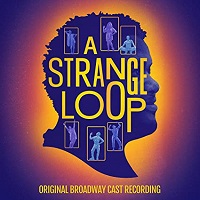 Original Broadway Cast, 2022 (Ghostlight/Yellow Sound)
  (3 / 5) Despite A Strange Loop having had a sold-out run Off-Broadway, winning the Pulitzer Prize, and sweeping all other eligible awards during its season, a transfer to Broadway was not a foregone conclusion. The musical was always going to be a hard sell to a mainstream audience, and the big question for fans of Jackson’s work was: If there is a transfer, will the creative team make any alterations to render the abrasive material more palatable? The answer, as evidenced by this new cast recording, is mostly “no.” A few of the rougher edges have been smoothed over, as in “Inwood Daddy,” but even a slightly toned-down Loop is more shocking and confrontational than 99% of shows that land on Broadway. Some of Jackson’s rewrites make certain lyrics slightly more clear to the audience, though not necessarily easier to take. Where the Broadway transfer and the resulting album lose a great deal of power are in the sound design and the new central performance; the second recording sounds mushier and more echo-y than the first one, making many of the lyrics difficult to decipher, while some of the voices are imbalanced and poorly blended. And although Jaquel Spivey brings pop panache and vocal ease to the role of Usher, his performance is less expressive and explosive than Owens’. This Usher feels more controlled and tempered, which ultimately dilutes the power of the piece. Still, Spivey is vocally well qualified for the role, and some listeners might prefer him to Owens in that regard. A Strange Loop went on to garner more critical acclaim for its Broadway bow, winning the Tony for Best Musical in 2022, though it has continued to struggle at the box office even after earning that honor. This recording is a strong representation of why the show deserves its accolades, even as it also displays what was lost in the move to Broadway. — M.K.
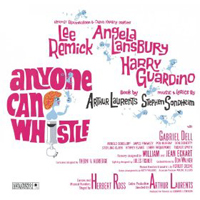
 (5 / 5) The show was a flop, but virtually every number is a winner, and so is this recording. Broadway audiences were bored by Arthur Laurents’ bizarre, satirical fable in which corrupt, small-town politicians fake a miracle by pumping water out of a rock, thus creating a new Lourdes with its attendant tourist trade. But what a cast! Angela Lansbury launched her musical theater career as Cora Hoover Hooper, the scheming mayor. Her co-stars were Lee Remick as Fay Apple, head nurse in the local nuthouse (named The Cookie Jar!), and Harry Guardino as J. Bowden Hapgood, a phony psychiatrist who stirs up trouble. And what a score! Stephen Sondheim’s wildly inventive songs include a lengthy musical-dramatic sequence, “Simple,” and a campy ballet, “The Cookie Chase.” Lansbury’s opener, “Me and My Town,” is a riotous spoof of nightclub-diva dramatics. Remick gets the achingly beautiful title tune, and Guardino delivers the biting, driving “Everybody Says Don’t.” The final duet for Hapgood and Fay, “With So Little to Be Sure Of,” is one of Sondheim’s finest, most adult love songs. Don Walker’s orchestrations are brassy and delightful. Recorded the day after the show closed, the album has a raw quality — Lansbury, for one, evidences some vocal strain — that, paradoxically, makes it seem fresher than many recordings that are more polished. One of Remick’s numbers, “There Won’t Be Trumpets,” was cut before the show opened and left off the LP, but has been restored for the CD. This kind of “failure” is far more interesting than lots of long-running hits. Note: Look for the version of the cast album marked “Deluxe Expanded Edition.” It includes bonus tracks of Sondheim singing demo versions of, among other things, the cut number “The Lame, the Halt, and the Blind” and an alternate version of “With So Little to Be Sure Of.” — David Barbour
 (1 / 5) This live recording of a starry concert version of Anyone Can Whistle, produced as a benefit for Gay Men’s Health Crisis, preserves more of the score than is heard on the original cast album. It includes “There Won’t Be Trumpets” as well as “There’s Always a Woman,” an unpleasant bitch-fest between Cora and Fay that was also cut from the score before the show opened on Broadway. But, 30 years on, nobody can muster much conviction for Laurents’ talky satire. As Cora, Fay, and Hapgood, Madeline Kahn, Bernadette Peters, and Scott Bakula respectively offer tentative, vocally wobbly performances, while Angela Lansbury narrates. Peters manages a lovely version of the title tune but lacks Remick’s vulnerability, and she’s really at a loss in the scenes where Fay impersonates a sexy French temptress. Kahn is the biggest disappointment here, giving a performance that lacks bite or energy. And Bakula doesn’t possess Guardino’s rough authority. What’s especially missed is the urgency of the original album. As sometimes happens in live recordings, the balance between singers and the orchestra is not ideal. Even Don Walker’s orchestrations, supervised by Jonathan Tunick, lose some edge. — D.B.
 (2 / 5) Elephants, who take 23 months to gestate, have nothing on this two-disc set, which incubated for 23 years. Recording began, and the bulk of it was completed, in 1997 — several presidential administrations ago. This is one of those JAY efforts billed as complete recordings, including playoffs and curtain call and exit music. Chat room savants insist that certain numbers have been cut slightly, and “There’s Always a Woman” is M.I.A. Nevertheless, this is the fullest recorded edition of Anyone Can Whistle that we are likely to get. Happily preserved are “The Cookie Chase” (in a lengthier version than that contained on the OBCR) and the ballet attached to “Everybody Says Don’t,” one of the jazzier passages in any Sondheim-composed musical. But the overly reverent approach to this score, treating a scrappy, satirical musical like a tony Gesamtkunstwerk, is counterproductive. Of the three stars, Julia McKenzie comes off best, punching her way through “Me and My Town” and “A Parade in Town” with gusto, but, unlike Lansbury, she doesn’t seem to be having fun with Cora’s cartoon-villain qualities. John Barrowman is a disconcertingly boyish Hapgood, which may be why he oversells “Everybody Says Don’t,” shouting every fifth or sixth word of the lyrics to signal his passion. Also problematic is Maria Friedman as Fay — a joyless Joan of Arc, lacking in warmth and applying an unpleasant vibrato to several numbers. Everyone’s line readings are pretty dire; this is a real issue in “Simple,” which weaves together music and dialogue. Conductor John Owen Edwards gets an expansive sound out of the National Symphony Orchestra, not always an asset in a show designed to be a sprightly spoof. It’s a pity that nobody recorded the 2010 New York City Center Encores! production of Anyone Can Whistle, which boasted the nearly ideal cast of Raúl Esparza, Sutton Foster, and Donna Murphy. But if you’re a superfan of the show, you’ll want to hear this recording if only because it does have material not available anywhere else — with Arthur Laurents, sounding like he needs a nap, providing occasional narration — D.B.