

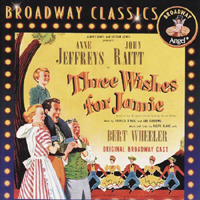
 Original Broadway Cast, 1952 (Capitol/Angel)
  (2 / 5) The singing on this recording of a misfire by Abe Burrows and Ralph Blane is so gorgeous that you’ll forgive Blane’s score for being less than riveting. Based on a Charles O’Neal novel, Three Wishes for Jamie is a nouveau operetta about a romantic Irishman who emigrates to Georgia in 1896, marries the girl of his dreams, and adopts a Gaelic-speaking son; those, after all, are his three wishes. Fortunately, the Irishman is John Raitt, and as soon as his voice soars above the staff in “The Girl That I Court in My Mind,” you know that this cast album will be more than listenable. Anne Jeffreys, in splendid voice, has even better chances: a lazy ballad titled “My Home’s a Highway,” and a sad soliloquy with intriguing harmonies, “What Do I Know?” Also on hand are Charlotte Rae as a frump, delicious in a showy piece of special material, and Bert Wheeler, who’s rather tiresome here. Working minus Hugh Martin, Blane produced pedestrian lyrics but often lilting music, especially as orchestrated by Robert Russell Bennett. The Irish blarney gets pretty thick, the story hasn’t much fire, and songs like “It’s a Wishing World” are time-passers. But as long as Raitt and Jeffreys are singing, it all passes pleasantly. — Marc Miller
The Threepenny Opera
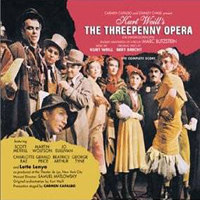 Original Off-Broadway Cast, 1954 (MGM/Decca)
  (5 / 5) This is the Carmen Capalbo production that helped put Off-Broadway on the map. One of the most important musical theater works of the 20th century, The Threepenny Opera is Marc Blitzstein’s translation of Die Dreigroschenoper, as it was titled in Germany. (Several recordings of the original German language version are available.) The powerful score is sung here by Jo Sullivan, Scott Merrill, Beatrice Arthur, Charlotte Rae, Martin Wolfson, Paul Dooley, and the one-and-only Lotte Lenya. The story, lifted freely from John Gay’s The Beggar’s Opera, concerns the ruthless Mack the Knife, his doxies, and the Peachum family, headed by Mr. Peachum, who makes tattered costumes guaranteed to garner beggars a solid income. When Kurt Weill spewed the score, he hadn’t yet begun to smooth the corners of his oom-pah-pah melodies; meanwhile, his collaborator Bertolt Brecht had honed his cynicism so that it cut as cleanly as Mack’s signature weapon. Lenya doesn’t sing much, but what she does utter our of the corner of her mouth includes the vengefully triumphant “Pirate Jenny” and “The Solomon Song.” She may also be heard with Merrill in the “Tango-Ballade” duet, and the Decca CD edition of this recording offers Lenya in a bonus track: her rendition of “Mack the Knife,” with Blitzstein on piano, taken from “an unidentified source.” Is any more reason needed to own this disc? Beatrice Arthur knocks the “Barbara Song” around, Jo Sullivan is perfect as the innocent/tarnished Polly, and Charlotte Rae is terrific as the tough Mrs. Peachum. — David Finkle
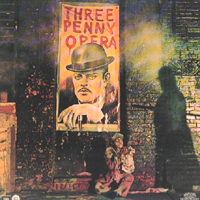 Broadway Cast, 1976 (Columbia/Masterworks Broadway)
  (4 / 5) Not unlike Show Boat and Porgy and Bess, to cite two other famous examples, The Threepenny Opera may have an official version, but does anyone know what it is? Certainly, people like Richard Foreman, who directed this still-talked-about revival at Lincoln Center’s Vivian Beaumont Theatre, have felt no compunction about taking major liberties with the show; they have freely rearranged the Kurt Weill-Bertolt Brecht song order, and have turned to various translators and adapters to do what they will with Brecht’s libretto. Here, the cast sings words by Ralph Manheim and John Willett. Too much of the time, sorry to say, those words are set more awkwardly on the notes than Brecht might have approved. (Did keeper-of-the-flame Lotte Lenya not speak up?) The cast, attempting to make fluid sense of the lyrics, fares well throughout. Raul Julia may sound less like a typical English criminal than a fellow with a Hispanic background, but he does impress as a bloke whose knife flashes quickly. The supporting cast members include some of the best talent available at the time. Maybe the most surprising is Ellen Greene, heard here before she put herself on the theater map in Little Shop of Horrors; she sings “Pirate Jenny” with glee and vengeance oozing from every note. Other standouts are Caroline Kava as the once-innocent Polly Peachum and Blair Brown as Lucy Brown. Kava sings “Barbara-Song,” bringing out the disillusion that infiltrates the young woman’s optimistic philosophy, and she joins Brown in the ironic catfight “Liebeslied.” Perhaps the most notable feature of this Threepenny Opera is how strikingly it’s conducted by Stanley Silverman, who wields a properly unforgiving baton. — D.F.
 London Cast, 1994 (JAY)
  (3 / 5) No way to know for sure without scoping every Threepenny Opera recording known to humankind, but there are those who say this is the most scatological version ever. Jeremy Sams, who directed the Donmar Warehouse production, is responsible for the lyrics, with the translation/adaptation of the book credited to Robert David MacDonald. What surely can be said of the result as heard on the cast album is that anyone who prizes English propriety is in for audible shock after shock. Of course, John Gay’s Beggar’s Opera (1728) is the Threepenny Opera inspiration, and Gay was writing at a time when Newgate Prison banter had a big influence on English vocabulary and expression. That sort of thing is abundantly present here in a liberal employment of various words that family newspapers don’t consider printable. (There are also contemporary references to the likes of Marks & Spencer.) Moreover, Sams may be the only lyricist who has rhymed “foreigner” with “coroner.” The cast is little recognized internationally, and as is often the case with British productions of musicals, they seem to have been selected primarily for their acting prowess. Nevertheless, the singing is fine. In the role of Macheath — a.k.a. Mack the Knife — we have Tom Hollander, one of England’s best actors for several decades, who slashingly delivers all the character’s razor-sharp declarations. This version of the show includes both “Pirate Jenny” and “Barbara Song” in that order, which isn’t the way it’s always done, and even more unusually, Jenny (Tara Hugo) sings what’s now familiar as “Mack the Knife.” (Prior to the chart-topping Bobby Darin recording, it was commonly called the “Moritat.”) More traditionally, Polly (Sharon Small) sings ”Pirate Jenny.” Musical director Gary Yershon gives the orchestrations lighter readings than others have done. — D.F.
3 Guys Naked From the Waist Down
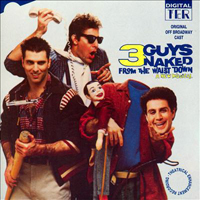 Original Off-Broadway Cast, 1985 (Polygram/JAY) (2 / 5) This three-character musical about the rise and ultimate dissolution of a gifted trio of young comedians has one big problem in that it’s never funny enough. Still, the story holds, supported by a peculiar and distinctive set of songs written in a jazz-rock fusion idiom. The music, by Michael Rupert, is always arresting if not terribly melodic, and it’s bolstered considerably by Michael Starobin’s orchestrations. The characters’ introductory songs are the most satisfactory: “Promise of Greatness” (sung by Scott Bakula) and “Angry Guy” (sung by Jerry Colker). “Operator” sets up the third comic (played by John Kassir), who is the real genius of the group; he becomes more unbalanced as the show unfolds, and he ultimately commits suicide. You may have trouble comprehending some of the lyrics, which often sound more like they were crafted for rock songs rather than theater songs. — David Wolf
3hree
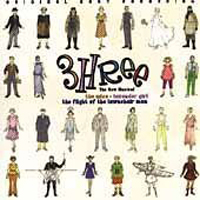 Original Cast, 2000 (DRG) (4 / 5) It would be a wonderful thing if more full-length musicals could be as melodic and charming as 3hree, the triumvirate of one-act works that director Harold Prince put together to great acclaim in Philadelphia. Each mini-musical was penned by a different team of up-and-coming young talents. Composer Laurence O’Keefe, lyricist Nell Benjamin, and librettist Julia Jordan wrote the first and most satisfying piece, the darkly comic “The Mice.” It features John Scherer as an exterminator who goes to extreme measures to escape his shrewish wife, played by the delightfully evil Jessica Molaskey. Less impressive overall is the show’s middle section, the ghostly love story “Lavender Girl,” but songwriter John Bucchino’s talent is evident here, notably in the pretty waltz “Dancing.” 3hree‘s showcase piece, “Flight of the Lawn Chair Man,” is based on the true story of a man who soared into the sky on a lawn chair lifted by toy balloons. Songwriter Robert Lindsey Nassif and book writer Peter Ullian’s fanciful work brings Leonardo DaVinci and Charles Lindbergh into the action for comic touches, but it’s in the score’s ballads that Nassif really shines. Christopher Fitzgerald and Donna Lynne Champlin perform “Tiny” and “The Air Is Free” with great sensitivity and great power, respectively. — Brooke Pierce
Thou Shalt Not
 Original Broadway Cast, 2001 (Swing Music)
  (1 / 5) In theory, it was an inspired idea to have Harry Connick, Jr. write the score for this Susan Stroman-David Thompson adaptation of Thérèse Raquin, Émile Zola’s tale of love, crime, and guilt. Since the steamy French narrative was to be transplanted to New Orleans, Connick, who was born and raised there and has a command of the city’s indigenous musical idioms, seemed the ideal choice for the project. In practice, however, that choice proved less than ideal. Almost none of the music heard on this hour-plus recording is spicy; most of it is pallid. But the blame for this shouldn’t be pasted on Connick exclusively, as he had Thompson’s inept libretto to work with, and he also had to suffer two miscast leading players interpreting his work. As Therese and her illicit lover, Laurent, Kate Levering and Craig Bierko are as passionate as two glasses of tepid tap water. Norbert Leo Butz, as Therese’s doomed hubby, Camille, delivers two songs that do have a little something extra: the reprise of “It’s Good to Be Home” and “Tug Boat” (Levering duets on the latter). Debra Monk, as Camille’s mother, gets to warble a couple of forgettable Connick tunes. No one who listens to Thou Shalt Not once will want to listen twice. — David Finkle
Thoroughly Modern Millie
 Film Soundtrack, 1967 (Decca/MCA) (1 / 5) There’s no explanation for this bizarre camp exercise, which was designed to spoof the 1920s. Julie Andrews and Mary Tyler Moore play flappers seeking their fortunes in the big city, unaware that their hotel is a front for a kidnapping ring run by white-slavers led by Beatrice Lillie (absent on the soundtrack recording, because she doesn’t sing a note in the film). Carol Channing sings “Do It Again” while being shot out of a cannon, and Andrews performs something called the “Jewish Wedding Song.” Thoroughly Modern Millie is barely a musical; it’s just a mishmash of a few old and new numbers scattered about. The album is padded with a lengthy overture, an intermission medley, exit music, and two cuts of the admittedly catchy title tune by James Van Heusen and Sammy Cahn. The ballad “Jimmy,” by Jay Thompson, is also quite good. After that, you’re on your own. Love interest James Fox can be heard talking but not singing (he was dubbed by Jim Bryant) in the Van Heusen-Cahn dance number “The Tapioca.” Channing’s rendition of “Jazz Baby” has probably been studied by drag queens around the globe, and that “Jewish Wedding Song” is beyond description; if they ever do a film remake of Fiddler on the Roof, don’t expect Andrews to turn up as Golde. — David Barbour
 Original Broadway Cast, 2002 (RCA) (1 / 5) This show is faux-’20s, faux-camp, faux-everything. The book by Richard Morris (screenwriter of the film version) and Dick Scanlan focuses on the innocent Millie, played by Sutton Foster, whose steely belt and lack of warmth are major debits. Arriving in Manhattan from Kansas, Millie is determined to be “modern” and to find herself a rich husband. Instead, she’s chased by the feckless Jimmy (Gavin Creel) and menaced by the faux-Oriental white-slaver Mrs. Meers (Harriet Harris). The stage score includes “Jimmy” and the title song from the film, plus about 10 new songs (by Scanlan and composer Jeanine Tesori) and borrowings from other sources. Less-than-scintillating comedic turns include a rendition of “Mammy” in Chinese and lovers who burst into “Ah! Sweet Mystery of Life.” Harris wrestles with “They Don’t Know,” one of the flattest comedy numbers in years. Creel gets better songs, including the jazzy “What Do I Need With Love?” and the enjoyable “I Turned the Corner.” Sheryl Lee Ralph, in a rewritten version of the Channing role, sings the clinker “Only in New York” and the catchy “Long as I’m Here With You.” The production number “Forget About the Boy,” in which Millie renounces men, is toe-tapping fun; but Angela Christian and Marc Kudisch, as Millie’s best friend and boss, have to contend with lackluster material. The orchestrations, by Doug Besterman and Ralph Burns, often oversell the songs, particularly in the pumped-up 11-o’clocker “Girnme Gimme.” — D.B.
This Is the Army
 Original Broadway Cast, 1942 (Decca) (2 / 5) Shortly after the start of World War II, Irving Berlin created a new version of his World War I revue Yip! Yip! Yaphank. The resulting show, This Is the Army, was incredibly successful: It played to turn-away business on Broadway before traveling the country, serving as the basis of a Hollywood film, and then touring cities and army bases all over the world for the duration of the war. All proceeds from ticket sales, music royalties, movie profits — about $10 million in all — were donated to the Army Emergency Relief Fund. But as acclaimed as the show was onstage, it simply doesn’t come across on the cast recording. There are nine songs here, and the best of them are the two that have become standards: “This Is the Army, Mr. Jones” and “Oh, How I Hate to Get Up in the Morning,” the latter sung by Berlin himself. Other songs, including the attractive “I’m Getting Tired So I Can Sleep,” are performed so squarely that they seem nearly comical. To fill out its CD release of the album, Decca included the original cast recordings of songs from Harold Rome’s returning-G.!. revue Call Me Mister (which are fun) and four choral selections from Moss Hart’s Air Force drama Winged Victory (which are not). — David Wolf
The Thing About Men
 Original Off-Broadway Cast, 2004 (DRG) (3 / 5) A sort of musical fairy tale for adults, The Thing About Men is based on Doris Dorrie’s German film Männer. It shows us what happens when a philandering advertising executive (Marc Kudisch) becomes the roommate of the bohemian artist (Ron Bohmer) with whom his wife (Leah Hocking) is having an affair. With music by Jimmy Roberts and lyrics and book by Joe DiPietro, the show is an ingenious marriage of uptown and downtown sensibilities. The first act finale, “Downtown Bohemian Slum,” brings a breathless theatrical excitement to the recording. The good date/bad date songs “Me, Too” and “One-Woman Man” are comic highlights, thanks to the performances ofJennifer Simard and Daniel Reichard, who function as an all-purpose ensemble. There are also some introspective songs: “Take Me Into You,” “The Greatest Friend,” and “The Better Man Won.” The opening and closing numbers, with clever orchestrations by Bruce Coughlin, are good examples of the score’s unique musical language. Hocking gets the best song of all, “Because.” — Matthew Murray
They’re Playing Our Song
 Original Broadway Cast, 1978 (Casablanca) (2 / 5) Neil Simon based his book for They’re Playing Our Song on the real-life relationship of the show’s composer and lyricist, Marvin Hamlisch and Carole Bayer Sager. The result was a hit musical with catchy, pop-oriented tunes for the leading characters, Vernon and Sonia, and their alter egos — three boys for him, three girls for her. Robert Klein and Lucie Arnaz, who created the roles on Broadway, must have been better onstage than they are on this recording. Here, Klein is mannered and lacks a strong singing voice; his pseudo-pop sound doesn’t put the songs across. Arnaz’s vocals are scratchy and short on vulnerability. Still, the energy of this recording is unquestionable. Conductor Larry Blank and the back-up vocalists are first-rate. There is almost no dialogue to put the songs in context, but the score contains some solid numbers. Both Vernon’s and Sonia’s versions of the title song are witty, and they also have their own separate versions of the introspective “If He Really Knew Me.” “Fallin’ ” is presented as one of Vernon’s hit compositions, while the strong ballad “I Still Believe in Love” is his collaboration with Sonia. Another nice song of Sonia’s is “Just for Tonight.” — Jeffrey Dunn
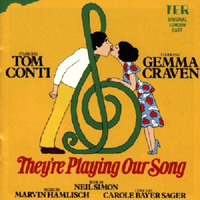 Original London Cast, 1980 (Chopper/TER-JAY) (4 / 5) It’s hard to define just why this recording is so far superior to the original. Tom Conti is primarily a non-musical actor, and Gemma Craven is better known as a soprano than a belter, but the two use all of their acting and vocal abilities to create fully realized characters. So, even though the London recording contains no more dialogue than the Broadway album, it’s far more theatrical. Conti immediately captures us with his touching performance of “Fallin’.” He and Craven deliver their respective versions of the title song with wonderful abandon, and the fact that their sensitive performances of “If He/She Really Knew Me” are programmed on the album as they are in the show only enhances their impact. Especially noteworthy here is the performance of “I Still Believe in Love”; this is supposedly the last song that Vernon and Sonia wrote before their breakup, and you can really hear that in Craven’s voice. The six alter egos are fine, and the orchestra sounds very good, but Craven and Conti are what make this disc spin. — J.D.
 Original Australian Cast, 1980 (Festival Records) (2 / 5) They’re Playing Our Song became an international hit: Germany, Italy, Hungary, Austria, Mexico, Holland, and Australia all found the show to be a fine star vehicle, and some of those productions yielded cast albums with the score sung in languages other than English. Down Under, Vernon and Sonia were played by John Waters (an Australian film actor, not the American film director!) and Jacki Weaver (an Aussie TV star). Neither of them is an accomplished vocalist, but both are excellent actors, and their charms do come across on this recording. The alter egos here are very strong singers, perhaps to compensate for the fact that the leads are not. Overall, the performance is spirited and more than pleasant. — J.D.
Texas, L’il Darlin’
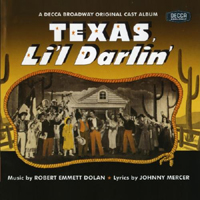 Original Broadway Cast, 1949 (Decca) (3 / 5) Although it is now forgotten, this mild satire on Texas politics ran out the season, and a near-hit song or two came out of its score by composer Robert Emmett Dolan and lyricist Johnny Mercer. Originally released on 78s that preserved only about half of the score, the Texas Li’l Darlin’ cast album is a delectable time warp, transporting listeners to a bustling Broadway that was the Hit Parade’s primary source. “A Month of Sundays” is as typical as a 1949 ballad can get, with a pleasant melody and an all-purpose Mercer lyric; but “Hootin’ Owl Trail” is a real rediscovery, an irresistible easy-listener. So is “Affable, Balding Me,” a duet for Mary Hatcher, a spirited ingenue with a sweet soprano, and her suitor Fredd Wayne, who woos her with lyrics from Mercer’s top drawer. The lyrics of “Politics” are just as wonderful, filled with infectious rhymes such as “sonnets,” “bluebonnets,” and “Kostelanetz.” The no-name cast does very well with the material, which is paired with songs from the soundtrack of the film You Can’t Run Away From It on Decca’s CD. — Marc Miller
Tenderloin
 Original Broadway Cast, 1960 (Capitol/Angel) (4 / 5) It all starts with a marvelous opéra bouffe-style overture that sets the tone perfectly for this tale of the Tenderloin, New York’s most notorious neighborhood during the final decade of the 19th century. The area’s low-life denizens and a preacher determined to get rid of them are at the heart of the story, which unfolds excitingly through Jerry Bock’s music and Sheldon Harnick’s lyrics. From the rollicking “Little Old New York” and the wise “Reform,” sung by the ladies of the evening, to the luscious art song “Artificial Flowers” to the ragtime “Picture of Happiness” to some brilliantly constructed musical scenes, Tenderloin boasts one of the team’s top scores. The only problems with the original cast album are the two leading men: Maurice Evans gives a one-note performance as the preacher bent on banishing vice and corruption, and Ron Husmann as a scandal-sheet journalist has an arch singing style that displays no personality whatever. — Peter Filichia
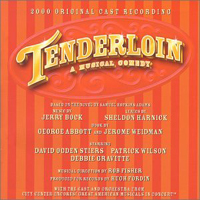 Encores! Concert Cast, 2000 (DRG) (5 / 5) This is one of the rare revival cast albums that’s better than the original. It offers crisper performances and sound, as though the singers had been recorded closer to the microphones. In the role of Tommy Howatt, Patrick Wilson has a much more freewheeling style than Ron Husmann, especially in “Picture of Happiness,” and a reprise of that terrific song adds to the fun of the recording. David Ogden Stiers comes across as a sincere preacher rather than the judgmental one portrayed by Maurice Evans of the Broadway cast. Another plus is the inclusion of introductory dialogue for many of the songs, none of which may be found on the original album. — P.F.
Tell Me More
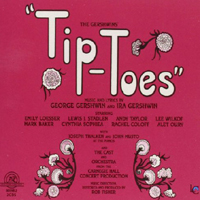 Studio Cast, 1998 (New World, 2CDs) (3 / 5) This was one of the Gershwins’ middling, mid-1920s musicals, chock-a-block with mistaken identities, society marriages, and principal comics delivering numbers like “In Sardinia on the Delicatessen.” The Ira Gershwin-Buddy DeSylva lyrics are lighthearted and expert. With Tommy Krasker producing, Rob Fisher conducting, and Russell Warner orchestrating, George Gershwin’s melodies are in safe hands here, even if the orchestra of seven can’t capture the lush 1920s sound that’s called for. But the score is hardly the supreme achievement of the Gershwins in their Jazz Age phase; the outstanding numbers are “Kickin’ the Clouds Away” and the lilting “Love Is in the Air,” yet the hoped-for-hit ballad “Why Do I Love You?” sank so quickly that, two years later, Jerome Kern and Oscar Hammerstein could appropriate the title for one of their Show Boat songs with no fear of confusion. In a high-profile cast, comic-relief guy David Garrison is given more material than such roles usually command, and he’s terrific throughout. But stalwarts Christine Ebersole and Patrick Cassidy are underutilized, and the delectable Sally Mayes is out of synch with the casual vocal demeanor of flapper soubrettes. The young lovers, Diane Fratantoni and Philip Chaffin, don’t do much with the substandard Gershwin ballads, and even conductor Fisher seems to nod off a little in the ensembles. (Note: This two-CD set also includes the score of the Gershwins’ Tip-Toes, a more well known title and therefore the main focus of the recording.) — Marc Miller
The Tap Dance Kid
 Original Broadway Cast, 1984 (Polygram) (2 / 5) Onstage, it was an entertaining, beautifully put together, old-fashioned show, but the cast album of The Tap Dance Kid reveals an uninteresting score. The musical’s strongest component is its book, written by long-time Broadway stage manager Charles Blackwell. The story centers on an upper-middle-class black family ruled by a tyrannical father (Samuel E. Wright) whose 10-year-old son, Willie (Alfonso Ribeiro), wants to be a tap dancer, following in the footsteps of his uncle (Hinton Battle). The lawyer-father’s adamant opposition to Willie’s career choice, plus other conflicts within the family involving the boy’s sympathetic mother and his outspoken older sister, drive the plot. The original cast members — those already named, plus Hattie Winston, Jackie Lowe, and Alan Weeks — give fine performances, and the songs, by composer Henry Krieger and lyricist Robert Lorick, help tell the story logically but without any particular inspiration. Here is an example of a musical whose sum is greater than its individual parts. — David Wolf
Tallulah
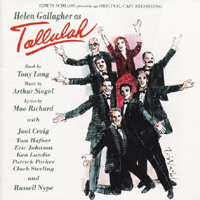 Original Off-Broadway Cast, 1983 (Painted Smiles) (1 / 5) One of the most colorful personalities in show business history, Tallulah Bankhead was so imitable that any impressionist worth his or her salt could evoke her with one growled “Dahhling!” Small wonder, then, that the musical Tallulah opens with a raft of male Bankheads going through the expected baritone-drawl motions. More surprising is the fact that the ambitious show, which ran briefly Off-Broadway, tried to be a full-scale biography of this magnetic and sometimes outrageous woman. Instead, it comes across as a sort of scrapbook-cum-A&E biography with songs that gaily (ahem!) skim the surface of Bankhead’s life without providing any real insight or substance. Arthur Siegel wrote a hummable score, and Mae Richard’s lyrics are generally serviceable, but the prime asset here is Helen Gallagher in the title role. A true musical comedy pro, she offers a decent imitation of Tallulah while singing far better than the real one ever could. (Oddly enough, Gallagher sings the curtain number, “I’m the Woman You Wanted,” in her own higher voice, not in Bankhead’s way-down tones.) Russell Nype appears to adequate effect as Tallulah’s senator father, and everyone works as hard as possible under the modest circumstances. But as Tallulah herself might have said, “There is less here than meets the eye.” — Richard Barrios
Taking My Turn
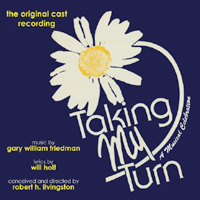 Original Off-Broadway Cast, 1983 (DRG) (4 / 5) This show managed only a brief run — not because there was anything wrong with the writing or the production, but perhaps because the general public didn’t think it wanted to see a musical about old people. Well, that was their loss: Taking My Turn is full of wonderful songs by composer Gary William Friedman and lyricist Will Holt. The show has no over-arching plot; it’s really a revue about various facets of the lives of seniors, from retirement to sex after 60, performed by an excellent cast. The famous 1940-’50s pop singer Margaret Whiting and film musical dubber extraordinaire Marni Nixon were still in terrific voice at the time of this show and the cast recording. Nixon shines in “Vivaldi,” about a nighttime concert in Central Park, while Whiting brings great depth of feeling to “In April,” a mother’s lament over the death of her son. The female company also includes Cissy Houston (mother of Whitney) and Sheila Smith (who had been seen on Broadway in such shows as Follies and Sugar). The men — Tiger Haynes, Victor Griffin, Mace Barrett, and Ted Thurston — are equally strong. — Michael Portantiere
Taking a Chance on Love: The Lyrics & Life of John Latouche
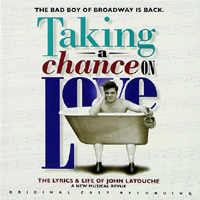 Original Off-Broadway Cast, 2000 (Original Cast) (5 / 5) This is a gilt-edged tribute to lyricist John Latouche, who wrote in a number of genres and had only occasional good fortune in any of them before dying at age 41. Latouche’s collaborators for musical theater scores were composers Vernon Duke (Cabin in the Sky), Jerome Moross (The Golden Apple), and Leonard Bernstein (Candide); with Douglas Moore, he wrote the opera The Ballad of Baby Doe. “Take Love Easy,” with music by Duke Ellington, is one of Latouche’s best songs that was not part of a show score. Spreading himself around and then dying young worked against Latouche being widely remembered; but this revue, lovingly put together by Erik Haagensen, goes a good distance toward documenting the gifted lyricist’s rightful place in musical theater history. The story of the man’s life, including his extensive homosexual experiences, is told between the songs, 18 of which were unrecorded until this cast album came along. Latouche’s work is sophisticated — for example, he rhymes “Oscar Levant’s room” with “Grant’s Tomb” in a song called “I’ll Take the City” — but can lean toward the rustic when appropriate, as in some songs from Cabin in the Sky. His biggest hit was surely “Taking a Chance on Love,” for which he collaborated with Ted Fetter on the lyrics. But some aficionados will point to “Lazy Afternoon” (from The Golden Apple), presented in the revue as a love song between Latouche and his late-in-life partner, Kenward Elmslie, as the pinnacle of his achievement. The cast, all of them up to all challenges, includes Eddie Korbich, Terry Burrell, Donna English, and Jerry Dixon. — David Finkle
Take Me Along
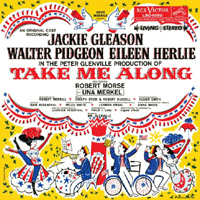 Original Broadway Cast, 1959 (RCA) (4 / 5) Eugene O’Neill’s uncharacteristic comedy Ah, Wilderness! seemed a natural candidate for stage musical treatment — even though the MGM musical Summer Holiday, based on the same play, hadn’t been a big hit a decade earlier. Bob Merrill, who had skillfully turned O’Neill’s Anna Christie into the Gwen Verdon vehicle New Girl in Town, wrote the music and lyrics for Take Me Along, which David Merrick presented with a ticket-selling cast: Jackie Gleason (a huge TV star) as Uncle Sid; Walter Pidgeon (a Hollywood star in his Broadway musical debut) as Nat Miller; the well-known British actress Eileen Herlie as Lily; and former Hollywood soubrette Una Merkel as Essie Miller. Robert Morse, following up on his successes in The Matchmaker and Say, Darling, made a big splash in the juvenile role of Richard Miller. Take Me Along has all the elements of an old-fashioned show with a well-written score, and Lehman Engel’s musical direction is excellent throughout. Highlights include “I Would Die,” Morse’s duet with Susan Luckey as his beloved Muriel; “Staying Young,” Pidgeon’s hearty song about “today’s world” (1906); “I Get Embarrassed,” Gleason’s hilarious duet with Herlie, which is immediately followed by the latter’s loving, anticipatory “We’re Home”; and the vaudeville-inspired title song, with Gleason and Pidgeon stepping out in straw boaters and canes on their way to a Fourth of July picnic. One of the strongest numbers is the romantic ballad sung by young Richard, who can barely wait until “Nine O’Clock,” when his beloved will meet him. Listen to Morse here and you’ll get a very good idea of the innocence, charm, and heart that pervaded Broadway musicals of this era. — Jeffrey Dunn
Taboo
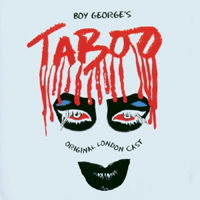 Original London Cast, 2003 (First Night) (2 / 5) Who would have imagined Boy George as a theater composer? Yet with this show, partly about George’s rise to fame in the London club scene of the early 1980s, that’s what the pop/rock star proved himself to be. As a bio-musical, what makes Taboo unusual is that its score does not consist exclusively of staples from an existing catalog. While one number from George’s Culture Club days, “Do You Really Want to Hurt Me?”, is included, the rest of the songs are original and surprisingly attractive, written by George in collaboration with John Themis, Kevan Frost, Richie Stevens, and others. “Stranger in This World” is a fine song for the young George, given an impressive vocal imitation by Euan Morton. “Guttersnipe” is performed by Morton with Mark McGee as the transvestite Marilyn, and “Love Is a Question Mark” is an insightful duet sung by Luke Evans and Dianne Pilkington. Yet the show lacks focus: It covers not only George’s ascent and subsequent fall from grace, but so many other lives and stories that we can’t latch onto anyone of them for very long. Among the people portrayed are performance artist Leigh Bowery (Matt Lewis and George himself share Bowery’s songs), nightclub promoter Philip Sallon (Paul Baker), and photographer Billy (Evans) and his troubled family (Gemma Craven and Mark White). — Matthew Murray
 Original Broadway Cast, 2004 (DRG) (3 / 5) Financed and promoted by an enthusiastic Rosie O’Donnell, a revised version of Taboo came to Broadway but lasted there only a few months. As heard on this recording, the musical still suffers from problems in terms of its dramaturgy, despite librettist Charles Busch’s rewrite of Mark Davies’ original book to help clarify the story line. Musical theater veterans Raúl Esparza and Liz McCartney narrate the show as a flashback, and the peripheral characters are compressed into a central group, with the songs more skillfully divided among the principals. There are two holdovers from the London cast: Euan Morton, who sounds even better here as Boy George; and George himself, who’s effective if a bit stilted as Leigh Bowery. The fine supporting cast includes Sarah Uriarte Berry, Jeffrey Carlson, and Cary Shields. Among the highlights of this recording are Esparza’s songs, the decadent opening sequence “Freak”/”Ode to Attention Seekers” and the shattering “Petrified”; McCartney’s searing “Talk Amongst Yourselves”; Berry’s reflective “Il Adore”; Shields’ tumultuous “I See Through You”; and “Love Is a Question Mark,” a dueling quartet for Morton and Shields and George and Berry. There’s also an effective new finale, “Come On in From the Outside,” and gratuitous inclusions of the Culture Club standards “Church of the Poison Mind” and “Karma Chameleon.” Intelligently produced by John McDaniel and Kevan Frost, this recording is a significant improvement over the London cast album. — M.M.
Man With a Load of Mischief
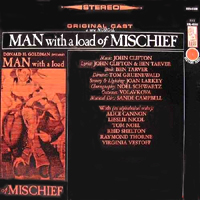 Original Off-Broadway Cast, 1966 (Kapp/no CD) (4 / 5) For a tantalizing glimpse of the talent and creativity spawned Off-Broadway in happier times, seek out this 1966 hit, a Restoration-style comedy (though based on a minor 20th century play) that is by turns bawdy, witty, satirical, and as romantic as fine Madeira shared by the fire. It led observers to expect great things of composer-lyricist John Clifton (librettist Ben Tarver helped on the lyrics), whose melodies and harmonies are distinctive and alluring without straying too far from tradition. Sadly, one later Off-Broadway fiasco aside, Clifton’s subsequent work for the theater was minimal. That’s a pity, since vocal showpieces such as “Lover Lost,” “Goodbye, My Sweet,” and “Once You’ve Had a Little Taste” mark their composer as a natural musical storyteller with unfailing instincts as to which dramatic moments should be turned into song. On the cast album, Reid Shelton’s tenor sails easily above the staff in “Hulla-Baloo-Balay” and “Come to the Masquerade.” Virginia Vestoff acts as well as she sings in the title track and “A Wonder.” Raymond Thorne exudes patrician hauteur in “You’d Be Amazed” and “Forget!” The other three — Alice Cannon, Tom Noel, and Lesslie Nicol — are less skilled vocally, but well cast in their roles. This recording is long overdue for a digital transfer. — Marc Miller
Swingtime Canteen
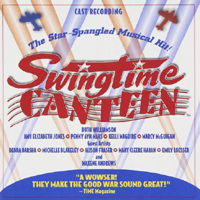 Studio Cast, 1997 (Performing Arts Preservation Assn.) (3 / 5) When producer William Repicci caught a performance of a work in progress by Linda Thorsen Bond that was being staged in Midland, Texas, he was so impressed with the material that he recruited playwright Charles Busch to collaborate with him and Bond in refining the embryonic show. The result of their efforts is an all-female musical comedy set in London during World War II as a company of American singers, headed by an aging movie star, embarks on a U.S.O. tour of the battlefront. The Off-Broadway production of Swingtime Canteen, featuring Alison Fraser and Emily Loesser, had a nine-month run that included replacement stints by Busch — in drag, of course — playing the movie star, and a surviving Andrews sister, Maxene, playing herself. This recording features original cast members plus others — Ruth Williamson, Amy Elizabeth Jones, Penny Ayn Maas, and Kelli Maguire — from subsequent regional productions of the show. The voice of Maxene Andrews opens the recording and sets the scene. Others billed as “guest artists” include Mary Cleere Haran, who blends classic and contemporary styles in “I’m Old Fashioned” (Jerome Kern-Johnny Mercer); and Alison Fraser, who delivers “A Nightingale Sang in Berkeley Square” (Eric Maschwitz-Manning Sherwin) with exquisite simplicity. The album reaches its apex when Emily Loesser caresses “How High the Moon” (Morgan Lewis-Nancy Hamilton) with bluesy inflections. — Charles Wright