

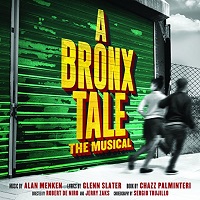
 Original Broadway Cast, 2017 (Ghostlight)
  (2 / 5) In 1989, Chazz Palminteri told the story of his youth in the Bronx as a one-man play, chronicling his conflicting loyalties to his working-class father, Lorenzo, and the charismatic local mob boss, Sonny. A 1993 film version starred Palminteri as Sonny and Robert De Niro, who directed, as Lorenzo. For the musical, Palminteri penned the libretto while De Niro co-directed with Broadway veteran Jerry Zaks. It conjures up memories of Jersey Boys (music, gangsters, lots of narration) and West Side Story (gritty neighborhoods in ethnic conflict, lovers from opposite sides). Alan Menken’s versatile score, evoking nearly every style of music heard on a transistor radio in the sixties, is the most enjoyable facet of A Bronx Tale. The composer returns to his Little Shop of Horrors doo-wop roots in the effective opener, “Belmont Avenue,” as Calogero (Bobby Conte Thornton) vividly describes the Italian-American neighborhood while “next year’s Frankie Vallis” harmonize on the corner. There’s a Sinatra-style swing tune (“One of the Great Ones”) for Sonny (a gruff yet sexy Nick Cordero), driving funk in “Hurt Someone,” a pop love duet (“Out of Your Head”), and Motown soul for the black neighborhood kids (“Webster Avenue”). Unfortunately, other than in the scene-setting descriptive numbers, Glenn Slater’s lyrics often rely on clichés and sentimentality. “Look To Your Heart” is a maudlin piece of advice given by Lorenzo (an underused Richard H. Blake) to young Calogero (Hudson Loverro, who holds his own with his elders); Lorenzo’s wife (Lucia Giannetta) reprises it, and the inescapable title phrase worms its way into other songs. Thornton and Ariana DeBose handle “Out of Your Head” well enough, but the lyrics could fit any generic pair of star-crossed lovers, while Cordero’s“Mack the Knife”-like ditty about “Nicky Machiavelli” is marred by some painful rhymes and syntax. Slater’s on better footing in “I Like It,” as young Calogero revels in the respect, free Cokes, and comic books that come with being Sonny’s favorite. The show concludes with “The Choices We Make,” and Lorenzo says, “It’s just another story.” One might wish it were told with more originality and verve. — Laura Frankos
Once
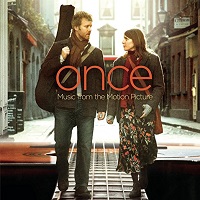 Film Soundtrack, 2007 (Columbia)
  (4 / 5) This is the deservedly popular soundtrack album of a gorgeously bittersweet indie film, set in Dublin, about the brief but intense romance and songwriting partnership of an Irish busker (Glen Hansard) and a Czech immigrant (Marketa Irglova). Their love affair ends due to other entanglements, but not before they record a demo together — and he buys her a piano as a parting gift. However close to real life the events and characters of the story may or may not be, the whole thing is lent a wonderful air of authenticity by the fact that all of the songs heard in the film and on the recording were written and performed by Hansard and Irglova. The gentle, simple, almost hypnotically lovely ballad “Falling Slowly” was the movie’s big hit, charting in Ireland, Canada, the U.S. and Brazil, and winning an Academy Award for Best Original Song. But there are several other delights here, such as “Say It To Me Now,” “Leave,” and the deliciously quirky “Broken Hearted Hoover Fixer Sucker Guy.” (The Hansard character repairs vacuum cleaners to earn a living.) This recording is eminently listenable and thoroughly enjoyable in its own right, aside from its interest as the soundtrack of a film that served as the basis for one of the most unexpected Broadway musical hits of its era. – Michael Portantiere
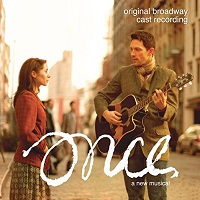 Original Broadway Cast, 2012 (Masterworks Broadway) (4 / 5) It probably never occurred to most fans of the film that a stage musical version of Once would ever be created or that it would be successful anywhere, let alone on Broadway, which generally tends to traffic in larger, faster-paced, less subtle entertainments. But the brief-candle romance of the lovers at the center of the story is potent enough that one could envision such a musical connecting with audiences if pains were taken to assure that the intimacy of the piece was retained. Which is exactly what happened. With a book by Enda Walsh (based on the screenplay by John Carney) and a score comprised almost entirely of the Hansard-Irglova songs from the movie, Once premiered at the American Repertory Theatre (ART) in Cambridge, MA in 2011 before transferring to the New York Theatre Workshop and then to Broadway, where it collected a bunch of 2012 Tony Awards — including Best Musical — and achieved a three-year run. Among the several wise decisions made in adapting the film to the stage were Bob Crowley’s unit set design, which created the feel of a homey Irish pub; and the fact that the cast also served as the onstage orchestra. Steve Kazee as “Guy” is a real charmer in these songs, sounding far more comfortable with this style of music than that of his previous big Broadway lead, Starbuck in 110 in the Shade. He and Cristin Milioti as “Girl” make beautiful music together in “Falling Slowly,” “If You Want Me,” and “When Your Mind’s Made Up.” She also does a persuasive job with “The Hill,” though some may find her rather thick Czech accent a bit distracting on repeated listening. The ensemble of actors/musicians includes familiar names such as as David Patrick Kelly and Anne L. Nathan, along with some super-talented newcomers. Cheers to them as well as to director John Tiffany and musical supervisor Martin Lowe for not radically changing or distorting Once in the stage transfer. – MP
Rothschild and Sons
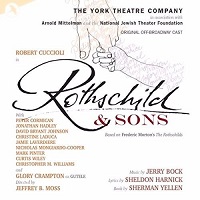 Off Broadway Cast, 2016 (Jay Records)
  (3 / 5) Here is a major revisal of the 1970 musical The Rothschilds, cut down to one-act and including several previously unheard Jerry Bock-Sheldon Harnick songs, plus some revisions by Harnick. The romance for son Nathan and the big ensemble numbers are gone, and the political leaders’ roles have been trimmed. The cast totals 11, compared to more than 30 on Broadway; when Mayer Rothschild (Robert Cuccioli) sings a shortened version of “He Tossed a Coin,” it’s clear that the Frankfurt fair isn’t crowded. Joseph Church has reorchestrated the score for four players, compared to Don Walker’s sumptuous originals. What if anything in this York Theatre Company production compensates for the loss of size and spectacle of the original? Lyricist Harnick and librettist Sherman Yellen (composer Bock died in 2010) had long wanted to refocus the story on the Rothschild family and less on the sprawling European setting. In this, they succeeded; Rothschild and Sons is an intimate piece that emphasizes feelings and relationships. Mayer’s wife, Gutele — a moving Glory Crampton — is a more significant presence as the action unfolds through her memories. She grows from being satisfied with “One Room” to standing strong against Metternich in the reprise of the driving anthem “Everything.” Crampton also gets the best of the added songs, “Just A Map,” in which she frets over her sons as they crisscross wartime Europe. Nathan (Christopher M. Williams) has lost his silly patter number, but here he makes mistakes on arrival in England (“Tea’s Hot”) and then butts heads with his father in “He Never Listens.” The heart of the show is Mayer, the father. Cuccioli’s voice sounds terrific — his “In My Own Lifetime” is rousing — yet he lacks the warmth and humor that Hal Linden found in the character. On the one hand (as another Bock-Harnick character said), it’s wonderful that this revisal may grant new life to the show. But on the other hand, while there are plenty of musicals about families, how many are as daring as The Rothschilds — set in the chaos of late 18th-early 19th century Europe, about a family relying on financial maneuverings and political cunning to survive, with a rich score evoking late Baroque and classical masters? Stick with the original. — L.F.
Holiday Inn, The New Irving Berlin Musical
 Original Broadway Cast, 2016 (Ghostlight) (2 / 5) In 1939, Irving Berlin imagined a themed revue set at an inn that opens only on holidays, with songs highlighting seasonal celebrations. It didn’t make it to the stage, but the idea became the basis for the 1942 film Holiday Inn, starring Bing Crosby and Fred Astaire, and featuring the biggest-selling song in history, “White Christmas.” Success breeds success, so the inn setting, Crosby, and that song reappeared in the 1954 film White Christmas. Both movies became perennial holiday offerings on television, prompting theatrical adaptations. Berlin himself recycled songs like aluminum cans; the original Holiday Inn lifted “Easter Parade” and “Blue Skies” from earlier shows. In similar fashion, librettists Gordon Greenberg (who also directed) and Chad Hodge ransacked Berlin’s catalog for gems to shoehorn into the plot of the stage version. The nine interpolated songs sometimes work (“Shaking the Blues Away” as an obvious cheer-up number) and sometimes don’t (“Heat Wave” sounds out of place, “Cheek to Cheek” is sadly truncated). Three songs from the film were cut: “Lazy,” replaced by “The Little Things In Life,” a more satisfactory “I want” song for Jim Hardy, along with the Presidential tributes “I Can’t Tell a Lie” and the minstrelsy “Abraham.” The plot largely follows that of the movie, with nightclub performers Jim (Bryce Pinkham), his girlfriend Lila (Megan Sikora), their pal Ted (Corbin Bleu), and Connecticut gal Linda (Lora Lee Gayer) variously torn between their desires for show biz, settling down, and each other. Pinkham gives Jim an earnestness (“Blue Skies,” “It’s a Lovely Day Today”) that distances him from Crosby’s laid back portrayal. He wisely keeps “White Christmas” simple, with Gayer delicately joining him. The latter conveys Linda’s sweetness in “Nothing More to Say,” one of the lesser-known tunes. In contrast, Sikora’s Lila is sometimes just too brassy, and the talented Megan Lawrence is wasted here, squeaking weirdly on the title song. Bleu ably handles the production numbers, including the literally explosive “Let’s Say It With Firecrackers,” but he doesn’t have much of a character to develop. Larry Blank’s exuberant orchestrations generally fit the material, but there are some odd changes in tempo during “Cheek to Cheek,” and “Easter Parade” sounds lethargic. — Laura Frankos
Irving Berlin’s White Christmas
 Premiere Recording, 2006 (Ghostlight) (3 / 5) Librettists David Ives and Paul Blake based this Irving Berlin songfest on the 1954 film of the same title, which starred Bing Crosby and Danny Kaye as ex-G.I.s, now performers, saving their former general’s failing Vermont farmhouse by — what else? — putting on a show. Ives and Blake altered some characters and eliminated four songs (“Heat Wave,” “Gee, I Wish I Were Back in the Army,” that unfortunate minstrel medley, and the campy “Choreography”) while adding eight Berlin classics. These numbers are better integrated into this show than those used in the later Irving Berlin’s Holiday Inn; pairing 1933’s “How Deep Is the Ocean?” with “Love, You Didn’t Do Right By Me” is particularly effective. “Happy Holiday” provides a quick jump from 1944 to 1954, and “Falling Out of Love Can Be Fun,” lifted from 1949’s Miss Liberty, is a kicky piece for the three women. “Love and the Weather” and “I’ve Got My Love to Keep Me Warm” also fit well, and the former gives some character insights. “Let Yourself Go,” however, has a mid-thirties vibe doesn’t sound quite right for a mid-fifties setting. White Christmas debuted at the St. Louis Muny in 2000, followed by a production in 2004 in San Francisco and a Broadway holiday run in 2008. This recording features the San Francisco leads — Brian d’Arcy James and Jeffry Denman as Bob and Phil, with Anastasia Barzee and Meredith Patterson as their girls, sisters Betty and Judy — plus Muny original Karen Morrow as Martha, the general’s aide. It’s a pleasure to hear d’Arcy James’s rich baritone in classics such as the title tune, “Blue Skies,” “Count Your Blessings,” and“How Deep Is the Ocean?” Barzee’s versatility is apparent; she’s wistful in “Love, You Didn’t Do Right By Me,” crackling with Patterson in the Andrews Sisters-styled “Sisters,” and tender in the reprise of “How Deep.” Patterson and Denman have a lot of fun in “Snow” and the tap extravaganza “I Love A Piano.” (The latter was written in 1915, but it’s timeless.) Morrow instills comic zest into the old Al Jolson hit “Let Me Sing and I’m Happy,” revealing Martha’s desire to perform, yet she manages not to become a caricature. The recording benefits from a sizable orchestra led by Rob Berman, with Larry Blank’s orchestrations intentionally sounding like a fifties movie musical. A solid choice for Berlin fans or those seeking something for their holiday playlist. — Laura Frankos
It Shoulda Been You
 Original Broadway Cast, 2015 (Ghostlight) (2 / 5) Weddings have inspired musicals since at least as early as the 1920s (often with multiple couples overcoming ridiculous obstacles before tying the knot) up through Fiddler on the Roof, Mamma Mia! and The Drowsy Chaperone (which parodied those ’20s shows). The combination of romance, mishaps, family conflict, and celebration is irresistible to writers. It Shoulda Been You joined the list in 2015, having originated as composer Barbara Anselmi’s concept piece at the BMI Lehman Engel Musical Theatre Workshop. Brian Hargrove came on as librettist/lyricist, though five of the workshop lyricists also retained credits; unfortunately, their lyrics vary in quality and are dissimilar in style from Hargrove’s work. Anselmi’s music, while not especially memorable, is sprightly enough, with occasional jazz overtones. Doug Besterman’s orchestrations provide that brassy, old-fashioned musical comedy feel. The cast is comprised of killer comic talent: Tyne Daly as the overbearing Jewish mother, Chip Zien as her husband, Sierra Boggess as the bride, Lisa Howard as the older sister who is in many ways the show’s central character, Harriet Harris as the unhappy mother of the groom, Josh Grisetti as the bride’s ex-boyfriend, and Edward Hibbert as the wedding planner. Plus, any show that has Montego Glover in a throwaway role has star power to spare. There are a few solid character numbers here: the sisters’ relationship is revealed in “Perfect”, Harris as the groom’s mom mourns the loss of her son to marriage in “Where Did I Go Wrong?”, and Howard and Grisetti conjure up childhood memories (“Who Was Angel to My Buffy?”) in “Who?” Daly gets a heartfelt 11 o’clocker in “What They Never Tell You,” and naturally, everyone is reconciled by the finale. So why does the score as heard on the cast recording seem nearly as flat as champagne opened last night? Probably because the show plays like an extended skit from The Carol Burnett Show, moving methodically from situation to situation, punctuated with a running gag about panini stations. “Albert’s Turn,” performed by Hibbert, largely serves to set up a later joke, while “Jenny’s Blues,” sung by Howard, is a textbook declaration of independence, and an ’80s power ballad sung by Glover and Nick Spangler is just pointless. (Spangler replaced David Burtka as the groom during the show’s brief Broadway run.) The comedy all-stars push to nail each joke, but they’re still playing stale stereotypes. Finally, It Shoulda Been You’s nuptial conditions and revelations rival the “ridiculous” factor of those ’20s shows, though in a 21st century social context. Musical comedy fans can accept all kinds of preposterous scenarios, but when practically the entire wedding party is hiding something, that’s harder to swallow than an overstuffed panini. — Laura Frankos
Anastasia
 Film Soundtrack, 1997 (Atlantic) (2 / 5) Just as Disney Animation was beginning to see a decline in its musical renaissance in the mid-’90s, Fox Animation decided to try its hand with the Princess formula. The attempt resulted in Anastasia, an animated musical about the search for the Russian Grand Duchess, who was rumored for a time to still be alive after the Russian Revolution. At the center of it all is Anya, an orphan with amnesia. She’s roped into a ploy by con artists Dmitri and Vlad to pose as the lost Anastasia — only for the two to realize that Anya could actually be the Grand Duchess. A modest success in 1997, the movie is a fun diversion; but it takes ridiculously wild liberties with historical accuracy, going so far as to suggest that the Bolshevik Revolution was due to a magic spell cast by Grigori Rasputin, who comes back from the dead to seek revenge. What has gained the film a loyal following is the score by Broadway’s Lynn Ahrens (lyrics) and Stephen Flaherty (music). Considering how beloved that score has become — enough to lead to a Broadway incarnation 20 years later — it’s disappointing that this is not the team’s best work. Most of the songs are fine and enjoyable in themselves, but they lack any Russian flourish, and the score in general seems more designed to fit the Disney aesthetic than to create its own identity. However, two songs stand out: “Journey to the Past” and “Once Upon a December.” Both are sung definitively by Liz Callaway, and they receive an extra push from Doug Besterman’s orchestrations. These two tracks make the album worthwhile, even if the rest of the score is not of the same quality. — Matt Koplik
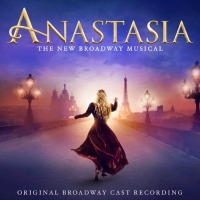 Original Broadway Cast, 2017 (Broadway Records) (3 / 5) Twenty years after its premiere in movie theaters, Anastasia arrived on Broadway with Ahrens and Flaherty expanding upon their original score and Terrence McNally coming in to add a more serious approach and historical context to the piece. However, in trying to honor the animated film as well as give the musical a more realistic perspective, the team came up with a stage musical of uneven quality. “Journey to the Past” and “Once Upon A December” remain high points, with Christy Altomare a more than worthy successor to Callaway, though the smaller Broadway orchestrations — once again by Doug Besterman — do them a slight disservice. And while Ahrens and Flaherty have been able to add a few welcome numbers to flesh out the characters (“My Petersburg” and “In a Crowd of Thousands”), these and other new songs feel disconnected from the ’90s originals in tone and style. Also, Ramin Karimloo, while serving as a more realistic villain than the film’s Rasputin, is sadly wasted as Gleb, a Russian officer in the new regime. His rich tenor is underused in the score’s two blandest new entries, “Still” and “The Neva Flows.” That said, this album is a much more fulfilling listening experience than the film soundtrack. And Altomare is a charming Anya, while Caroline O’Connor and Mary Beth Peil respectively bring jolts of energy and gravitas to their roles of the Countess Lily and the Dowager Empress. — M.K.
Waitress
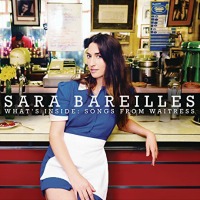 Sara Bareilles: What’s Inside: Songs from Waitress, 2015 (Epic) (4 / 5) The idea of Sara Bareilles writing a musical wasn’t so far-out, even before it happened. The 21st century has seen several musical theater scores written by popular singer/songwriters (Kinky Boots, The Last Ship, 9 to 5), and with her insightful lyrics and inventive, pop/soul colored music, Bareilles seemed a natural fit for the modern musical stage. But, gifted as many of these writers are, few have been able to successfully translate their talent to Broadway, so it’s refreshing that Bareilles has done as well as she has in this respect. What’s Inside is not a cast recording, but more of a concept album that previews Bareilles’ score for Waitress — a musical based on the 2007 film of the same title, about a diner waitress and pie maker extraordinaire named Jenna who’s trying to escape an unhappy marriage, only to discover that she’s pregnant. Though the plot is a bit of a downer, the film used dry humor and charming performances to create more of a grounded, intimate comedy. Bareilles’ songs match the tone of the film and dig deep into the characters, from the deceptively peppy “Opening Up” to the ethereal, dreamlike “Soft Place to Land” to the heartbreaking “She Used to Be Mine.” All of the tracks on this album are sung by Bareilles (with guest vocals by Jason Mraz), and it’s charming to hear her shift from Jenna to other characters throughout. What’s Inside: Songs from Waitress is both a fun showcase for her as a singer/songwriter and a great introduction to her first musical. — Matt Koplik
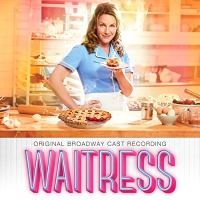 Original Broadway Cast, 2016 (DMI Soundtracks) (3 / 5) This recording preserves the score for Waitress as presented on Broadway, with a fair amount of dialogue included on the album, vocal arrangements beefed up, and seven new songs added (“Door Number Three” has been revised to become “What Baking Can Do”). It all feels a little overstuffed. Part of what made Waitress work so well on screen were the grounded performances and the simple, almost quaint way in which the film presented itself as a story of everyday people dealing with everyday situations. By comparison, the Broadway production and this recording are much broader and flashier, and the material suffers because of it; many songs are overwhelmed by the arrangements or lose their emotional potency due to performances that lean more towards caricature than humanity. Also, some of the additional songs — for example “It Only Takes a Taste” and “I Love You Like a Table” — are not as strong as those Bareilles first presented on the concept album. On a positive note, the cast is made up of stellar singers. They bring to the score a Broadway shine that makes the album easily listenable, even if it’s not the best style for the piece. The best thing about the recording is Jessie Mueller in the central role of Jenna. Her voice is essentially as sweet and smooth as Bareilles’, yet versatile enough to delve deep into dark emotional territory and bring aching power to “She Used to Be Mine.” In addition, Mueller is a smart actress who offers the most realistic performance to be heard here. Every time she’s front and center, she wipes away the glossiness that coats the rest of the album, and she brings back the score’s heartbeat. — M.K.
Dear Evan Hansen
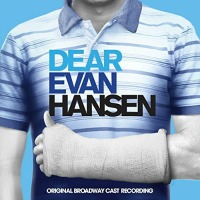 Original Broadway Cast, 2017 (Atlantic ) (4 / 5) A musical that unapologetically wears its heart on its sleeve, Dear Evan Hansen is the most high profile theater work to date from the songwriting team of Benj Pasek and Justin Paul. Set in a nondescript modern suburb, the show centers around a high school introvert with intense anxiety issues who finds himself involved in a misunderstanding which, partly due to the double-edged sword of social media and its galvanizing impact, snowballs into a giant lie that does both good and harm. Though the character of Evan is a little too broadly painted in his neuroses, and the show’s commentary on the effect of social media in modern culture doesn’t go quite as deep as it should, Pasek and Paul’s score is memorable and compelling, managing to wax poetic without being too on-the-nose in its imagery. Ben Platt, in the title role, does the majority of the vocal heavy lifting here, delivering a fully rounded and thrilling performance. It helps that he’s given the best songs in the score: the show’s biggest hit, “Waving Through a Window,” as well as the crushing “Words Fail” and the lovely if slightly heavy-handed “For Forever.” Platt is well supported by Rachel Bay Jones as Evan’s endearing, struggling, single mother; and Laura Dreyfuss, refreshingly understated as Zoe, the object of Evan’s affections, who may be harmed most by Evan’s lie. The cast album includes minimal dialogue, opting instead to present each song as a stand-alone item. While this doesn’t harm the flow of the recording, and has helped a few of the songs to break out as popular hits, two songs suffer from such treatment: “Good For You,” a cathartic release of Evan’s mom’s pent-up frustration, here plateaus in its anger, with no release; and the offbeat humor of “Sincerely Me” comes across as somewhat tasteless out of context. That said, the rest of the album works very well. Alex Lacamoire’s orchestrations (with additional work by Christopher Jahnke) are appropriately pop-oriented, and Justin Paul’s vocal arrangements never go overboard with vocal pyrotechnics. The restraint in their work separates DEH from many other contemporary scores, allowing the emotional weight of the piece to really resonate with the listener. And there are plenty of emotions here to resonate. — Matt Koplik
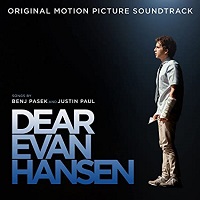 Motion Picture Soundtrack, 2021 (Interscope) (3 / 5) While the Broadway stage production of Dear Evan Hansen received critical acclaim, the movie version was met largely with controversy and derision. Director Stephen Chbosky stated that the main reason the project went forward was to “preserve” Ben Platt’s performance as Evan, leading some to label the movie as nothing more than a vanity project. Listening to this soundtrack, one may feel that some artistic decisions were made to showcase Platt rather than to best adapt the musical for the motion picture medium. For example, several Benj Pasek-Justin Paul songs from the show that didn’t include Evan have been cut, and while few listeners will miss “To Break In A Glove,” the excision of other characters’ songs has sanded down the piece’s cynical edge, making the moral ambiguity of the plot and its view of Evan’s duplicity more unappealing. All of that said, the soundtrack is still a pleasant listening experience. No matter the consensus on Platt’s performance on screen, his singing voice is exceptional, and he has an even greater control of his instrument here than on the Broadway recording. The enlarged arrangements and orchestrations — typical of movie adaptations of stage musicals — are fun, if not as dramatically compelling as the restrained originals. The supporting cast is strong, though largely wasted, with not much material to showcase their talents. Kaitlyn Dever makes a particularly effective Zoe, and Julianne Moore shows a surprisingly sweet singing voice in “So Big/So Small,” even if it she sometimes sounds overly auto-tuned. Two new songs were added for the movie, the more notable of them being “The Anonymous Ones.” Given to the character Ilana, played by Amandla Stenberg, the song was co-written by Stenberg with Pasek and Paul, and it aims to provide more of an inner-life for a character who was mostly a plot device in the stage show. Compared to other songs that have been added to past movie versions of stage musicals, this one is more satisfying and well-rounded, even if it’s not quite up to the quality level of the rest of the score. — M.K.
Pretty Filthy
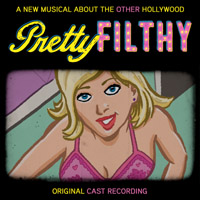 Original Off-Broadway Cast, 2016 (Ghostlight) (3 / 5) Here’s a musical comedy about the porn industry, created by the New York-based theater company The Civilians, with music and lyrics by Michael Friedman (Bloody Bloody Andrew Jackson, Fortress of Solitude, Love’s Labours Lost) and a book by Bess Wohl. One of the best things about the show is its title, which strikes just the right tone of light humor and sweet naughtiness that’s skillfully maintained almost throughout the proceedings, despite the fact that so much of the content is, indeed, pretty filthy. Song titles include “Waiting for Wood,” “Fuck The World,” and “Squirting 101,” and here’s a sample lyric from the opening number: “Most girls give blowjobs to guys they barely know at college parties.” Although the controversial “Parental Advisory: Explicit Lyrics” label is not affixed to this recording, it applies in spades — but honestly, why would anyone who decides to purchase the cast album of a show about “adult entertainment” expect anything else? Some of the melodies Friedman created for this unusual project are very tuneful, but a salient feature of the show — some would say its main problem — is that many of the quotes of the porn actors, directors, and producers seem to have been set to music practically verbatim, with only a little modification and a few rhymes and repetitions thrown in to make them more lyric-like. As a result, significant stretches of the score sound prosaic, and often there’s a sense of too many words having been crammed into each measure of music. Still, there’s a lot of illicit, edgy fun to be had here, thanks in no small part to the perfectly gauged performances of a talented cast: John Behlmann as “Fredo/Jimmy Wood,” Lulu Fall as “Dana,” Alyse Alan Louis as “Becky/Taylor,” Luba Mason as “Georgina Congress,” Maria-Christina Oliveras as “Carrie/Holly Donovan,” Steve Rosen as “Sam Speigel/Jeff/Oscar Gerhard,” Marrick Smith as “Bobby/Dick,” and Jared Zirilli as “Nick Harding.” — Michael Portantiere
Cagney
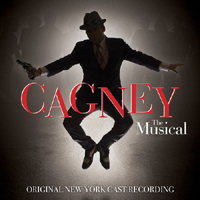 Original Off-Broadway Cast, 2016 (Broadway Records) (2 / 5) First seen at the York Theatre Company’s home at St. Peter’s Church and then in a commercial run at the Westside Theatre, this show was a crowd pleaser largely for Joshua Bergasse’s exciting, tap-heavy choreography, which obviously cannot be experienced via the cast album. But the recording is still worth hearing for the enjoyable score by Robert Creighton and Christopher McGovern, and for Creighton’s dynamic performance in the title role: James Cagney (1899-1986), who started as a song and dance man in vaudeville and went on to huge fame for his tough-guy roles in such movies as The Public Enemy, Angels With Dirty Faces, and White Heat. Another major character in the show is studio mogul Jack L. Warner (Bruce Sabath), who in the opening number, “Black and White,” boasts of taking “a shrimp with pride from the Lower East Side” and turning him into “the greatest tough-guy the silver screen ever saw.” Indeed, the contentious relationship between Cagney and Warner provides much of the show’s dramatic energy, and one of its best sequences deals with the mid-career triumph Cagney achieved when he played legendary songwriter/performer George M. Cohan in the Warner Bros. biopic Yankee Doodle Dandy. Highlights of the Creighton/McGovern score include the charming “Falling in Love,” in which Cagney and his future wife (played by Ellen Zolezzi) find it difficult to say the “L” word, and Cagney’s introspective second-act solos, “How Will I Be Remembered?” and “Tough Guy.” Also included are two Cohan songs that were featured in Yankee Doodle Dandy: “Grand Old Flag,” for the Act I finale, and the title song, for the epilogue. The recording would have benefited from a larger orchestra (only five players here), but it’s entertaining for the stronger moments of the score and the performances of Creighton and the rest of the cast, which also includes Jeremy Benton, Danette Holden, and Josh Walden in multiple roles. — Michael Portantiere
The Story of My Life
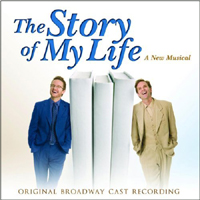 Original Broadway Cast, 2009 (PS Classics) (3 / 5) The Story of My Life is an intimate, unusual, two-character musical with songs by Neil Bartram and book by Brian Hill. The strengths of the cast album lie in two talented performers, a score that’s lovely, evocative, and emotional, and the show’s highly original premise about friendship and the art of creative writing. Yet that very premise also shackles the piece, for the audience isn’t sufficiently exposed to other aspects of the lives of the characters, creating distracting questions that are never fully answered. Thomas Weaver (Will Chase), a successful author, returns to his hometown to write the eulogy for his one-time best friend, Alvin Kelby (Malcolm Gets). Alvin appears in Thomas’s mind, taking him back to when a thoughtful first grade teacher brought them together (“Mrs. Remington”). The score soars in its early numbers, charting how the pair bond over a shared love of books (Alvin’s dad owns a bookstore) and the film It’s a Wonderful Life. Bartram displays a solid grasp of childhood perspective, and Chase and Gets — even as only heard on this recording — magically transform themselves into schoolboys, exchanging gifts and creating traditions. (Check out the way Chase’s voice cracks in “1876.”) When the boys hit adolescence, it hits back; Thomas rightly worries that Alvin’s “odd” behavior, including an obsession with his dead mother’s bathrobe, might not go over well in high school (“Normal”). Bartram and Hill subtly reveal the differences that will later fracture this friendship, but the show doesn’t work as well once the men reach adulthood. Thomas attends college, writes bestsellers, and gets engaged, while Alvin apparently has no existence beyond the bookstore. Thomas increasingly edits his friend out of his life, culminating in the shocking “Independence Day” — and then he develops writer’s block. He has rejected Alvin, so now his muse has abandoned him. Here’s where the questions start — not the one concerning Alvin’s death, which Bartram and Hill rightly keep a mystery, as it leads to Thomas’s catharsis. But what about Thomas’s fiancée, Ann? Unlike the brief but fully realized portraits of Mrs. Remington and Alvin’s parents, she’s a cipher. And are we supposed to accept that everything Thomas has written has derived from his experiences with Alvin? In the hands of less talented performers, this slight framework might crumble, but Chase keeps Thomas attractive even when he’s being a jerk, and Gets’s Alvin skillfully morphs from neurotic kid to crushed soul to the ghost whose nagging gets his friend back on track. — Laura Frankos
Giant
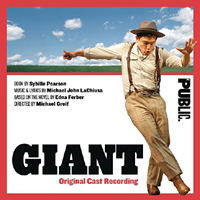 Original Off-Broadway Cast, 2013 (Ghostlight) (4 / 5) Texas is big. Edna Ferber’s 1952 novel, Giant, is big, spanning decades and two generations of rancher families. The 1956 movie version is big, with spurting oils wells and thundering cattle herds (plus a stunning young Liz Taylor and a sultry James Dean). How to translate something so gigantic to the stage? By going big with the score. Giant may not be Michael John LaChiusa’s most important musical, but it’s his most melodic, alternately sweeping and introspective. This recording is jam-packed with 26 songs from the three-hour show: Mexican folk songs, country hoedowns, ballads of hope and regret, swing, and early rock. (LaChiusa subtly mirrors changing musical tastes as the story moves from 1925 to 1952.) Linking the various parts of the whole is the anthem “Heartbreak Country,” for at its heart, Giant is the tale of that land — the Reata Ranch — and how it changed through the years, affecting everyone connected with it. At the center is the owner, Bick Benedict (the wonderful Brian D’Arcy James), who, like his older sister Luz (Michele Pawk), loves Reata and is always aware of his obligation to “take care of the land.” Yet, instead of marrying the daughter of a neighboring ranch owner, he weds an educated Virginian, Leslie (Kate Baldwin). LaChiusa chronicles their relationship in nine telling numbers. “Your Texas” is about Leslie’s dreams during their courtship, including a kind of frontier utopia. The lilting “Did Spring Come To Texas?” reveals Bick’s joy at their wedding. Things don’t always run smoothly, not with Luz’s interference and sexy mechanic Jett (PJ Griffith) hanging around; but there is genuine love here, and Bick and Lesie try repeatedly to work out their differences (“Heartbreak Country,” “Topsy Turvy”). A major issue is the treatment of the Mexicans who work the ranch, once Mexican property (“Aurelia Dolores”). The racism appalls Leslie, and her views are shared by the couple’s bookish son, Jordy (Bobby Steggart), who loves Juana (Natalie Cortez). Things reach a crisis in the climactic “The Desert,” a musical sequence (with dialogue by librettist Sybille Pearson) that’s a mini-play in itself. Others — there are nearly a dozen significant characters — play their roles in this changing Texas. Griffith works hard to distance himself from Dean’s iconic portrayal; his rock growl helps. Pawk’s Luz is perhaps overly villainous in “No Time For Surprises,” but fares better in her duets with Bick. John Dossett and Katie Thompson each get strong solos as Bick’s uncle and the girl Bick jilted for Leslie. The younger generation — Steggert, Cortez, Miguel Cervantes, and Mackenzie Mauzy — have their own chances to shine as well, notably in the bouncy “Jump” and the tender “There Is A Child.” This is a rich, vibrant score, loaded with emotion and power. — Laura Frankos
Dogfight
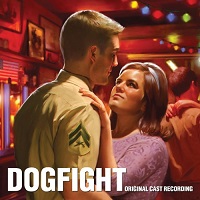 Original Off-Broadway Cast, 2013 (Ghostlight) (3 / 5) Many musical scores can stand perfectly well as cast recordings, separate from their staged productions. Others lose something when deprived of the character and plot development revealed in the shows’ libretti. For all its virtues, Dogfight — songs by Benj Pasek and Justin Paul, book by Peter Duchan — falls within the latter group. Based on the 1991 film, it’s the story of some Marines tearing up San Francisco in late 1963, the night before they ship out to Vietnam. They plan a “dogfight,” a contest in which each jarhead contributes fifty bucks to a kitty that will be won by the guy who brings the ugliest date to the party. A nasty game, indeed — and the boys, including lead Eddie Birdlace (Derek Klena), appear as insensitive, hot-blooded louts. Fresh out of boot camp and convinced that they’re invincible, their pickup lines in the song “Hey, Good-Lookin'” are lies and braggadocio. Eddie finds a waitress, Rose (the sweet-voiced Lindsay Mendez), and pressures her to “Come to a Party” while privately exulting over his chances of winning the dogfight. Rose, for her part, is thrilled to be going out with a boy; in “Nothing Short of Wonderful,” she dithers over what to wear in staccato phrases, sounding like a mashup of Cinderella and the Baker’s Wife from Into The Woods. (The opening vamp of the title song also echoes that Sondheim show.) Clearly, this evening will not go well for Rose. But, sometime between the invitation and the party, Eddie has a change of heart that isn’t part of the score, although it’s described in the recording notes. The libretto shows us how Eddie grows to like Rose as they walk to the party, but none of that is in the score; on the album, he jumps from acting like a complete cad to trying unsuccessfully to take Rose home before the judging, in order to save her the embarrassment. Similarly, the recording doesn’t include Eddie’s later apology or indicate how the relationship progresses. Still, there’s much to appreciate here. Pasek and Paul know how to craft effective theater songs with nuance and layers. A few of the lyrics are a little too facile in telegraphing emotions or a sense of time and place, but most are very well written. The music ranges from early-sixties pop to Rose’s folk songs and powerful, revealing character numbers. “Come to a Party” works on multiple levels as variously sung by the callous Marines, the naive Rose, or Marcy, a knowing prostitute (played with sledgehammer bluntness by Annaleigh Ashford). The boys’ cockiness is evident as they take the town in “Some Kinda Time” and plan their big homecoming in “Hometown Hero’s Ticker Tape Parade.” Reality shatters their hopes, and Eddie’s devastating “Come Back” portrays what the war has done to him. But Rose is the real star here, and her journey comes through best in the score. She’s alternately shy and manic at first, then furious at the “Dogfight,” and soul-searching in “Pretty Funny.” The show’s emotional crux is found in her song “Before It’s Over,” when she realizes she has somehow benefited from the dreadful experience. As noted above, Eddie’s character growth isn’t charted as well in the songs, but this is still a solid score that tells a compelling story. — Laura Frankos
The Scottsboro Boys
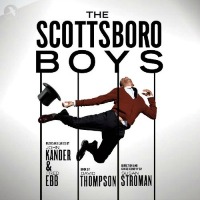 Original Off-Broadway Cast, 2010 (JAY)
  (5 / 5) In several of their shows, John Kander and Fred Ebb have used various types of entertainment as the contextual setting for exploring historical and social issues. In Cabaret, sleazy nightclub routines parallel the excesses of Weimar Germany and the rise of Nazism; Chicago‘s vaudeville acts reveal the corrupt justice system of the Roaring Twenties. In The Scottsboro Boys, the tragic story of nine young African Americans who were unjustly accused of raping two white women in 1931 is told in the form of a minstrel show. The result is a searing, brilliant work with depth, power, and guts. Kander says they chose the format for the opportunities it provided: an ensemble, led by an Interlocutor (John Cullum), telling stories, jokes and songs. Mr. Bones and Mr. Tambo (the versatile Colman Domingo and Forrest McClendon) assist by playing multiple characters (“White men’s our speciality”). Needless to say, the minstrel show itself is a stark reminder of racism, reinforcing social injustice with every number. In the rousing opener, the lead among the accused men, Haywood Patterson (the impressive Brandon Victor Dixon), asks “This time, can we tell it like it really happened?” The Interlocutor benignly replies, “Of course.” Haywood’s resolve to tell the truth provides the score with a constant refrain, from his first defense (the Bert Williams style “Nothin'”) to the comic fable “Make Friends With the Truth” to “Zat So?” His defiant cry “You Can’t Do Me” sets up the boys’ refusal of the Interlocutor’s call for a cakewalk and a “happy ending,” subverting the minstrel show. The fates of the real-life Scottsboro Boys were anything but happy, but the final scene places their case in the broader context to the civil rights movement, giving a glimpse of a better future. The score also contains one of Kander & Ebb’s finest songs, the poignant “Go Back Home,” with a beautiful, wistful melody that reoccurs throughout the underscoring. (A bonus track has Kander performing the number.) Throughout the recording, Cullum shines as the unctuous Interlocutor, his genially racist attitude clear in “It’s Gonna Take Time” (cut from the subsequent Broadway production) and “Southern Days.” The Interlocutor misses Mammy’s ribs and mint juleps, but conveniently forgets the lynchings and cross-burnings. Domingo and McClendon’s talents are also evident throughout, especially when they assume the guises of the Attorney General and lawyer Samuel Liebowitz in savagely satirical numbers revealing Southern anti-Semitism and patronizing New York showmanship. (“Just ask my chauffeur, Rufus!”) Here was no easy subject, but this musical may be Kander and Ebb’s most important work; three years after the show opened, the Scottsboro boys were granted a posthumous pardon. — Laura Frankos
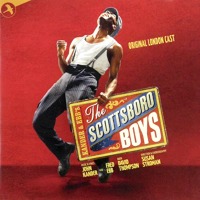 London Cast, 2014 (JAY) (4 / 5) This cast album bears a close similarity to the 2010 version. Three of the principals crossed the Atlantic to appear in the London production of The Scottsboro Boys: Brandon Victor Dixon as Haywood Patterson, Colman Domingo as Mr. Bones, and Forrest McClendon as Mr. Tambo. Dixon may even be better here, displaying heightened exuberance in “Commencing in Chattanooga” and enormous inner strength in “You Can’t Do Me.” The ensemble numbers sound more polished, and there are some lyric changes, notably in “Make Friends With the Truth.” There’s also a bit of additional dialogue, with more details about the fate of these young men. The Interlocutor’s solo, “It’s Gonna Take Time,” was cut from the Broadway production and is absent here, but the exit music is included. Like the earlier recording, there’ a bonus track of “Go Back Home,” here performed by Dixon. A key difference between the two albums is the Interlocutor, played nastily here by Julian Glover. Where John Cullum was generally sly, Glover is more commanding, sending chills as he insists, “Shake those tambourines!” When he describes himself as “the master of these folks” in the opener, the listener can’t help thinking he means more than just master of ceremonies. Does a collector need both recordings? Probably not. But those considering staging the show may want the London one, which is closer to the licensed version. — L.F.
Shrek
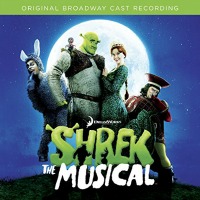 Original Broadway Cast, 2010 (Verve) (3 / 5) Not to be outdone by Disney, the Dreamworks company decided to come to Broadway with a musical adaptation of its Oscar winning animated film Shrek, about an everyman ogre trying to maintain his peace of mind while wading through numerous fairy tales — some of which aren’t quite so magical. While the original Broadway production proved to be wildly over-produced and too loyal to the film in terms of its design and book, the cast recording reveals that, at its core, Shrek has considerable charm and a solid score aided by Danny Troob’s healthily full orchestrations. It’s not a surprise that composer Jeanine Tesori brought a mixture of earnestness and funky independence to the piece, but it is a surprise that first-time lyricist David Lindsay-Abaire crafted such well-structured and genuinely witty lyrics. The score boasts a fair number of highlights, such as “I Know It’s Today” and “When Words Fail,” though some songs try too hard for off-kilter humor — for example, “Story of My Life” and “What’s Up, Duloc?” In the title role, Brian d’Arcy James had to balance his own musical theater instincts with the burden of recreating a highly beloved film character; for the most part, he succeeded, especially in the touching “Who I’d Be.” Sadly, the talented Daniel Breaker was not given as much artistic freedom in the role of Shrek’s best friend Donkey, and instead offers an Eddie Murphy impression through much of this cast album. More successful principal players include Sutton Foster as not-your-average-princess Fiona, going toe to toe with James in the childishly gleeful “I Think I Got You Beat,” and Christopher Sieber as the hyper-sinister, height-challenged villain Lord Farquad. In their score, Tesori and Abaire gave Shrek a mischievous soul that was sadly lost among the giant scenery of the original production. Luckily, it’s captured here. — Matt Koplik
Curtains
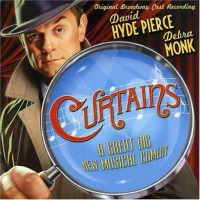 Original Broadway Cast, 2007 (Manhattan Records) (2 / 5) Part backstage satire and part whodunit, Curtains was a long-gestating property. At the time of its opening, the show was touted as having the last original score by the legendary team of lyricist Fred Ebb, who died in 2004, and composer John Kander. (Whatever the order of composition, it turned out that the team’s adventurously rewarding The Scottsboro Boys and The Visit both premiered in later years.) Peter Stone, who died in 2003, is credited with the original book and concept of Curtains; Rupert Holmes, who already had “whodunit” experience with Drood, came in to help restructure the book and to work with Kander on writing some additional lyrics. The result is a modestly entertaining piece, but it doesn’t have quite enough bite to succeed as satire or enough intrigue to succeed as a murder mystery. Centered on a Broadway-bound musical that’s experiencing out-of-town woes, Curtains opens with the mysterious murder of the show’s lame leading lady (a hilarious Patty Goble). The cast and production team are up in arms trying to figure out who the culprit is while simultaneously attempting to improve their show so it won’t meet the same deadly fate at the hands of the New York critics. At the center of it all is theater-crazed detective Lieutenant Frank Cioffi, played with boyish charm by David Hyde Pierce. The star is supported by a strong cast including Debra Monk as the show-within-the-show’s gruff producer; Edward Hibbert as the catty director; and Karen Ziemba and Jason Danieley as the songwriting team, once married but now divorced. The cast works their magic — especially entertaining is Monk’s delivery of her character’s hard-as-nails mantra, “It’s a Business” — but the material is rarely up to the intelligence or melodic zeal of previous Kander and Ebb scores. The always reliable William David Brohn provides orchestrations that practically come with their own pair of jazz hands, but they aren’t able to elevate Kander’s music beyond the level of stylishly presentable. Although Curtains is a pleasant diversion from the darker K&E works, it will not likely stay with you for long. — Matt Koplik
Yank!
 Original Off-Broadway Cast, 2014 (PS Classics) (4 / 5) Musical theater fans look back with affection at the Off-Broadway shows of the early- to mid-sixties — small, unique productions whose distinctive scores guaranteed them long life on record, if not on the boards. (The Fantasticks, of course, is a major exception in the length-of-run tally.) Today, there are still examples of terrific, innovative musicals getting their start Off-Broadway or Off-Off-Broadway, and thankfully, many of them are being recorded. In the case of Yank!, a Kickstarter campaign helped raise funds to preserve the performances of nearly the entire company of the show’s 2010 York Theatre production. (Two of the cast members had scheduling conflicts.) Yank! is the creation of brothers David Zellnick (book and lyrics) and Joseph Zellnick (music), a wholly original work inspired by the precarious situation of gays and lesbians who had to remain closeted while serving in the armed forces during World War II. It centers on Stu (the amazing Bobby Steggart) and his love for Mitch (Ivan Hernandez), yet somehow the Zellnicks convey that their story reflects that of the thousands of others like them who served with honor. The storytelling is tight and focused, making good use of Stu’s wartime journal, discovered at the start of the show by a young man in the present day (also played by Steggart). This device offers a link between our time and the past while also allowing us to hear Stu’s private thoughts. The clever title number introduces the squad — the expected melting pot of ethnicities — and lets us see and hear Stu’s reaction to each of his comrades. The music effectively recreates the 1940s sound, especially in the diegetic numbers presented as songs heard on the radio; the fact that the legendary Jonathan Tunick was enlisted to rework the show’s original orchestrations for this recording doesn’t hurt. Nancy Anderson, the sole woman in the cast, is a musical chameleon. She plays four different vocalists, each with her own nuanced style, as well as Louise, a blunt lesbian secretary interviewed by Stu for Yank magazine. Jeffry Denman shines in the standout “Click,” reassuring Stu that “there are more of us than you imagined” and demonstrating (in dance) the signals and codes of gay social relations. The guys in Charlie Company are red-blooded American males; they indulge in lots of bullying and pranks, and they’re constantly thinking and talking about women, as in an ode to pin-up girls, “Betty.” But, in the end, the story is Stu’s, and Steggart owns the role. The quaver in his voice reveals Stu’s terror during basic training, his need to fit in, and his concerns about his sexuality. His longing for Mitch is natural and convincing; “Just True,” in which the two men dream of a future together, may well reduce the listener to tears. The album concludes movingly with Steggart, again as the young man who found the journal, pondering Stu’s fate, followed by a brief reprise of the key ballad, “Rememb’ring You.” — Laura Frankos
Death Takes a Holiday
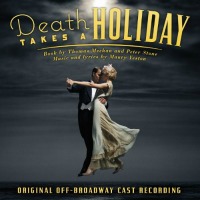 Original Off-Broadway Cast, 2011 (PS Classics) (2 / 5) On paper, Death Takes a Holiday probably looked like a wonderful idea for a musical. Composer-lyricist Maury Yeston has done some very admirable work, and audiences have long been intrigued with the story told here — based on a play by Alberto Casella that has received several adaptations, most famously as a 1934 film that starred Fredric March. So what went wrong? After the success of Titanic, Yeston and librettist Peter Stone chose to create an intimate musical inspired by Casella’s tale of a weekend during which Death puts aside his scythe and falls for a mortal girl. (Thomas Meehan joined the project after Stone’s death.) As it turned out, the plot was the first stumbling block for the adapters; the list of successful fantasy musicals is a short one, and the concept here is a whopper to swallow. Still, a strong opening number can get an audience to accept darn near anything — but Yeston disappoints with “In the Middle of Your Life/Nothing Happened.” Instead of being made to understand what it is about Grazia (Jill Paice) that causes Death (Kevin Earley) to stay his hand when she’s thrown from a car, we’re wincing at the bare exposition of the lyrics: “What is that darkness I see ahead?” “We’re going into a spin!” Also wince-inducing is the line, “Nothing can go wrong for her.” (Did they really sing that? Yup.) Nor do we buy it when Death, impersonating a Russian prince, tells Grazia’s father (Michael Siberry) of his desire for a vacation. Earley, who took over the role during preview performances when Julian Ovenden developed vocal problems, has a terrific voice, but its timbre isn’t well suited to the the Grim Reaper’s darker musical moments. He’s more effective in the lighter “Alive!” discovering the joys of breakfast, and in the romantic numbers with Paice, a solid Grazia. Oddly, the score’s best songs center on an unseen character: Grazia’s dead brother, Roberto. Major Fenton (Matt Cavenaugh) sees something in Prince Sirki’s eyes that eerily remind him of “Roberto’s Eyes” when his friend was shot down; and Rebecca Luker, as the mother, tells Sirki what death does to a family in the devastating “Losing Roberto.” The former conveys terror far better than characters intoning “Death is in the house!” and the latter lets Sirki truly know the pain he inflicts with each fatality, effectively leading to Earley’s heartfelt big number, “I Thought That I Could Live.” Would that the rest of the score matched the quality of these songs. Yeston’s melodies are lovely, with a nice Continental air (aside from a shimmy designed to get the cast dancing), but it’s hard to get past the often clunky lyrics. — Laura Frankos
Dirty Rotten Scoundrels
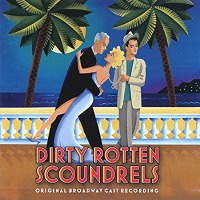 Original Broadway Cast 2005 (Ghostlight) (4 / 5) David Yazbek’s Broadway scores are just plain fun, whether it’s the frenetic farce of Women On the Verge of a Nervous Breakdown or the blue-collar humor of The Full Monty. For Dirty Rotten Scoundrels (book by Jeffrey Lane, based on the 1988 film), Yazbek wrote a genuine, old-fashioned musical comedy in which the various songs put on as many guises as the con-men characters. There are pop pastiches, a scatological list song presented with Cowardesque elegance, a rueful ballad, a samba, and the most vulgar “I want” song in musical history, along with several numbers that require the performers to use accents outrageous enough to start another Franco-Prussian war. For all these varied styles, the score is well-tailored to the characters, and the excellent cast delivers. The scoundrels are the suave Lawrence Jameson (John Lithgow) and the crass Freddy Benson, the latter a small-time grifter eager for bigger scams. Klutzy heiress Christine Colgate (Sheri Rene Scott) is their mark, with Joanna Gleason and Gregory Jbara as the obligatory comic secondary couple. (I told you it’s a traditional musical comedy.) The versatile Lithgow assumes personae ranging from a dignified pseudo-prince to a sadistic Austrian shrink, yet still achieves a believable wistfulness in “Love Sneaks In.” Tony-winner Butz salivates over the “Great Big Stuff” he craves (“I wanna be like Trump!”), shrieks as mad Prince Ruprecht, and, with Scott, croons an anatomy lesson in “Love Is My Legs.” Scott pairs well with both tricksters and soars in the zippy “Here I Am.” (Yazbek is a fan of Ira Gershwin and Cole Porter’s skill with internal rhymes; they’d approve his work here.) Gleason and Jbara make the most of their numbers, especially the absurd yet sexy “Like Zis/Like Zat.” Harold Wheeler’s orchestrations have the right comic-caper tone for the proceedings, and the vocal arrangements by Yazbek and Ted Sperling let the ensemble punctuate the score with jazzy exclamation points. The recording includes two demos by Yazbek, plus Scott in a lovely version of “Nothing Is Too Wonderful To Be True” — a surprisingly pretty song with Butz’s comic verses removed. There’s also a bit of dialogue from Lithgow, warning listeners just before the tracks that reveal the final twists — the likes of which we haven’t encountered since The Mystery of Edwin Drood. The title of the show’s opening number is “Give Them What They Want.” I want more David Yazbek musicals. — Laura Frankos