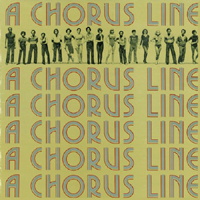
 Original Broadway Cast, 1975 (Columbia/Masterworks Broadway)
  (5 / 5) In 1975, A Chorus Line was a phenomenon. The conception of the show began with Broadway wunderkind Michael Bennett’s idea that there might be a musical to be made from the stories of the lives of Broadway’s dancers, a group that was undervalued and overlooked at the time. Bennett got together a bunch of these “gypsies,” many of whom would go on to be in the original company of A Chorus Line, and urged everyone to talk about their lives, all the while taping the conversations. From those tapes, Bennett along with librettists James Kirkwood and Nicholas Dante, composer Marvin Hamlisch, and lyricist Edward Kleban shaped the material through a series of workshops at The Public Theater. Both achingly real and thrillingly theatrical, the show premiered there to ecstatic reviews and quickly moved to Broadway, where it became a massive hit. The setting is an open audition of dancers for an unnamed Broadway musical, during which the show’s director, Zach, sets his final 16 hopefuls in a line and proceeds to inquire about their lives. Some of the dancers offer humorous anecdotes (“I Can Do That”), others share painful stories (the moving “At the Ballet”). From beginning to end, this original Broadway cast recording feels like lightning in a bottle. The definitive cast performs with a gumption that’s palpable to the listener, expressing each character’s desire to dance and their need get the job. As Cassie, a veteran dancer who’s hoping for a second chance at her career and who also has a complicated history with Zach, Donna Mckechnie is exceptional. (She won a Tony Award for her performance. )Though we don’t get to see any of her beautiful dancing here, her vocals are the most impressive of any Cassie, and the sheer desperation in her delivery of “The Music and the Mirror” resonates deeply. There’s also Priscilla Lopez as the bouncy Diana, Kelly Bishop as the cynical yet vulnerable Sheila, Sammy Williams as the conflicted Paul, and Pamela Blair as the brassy Val — but, truthfully one could keep going on and on about each cast member’s contribution. The score remains a classic, with Kleban’s conversational lyrics seamlessly flowing in and out of dialogue as Hamlisch’s melodies display great variety in style and emotion, from pulsating anxiety (the opening “I Hope I Get It”) to classic show biz razzle-dazzle (the finale ,“One”). Though the grand montage “Hello Twelve, Hello, Thirteen, Hello Love” is only represented here in chunks, and the music-and-dialogue sequence “And…” wasn’t recorded at all, there are no serious complaints about this truly great cast album. Fun fact: Due to the small budgets for the workshops, Bennett was unable to afford a solo orchestrator to work on the entire show, so he instead hired three — masters Hershy Kay, Jonathan Tunick, and Bill Byers — to individually orchestrate various musical numbers. The fact that the work of these three men never feels disjointed and comes together as a beautiful whole is representative of the theme of A Chorus Line in general. — Matt Koplik
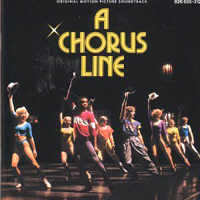 Film Soundtrack, 1985 (Casablanca/Polygram) No stars; not recommended. With its inherent theatricality and non-traditional story structure, A Chorus Line was always going to be a difficult property to adapt for the screen, even in the best of hands. But that hardly excuses Richard Attenborough’s bafflingly misguided interpretation. The soundtrack recording provides numerous examples of the film’s wrongdoings, which include giving “What I Did For Love” to Cassie as a solo and replacing “The Music and the Mirror” and the “Hello Twelve…” montage with, respectively, the inferior “Let Me Dance For You” and “Surprise, Surprise.” Also unfortunate are Ralph Burns’ synthesizer-heavy orchestrations. In fairness to Burns, though his work here is busy and rather cheap sounding, anyone who watches the movie (but why would you?) can see that the director and producers were aiming for a hip, modern, ’80s look and sound, so it’s likely they imposed that vision on the Broadway-favorite orchestrator. Director Attenborough managed to cast an able company of dancers, but his and screenwriter Arnold Schulman’s terrible creative decisions bar any of them from truly succeeding. While Allyson Reed does a commendable job as Cassie, having her sing the show’s anthem, “What I Did For Love,” as a solo was, as noted, a huge misstep; it robs the company of the proud defense of their sacrifice for their art and instead puts a tighter spotlight on Cassie, so that the story suddenly becomes very specific rather than achieving the universality that Michael Bennett fought hard for in the original stage show. Similarly, while Gregg Burge as Richie does his best with “Surprise, Surprise,” that number focuses purely on one character’s sexual awakening, rather than offering detailed glimpses into the adolescence (the pain, the humiliation, the joy) of each dancer on the line. For film students, A Chorus Line provides a textbook example of how not to adapt a successful musical to the screen. For Broadway fans, you’re better off pretending this soundtrack recording doesn’t exist. — M.K.
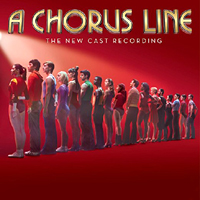 Broadway Cast, 2006 (Masterworks Broadway)
  (3 / 5) If the original cast album of A Chorus Line provides a rush of adrenaline, this respectful recording plays like a reference guide for those who might be new to the score. Just about every note and every lyric is carefully set down — though “And…” is still sadly unrepresented — with a cast that makes sure not to impose negatively on the Chorus Line legacy. While this approach is a far more welcome alternative to that of the disastrous movie version, it makes for a rather bland recording. From the piano intro of “I Hope I Get It” through to the grand finale, “One,” the listener can sense the conductor, cast, and orchestra taking great pains to not have a single hair out of place. This delicate attitude takes away much of the energy and urgency that make A Chorus Line so compelling, and it keeps most of the very talented company from putting their own personal spin on their characters. That said, there are some major highlights here. As Diana, Natalie Cortez offers an impassioned and vulnerable interpretation of “Nothing,” and if Jessica Lee Goldyn isn’t quite as brassy as Pamela Blair, her “Dance: Ten, Looks: Three” is comically endearing. Best of all, for the first time, the “Hello Twelve…” montage is recorded in its nearly 20 minute entirety! If nothing else, that alone makes this recording essential for Broadway fans. — M.K.
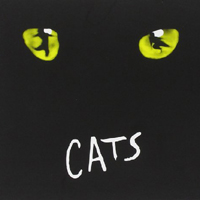
 (4 / 5) Before it became a joke, Cats was a true phenomenon. While Trevor Nunn’s direction placed spectacle above emotion and story, the show has a better score than it’s usually given credit for. T. S. Eliot’s Old Possum’s Book of Practical Cats may not have been a natural choice for musicalization; still, Andrew Lloyd Webber found some remarkably creative ways to get Eliot’s feline characters to sing, whether in the style of straight-out pop (“The Rum Tum Tugger”), mock-operetta (“Growltiger’s Last Stand”), or a host of others. The magical (and highly electronic) overture, the rapidly shifting strains of the lengthy first-act Jellicle Ball, and the lush finale “The Ad-Dressing of Cats” all help to make this a musical theater score full of variety and invention. Even the now standard “Memory” works within the weird universe created by the half-posthumous collaboration of Eliot and Lloyd Webber. Here, that song is delivered beautifully by West End diva Elaine Paige as Grizabella, the Glamour Cat — the character who ties together the show’s story about junkyard strays meeting to decide which of them will be reborn into a new, presumably better life. Paul Nicholas’ Rum Tum Tugger, Brian Blessed’s Old Deuteronomy (and Bustopher Jones), and Kenn Wells’ Skimbleshanks also provide lots of fun. This recording of Cats captures the ineffably English tone of the piece, and is a highly entertaining listen. — Matthew Murray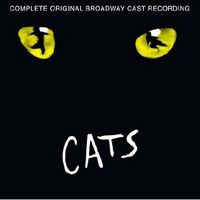
 (2 / 5) Stephen Sondheim’s first new musical in nearly a decade, Bounce was highly anticipated when it played Chicago and Washington in 2003. Though this recording benefits from the lack of John Weidman’s book, the score doesn’t sound appreciably better here than it did onstage, despite a good orchestra conducted by David Caddick and a top-notch cast including Howard McGillin, Richard Kind, Michele Pawk, Gavin Creel, Herndon Lackey, and Jane Powell. What’s missing is a sense of vivid inspiration, although there are a few nice selections. The title song, sung by McGillin and Kind, is catchy; McGillin and Pawk have an attractive duet in “The Best Thing That Ever Has Happened”; and “Addison’s City” and “Boca Raton” make up an entertaining musical scene that chronicles the Florida land boom. Otherwise, the music has uncomfortable echoes of Sondheim’s superior work in such shows as Sweeney Todd(a vamp in the title song recalls “By the Sea”) and Merrily we Roll Along (Jonathan Tunick’s orchestrations could have been lifted from that show). There’s much here to appreciate, but little to love; Sondheim’s previous scores set the bar so high that a middling effort like this one just doesn’t seem quite good enough. [Ed. Note: Sondheim and Weidman later rewrote this show and retitled it Road Show; see separate review of the recording of that version.] — Matthew Murray
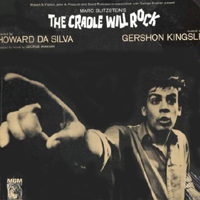
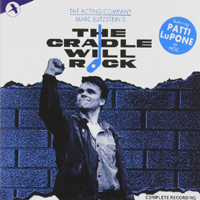
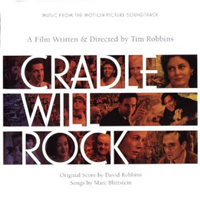
 (1 / 5) Tim Robbins’ film Cradle Will Rock (no “The”) tells the story of the original production intermingled with other plots concerning art and censorship. About half of this CD is devoted to songs from the original show; the other half is new music composed for the film by David Robbins. “Moll’s Song” (sung by Emily Watson), “Croon Spoon” (Eddie Vetter and Susan Sarandon), “Honolulu” (Erin Hill, Dan Jenkins, Vicki Clark, Tim Jerome), “Reverend Salvation” (Vicki Clark and Chris McKinney), “The Freedom of the Press” (Henry Stram and Tim Jerome), and “Art for Art’s Sake” are all here in unedited form, plus Audra McDonald’s compelling rendition of “Joe Worker.” (Other songs in the film are not on the CD.) In the notes for the recording, David Robbins writes: “The arrangements you hear are, for the most part, Blitzstein’s original orchestrations.” This may be technically true, but because the orchestra here consists of only 12 instruments with a single violin, the score has more of a Brecht-Weill sound than the operatic heft that Blitzstein intended. The disc begins with an awful rendition of “Nickel Under the Foot,” heard in the film over the end titles, but don’t let this one disgraceful track keep you from exploring the pleasures of the recording. — J.D.