

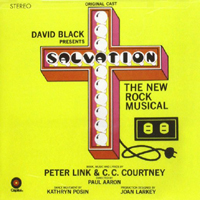
 Original Off-Broadway Cast, 1969 (Capitol/Angel)
  (3 / 5) Unlike some other rock musicals of the period, Salvation had no dance or spectacle elements; the physical production was tacky, and the show played in an ungainly Off-Broadway space. Yet the songs, by Peter Link and C. C. Courtney, are uncommonly sweet and melodic. The style of the music is so time-specific that, to some modern ears, it may be meaningless. Still, there’s a touching simplicity in “Let the Moment Slip By,” all about a young woman who didn’t sleep with her boyfriend and regrets it after he’s killed in Vietnam. “Daedalus” is at once an odd and ravishing tune, especially as performed by jazz singer Yolande Bavan. “In Between,” “Gina,” “Let’s Get Lost in Now,” and “If You Let Me Make Love to You, Then Why Can’t I Touch You” are arresting ’60s rock. The cast, which includes songwriters Link and Courtney along with Joe Morton, Chapman Roberts, Marta Heflin, and Annie Rachel, is vocally strong. The CD edition of the cast album includes three songs that previously had been issued only on the eight-track tape version of the recording. — David Wolf
All posts by Michael Portantiere
St. Louis Woman
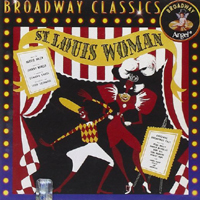 Original Broadway Cast, 1946 (Capitol/Angel)
  (4 / 5) Careening between musical comedy and musical tragedy, St. Louis Woman is a turn-of-the-century tale with an all-black cast and a score by Harold Arlen and Johnny Mercer that reflects the tonal uncertainty at both ends of the comedy/tragedy spectrum. One minute, the score strives for Porgy and Bess-like grandeur (“Leavin’ Time”), then it returns to standard-issue, albeit high-grade, Broadway (“Ridin’ on the Moon”). But Arlen’s music is amazing throughout, Mercer’s lyrics are adult and idiomatic, Leon Leonardi’s conducting is sensational, and the singers are terrific. June Hawkins infuses “I Had Myself a True Love” and “Sleep Peaceful, Mr. Used-to-Be” with operatic intensity. Ruby Hill is warm and appealing in “Lullaby” and sassy in “Anyplace I Hang My Hat Is Home.” Harold Nicholas was a great dancer without much of a voice, but he comes through in “Come Rain or Come Shine.” And a young Pearl Bailey is always in the wings, ready to deliver another insinuating comic specialty number. At just under 30 minutes, this is an uncommonly short cast album, but also an uncommonly sweet one. And the sound quality, for its age, is excellent. — Marc Miller
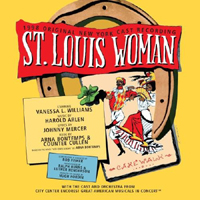 Encores! Concert Cast, 1998 (Mercury)
  (2 / 5) This album captures every note of a City Center Encores! concert staging of St. Louis Woman on a recording that’s more than twice as long as the original. But from the first few bars — a portentous drum roll, a brassy fanfare, a showy parade of unrelated themes — it disappoints. The original orchestrations have been tarted up with Vegas obviousness, and the big songs are punctuated with even bigger “buttons” at the end. (You’d think “Come Rain or Come Shine” was the “Eroica.”) Conversely, Rob Fisher’s conducting is strangely cautious, as though applying some heat to the score might scorch it. (Listen to the middle section of “Leavin’ Time,” so deliberate that it sounds like a school band is playing it.) To be sure, it’s terrific to have all the missing material restored for a recording; “I Feel My Luck Cornin’ Down” and “Li’l Augie Is a Natural Man” are joyous rediscoveries. But this cast doesn’t make much of the score’s riches. Vanessa Williams is a pleasant vocalist, but her much-vaunted va-va-voom doesn’t carry over to disc, and she’s short on individuality in the role of Della. Helen Goldsby’s Lila is a disaster as she mumbles her lyrics and sings stiffly. Leading men Stanley Wayne Mathis and Victor Trent Cook are competent but vapid. Only Yvette Cason measures up, offering a take on Butterfly that’s very different from but equally valid as that of Pearl Bailey. — M.M.
Sail Away
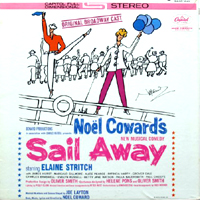 Original Broadway Cast, 1961 (Capitol/Angel) (4 / 5) Which musical has the best opening and closing numbers for its star? A good bet is Noël Coward’s Sail Away. The show-stopping songs, written expressly for Elaine Stritch, are “Come to Me” and “Why Do the Wrong People Travel?” Stritch is a stitch as a “professional pepper-upper” cruise director on an ocean liner, and her material is a hoot. Listen and guffaw at “Useful Phrases,” Coward’s clever parody of foreign guidebooks that give translations of sentences no one ever needs (“Please bring me some rhubarb”). Savor “The Little Ones’ A-B-C,” in which Stritch grapples with her passengers’ children. And when romance comes her way, the star is utterly convincing and tender singing “Something Very Strange.” Yes, the “Beatnik Love Affair” number, performed by Grover Dale, is an embarrassing attempt by Coward to be au courant. James Hurst is a disappointment as Stritch’s young lover — he’s supposed to be a breath of fresh air, but comes across as uptight — and Patricia Harty is simpering as the show’s soubrette. Still, Stritch keeps things happily afloat, so jump aboard for a good listen. — Peter Filichia
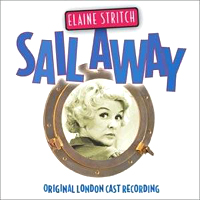 Original London Cast, 1962 (HMV/Fynsworth Alley) (3 / 5) A year after the show’s disappointing Broadway run of only a few months, Sail Away crossed over to London, where it was slightly more appreciated. Stritch was still strong at the helm, with David Holliday showing panache as her lover. One of the better songs on the original album, “The Little Ones’ A-B-C,” is missing here. But this recording does have one word more, “ass” — which, on the more demure Broadway album, was replaced by a trumpet bleat in “Why Do the Wrong People Travel.” Another addition is “Bronxville Darby and Joan,” a witty ditty for two minor characters that was cut from the New York staging, restored in London, and included here. Sadly, Irwin Kostal’s superb orchestrations have yielded to new, inferior charts by a person who is uncredited. We can understand why the culprit chose to remain anonymous. — P.F.
Ruthless!
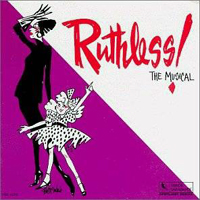 Los Angeles Cast, 1993 (Varèse Sarabande) (3 / 5) Ruthless! is a very campy show, first produced Off-Broadway in 1992 and then in Los Angeles the following year, about a talented little girl named Tina Denmark (Lindsay Ridgeway), who loves to sing and dance. All of the characters in the show are women, though you can’t help wondering if some of them are being played by men. (In this cast, one of them is.) The others on hand include Tina’s mother, who most often identifies herself only as “Tina’s mother” (Joan Ryan); an aggressive talent agent named Sylvia St. Croix (Loren Freeman); Tina’s third-grade teacher, Miss Thorn (Nancy Limari), who came to New York to be an actress but was mugged before she left Penn Station; a brassy theater critic named Lita Encore (Rita McKenzie); and a few more, all of whom seem to exist only to exploit the little girl. Near the end of the first act, it seems that Tina kills someone, which we know because her mother sings: “Oh, what’s to become of my only daughter, who I have protected from croup and split ends? So many lessons that I should have taught her — like for example, to not kill her friends.” Has Tina murdered another child who got a part she wanted? That’s possible, but from the album alone, unknowable. Tina is sent away to reform school and, after that, it’s hard to understand the additional characters we meet, or anything that happens. [Ed. Note: Although the booklet accompanying the CD issue of this recording contains the lyrics to all the songs, it does not include a synopsis of the plot.] Still, Joel Paley’s lyrics are often clever and are written with real craft. The music, by veteran dance arranger, musical director and pianist Marvin Laird, is brisk. — David Wolf
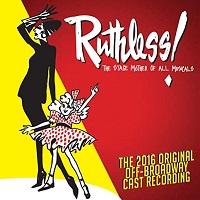 Off-Broadway Cast, 2016 (Rhino) (3 / 5) Ruthless! is a fun camp-fest of a show, but as clever as the score is, it wasn’t necessarily crying out for a second recording. That said, this album of a well received Off-Broadway production is worth at least a listen or two for its overall strong cast, pretty much equal to the original in terms of quality, and fine musical direction. Here we have Tori Murray as Tina, Kim Maresca as her mom, Andrea McCullough as her teacher, and Peter Land as her agent. One disappointment: Though its nice to have the big-and-brassy voiced Rita McKenzie, who made a career with an Ethel Merman tribute show, back in the bravura role of theater critic Lita Encore, her singing voice here has quite a wobble as compared to her performance on the previous recording. Perhaps the main reason why cast album collectors might want to purchase or at least sample this one is the presence of a few bonus tracks. One of them, also included on the 1993 album, is “I’ll Be an Unkie’s Muncle,” featuring Bernadette Peters. (Laird has played piano and conducted for that beloved musical theater star since she was 13, and this recording was used in the Off-Broadway revival of Ruthless! as a song heard on the radio during a scene change.) The album is very well produced, and the booklet that comes with the CD offers several fun color photos of the production, as well as an enjoyable and informative essay about the history of the show by music journalist James Gavin — though, here again, there is no synopsis of the plot (such as it is). — Michael Portantiere
Runaways
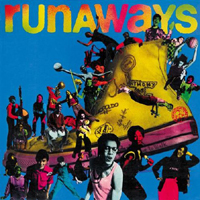 Original Broadway Cast, 1978 (Columbia/DRG) (3 / 5) Elizabeth Swados’s revue about street kids, developed by The Public Theater before opening on Broadway, was considered fresh and edgy when it debuted. Runaways is a collage of monologues and expressionistic songs featuring a young cast and “popular” music. Even if the occasional disco beats now sound dated, there’s lots of great stuff here; the Latin rhythms of “No Lullabies for Luis” and the tribal rap of “Enterprise” are among the best of what composer-lyricist Swados offers up. There are also some memorable melodies, as in the mesmerizing dirge “Every Now and Then” and the jaunty “Find Me a Hero.” Serious subjects like street violence and child prostitution dominate the show, but humor also abounds. Especially funny are “Revenge Song,” which has the runaways daydreaming about gruesome fates for their parents; “The Undiscovered Son,” in which they imagine their family members as celebrities; and the mocking “Where Are Those People Who Did Hair?” The entire 20-person ensemble radiates personality, passion, and intelligence; among what was then a largely unknown group are the now-familiar Trini Alvarado and Diane Lane. Karen Evans deserves a special mention for her unforgettable reading of the fiery song “To the Dead of Family Wars.” — Brooke Pierce
Rugantino
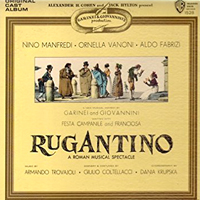 Original Broadway Cast, 1965 (Warner Bros./no CD) (3 / 5) One of the oddest musicals ever to hit Broadway, Rugantino first opened in Rome and became an enormous hit. On a visit to Italy, American producer Alexander H. Cohen became so enchanted with the show that he brought it to New York with its Italian libretto and lyrics intact. That was long before sub-or super-titles were in common use in opera houses or elsewhere, so the failure of this “Roman Musical Spectacle” on Broadway had more to do with the language barrier than with the quality of the show. The cast album was recorded in Italy, with the second leading lady replacing the original, and a different singer as the Troubadour. The souvenir program included with the LP provided an extensive synopsis, but translations of only a few songs. The librettists-lyricists are Pietro Garinei and Sandro Giovannini; the music is by Armando Trovaioli, composer of numerous Italian film scores and song hits. The score is unique; it has an unclassifiable style that will either entrance you immediately or leave you cold. On the cast album, the songs are not presented in proper sequence, so even if you read the synopsis as you listen, you may have trouble following the plot. Many musical sections of varying length and importance were not recorded, but what’s included here is performed well. As Rugantino, Nino Manfredi clearly communicates emotion through the Italian lyrics, and so do the other featured singers: Ornella Vanoni, Aldo Fabrizi, and Bice Valori. One of the traditions of a Garinei-Giovannini musical was to take a single song and have it endlessly repeated, reflecting the different characters’ points of view in the lyrics. In Rugantino, the song given such treatment is “Roma, non fa la stupida stasera,’ which was recorded by a few American singers as “The Lights of Roma” and became a standard in Italy. — Jeffrey Dunn
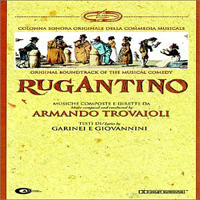 Italian Television Cast, 1978 (CAM) (3 / 5) When Rugantino was revived in Italy, it was videotaped for TV broadcast. This cast album of that production is the recording of the score that you’re most likely to find, and its lavish booklet has a few of the lyrics translated into English. This is a more complete aural document of the score than the Broadway album, with extra dance music and so on. The new Rugantino is a crooning Enrico Montesano. Bice Valori and Aldo Fabrizi repeat the roles they originated, Alida Chelli is a fetching Rosetta, and Aldo Donati is a raspy-voiced Troubadour. — J.D.
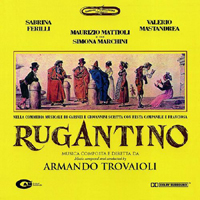 Italian Cast, 1998 (CAM) (4 / 5) Here is the most complete recording of Rugantino. The orchestrations are new, and the inclusion of some beautiful incidental music makes the score seem more cohesive than on the previous cast albums. Valerio Mastandrea is strong in the title role. The top-billed Sabrina Ferilli is a fiery Rosetta, while Maurizio Mattioli sings the Headsman’s songs powerfully. Fabrizio Rusotto’s Troubadour is also very effective. — J.D.
The Rothschilds
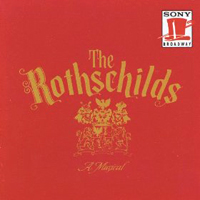 Original Broadway Cast, 1970 (Columbia/Sony)
  (5 / 5) Composer Jerry Bock and lyricist Sheldon Harnick were still at the peak of their productivity, following their great success with Fiddler on the Roof, when they wrote this sort of rich-man’s Fiddler, based on the true story of the wealthy and powerful Rothschild family. Listening to the impeccable cast album today, it’s hard to believe that The Rothschilds was not a blockbuster hit. Happily, this aural document preserves the score of a musical theater masterpiece. The songs are exciting and richly melodic, full of intelligence, character, and passion. There are outstanding, Tony Award-winning performances by Hal Linden as Mayer Rothschild and Keene Curtis in multiple roles; also excellent are Paul Hecht as Nathan Rothschild and Jill Clayburgh as Hannah Cohen. The songs “Pleasure and Privilege” and “Everything” are triumphs of ingenuity. The ballad “In My Own Lifetime,” a strong comment on the futility of war, is movingly delivered by Linden, who also does a wonderful job with the funny, clever “He Tossed a Coin.” Bock’s music is orchestrated masterfully by Don Walker. This album is a great addition to any collection. — Gerard Alessandrini
Romance Romance
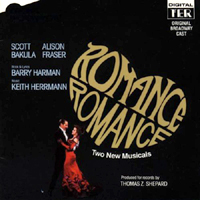 Original Broadway Cast, 1988 (MCA Classics) (2 / 5) Romance Romance is intelligent and well crafted, but the score is not one you’ll necessarily be eager to hear more than once. The show consists of two one-act musicals. In the first, a rich, bored, 19th-century Viennese man and woman masquerading as members of the bourgeoisie meet, become romantically involved, and finally reveal the truth. In the second piece, two contemporary couples sharing a house in the Hamptons ponder whether one of the couples is on the verge of adultery. The problem is an absence of defined characters: In the first act, Alfred and Pepi are just a generic man and woman, while the second-act foursome have no traits to distinguish them from one another or from anyone else. The score has careful writing by lyricist Barry Harman and composer Keith Herrmann. Their songs perform the narrative functions obediently, but we always hear a lyricist at work rather than a character portrayal being built. Cast members Scott Bakula, Alison Fraser, Robert Hoshout, and Deborah Graham all sing well, which does help. — David Wolf
The Rocky Horror Show
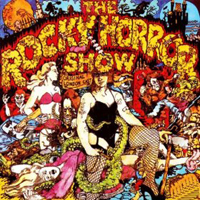 Original London Cast, 1973 (First Night)
  (1 / 5) The first recording of Richard O’Brien’s kinky cult classic is weak. The cast members include O’Brien himself, Patricia Quinn, Little Nell, Jonathan Adams, Rayner Bourton, and — of course — Tim Curry. Quinn sounds unpleasant singing “Science Fiction Double Feature,” and Bourton is even squeakier in “Sword of Damocles.” Richard Hartley’s orchestrations for a five-piece band are guitar-heavy and unexciting. At under 40 minutes, this Rocky Horror cast album is shorter than any of the others that follow; missing are “Charles Atlas Song,” “Eddie’s Teddy,” and “Planet, Schmanet, Janet.” — Seth Christenfeld
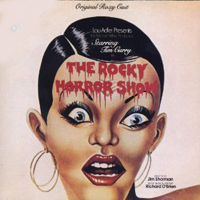 Original Roxy Cast, Los Angeles, 1974 (ODE) (3 / 5) Tim Curry is the only holdover from the London production, and the Stateside cast members do a better job with a show that’s rooted in American monster-movie culture, even if it was written by a Brit. Jamie Donnelly gets things off to a great start with a giggly “Science Fiction Double Feature.” If B. Miller is a weakish Brad and Bruce Scott a subpar Riff-Raff, the rest of the company shows high energy: Abigale Haness is enjoyable as a deliriously belty Janet; Meat Loaf offers his first blazing performance as Eddie, and also has a ball as Dr. Scott. Richard Hartley (billed here as Richard Hartly) reorchestrated the score for a larger band that’s led by D’Vaughn E. Pershing. — S.C.
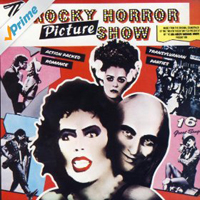 Film Soundtrack, 1975 (ODElRhino) (2 / 5) The thing about The Rocky Horror Picture Show, as the property became known on film, is that it’s iconic and indelible but not very good. Without an audience full of rowdy geeks screaming out callbacks, Rocky Horror feels incomplete: “He told us where we stand” should be followed by “on our feet,” damn it! Still, some of the performances on the soundtrack recording are definitive. Tim Curry is superlative as Frank, and several of the others are very good, but the best to be said about Susan Sarandon’s singing is that she isn’t totally awful. The first CD edition of the soundtrack (ODE) is missing “Sword of Darnocles” and “Once in a While” but has two versions of “The Time Warp”; one is a boring remix, the other a karaoke version. The other CD (Rhino) includes both songs dropped from the first one, plus lots of dialogue — too much, in fact). — S.C.
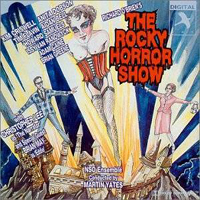 Studio Cast, 1995 (JAY) No stars; not recommended. Christopher Lee as the Narrator and Queen’s Brian May as Eddie are, in theory, amusing stunt casting — but only in theory. Both performances are unsatisfying. Everyone else on this recording — Tim Flavin, Kim Criswell, Aidan Bell, Anita Dobson, Issy Van Randwyck, Adam Caine, et al. — seems to be doing third-rate imitations of the film cast. The band plays the less-than-good arrangements from the original London production, and the cover art is terrible. — S.C.
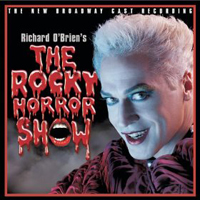 Broadway Cast, 2001 (RCA) (4 / 5) At last, a really great recording of Rocky Horror. The Broadway revival was dazzling, and so is the cast album. Tom Hewitt, Alice Ripley, Jarrod Emick, Raúl Esparza, Daphne Rubin-Vega, Dick Cavett, Sebastian LaCause, and Kristin Lee Kelly perform the hell out of the score. Hewitt is hilarious as Frank, especially in his “Sweet Transvestite” number. The one weak link in the cast is Lea DeLaria, a bad choice for Eddie/Dr. Scott. Doug Katsaros’ new orchestrations for a six-piece band are terrific. All that’s missing is the audience participation; Cavett was a deliciously funny Narrator who bantered regularly with the crowd. But what’s here is fantastic. — S.C.
Roberta
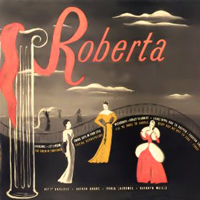 Studio Cast, 1944 (Decca) (3 / 5) Roberta has one of the best-remembered musical theater scores of the 1930s, and it owes its fame solely to the efforts of Jerome Kern, whose rapturous music managed to triumph over Otto Harbach’s regressive lyrics and an archaic plot in which the leading conflict is a dispute over an evening gown. When was the last time you heard music so gorgeous that it makes you overlook the howlers to which it’s married? “So I chaffd them” and “Happiness forsooth was mine” are only the tip of Harbach’s purple-hued iceberg. When you hear the witty “I’ll Be Hard to Handle,” you may begin to forgive Harbach for his missteps; then you discover that he did not write the lyrics for that song. (They’re the work of Bernard Dougall.) Still, a show that includes “Smoke Gets In Your Eyes” and “Yesterdays” can survive many things. The score has fared well in the recording studio, beginning with this album starring Kitty Carlisle, Alfred Drake, and Paula Lawrence. Carlisle’s voice is well suited to the imperishable “Smoke Gets in Your Eyes,” even though she sounds a bit tentative when she teams with Drake in “The Touch of Your Hand.” Lawrence makes expert comic-soubrette sounds; and Drake, who takes the songs written for both the male leads, is in glorious voice. The CD includes Drake’s Vagabond King set, so it’s as much a tribute to this great Broadway star as it is to the dazzling artistry of Jerome Kern. — Richard Barrios
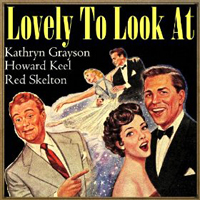 Film Soundtrack: Lovely to Look At, 1952 (MGMlRhino-Turner) (2 / 5) In venerable musical comedy tradition, the central couple in Roberta carries the plot and love songs while the secondary pair gets the zingy numbers and incidental shtick. For the MGM film version of the property, retitled Lovely to Look At, three couples are on hand: Howard Keel and Kathryn Grayson for the romance, Marge and Gower Champion for song and dance, and Red Skelton for shtick and Ann Miller for zing. The whole thing is dauntingly glossy, but there are some nice moments. Keel and Grayson perform in synch with their reputations: He’s strong-voiced, she’s shrill. The Champions could never replace Astaire and Rogers, but they’re fun on their own terms, and Miller belts out “I’ll Be Hard to Handle” in her best earthy style. The CD includes some interesting numbers that were cut from the film, and boasts crisply remastered sound. — R.B.
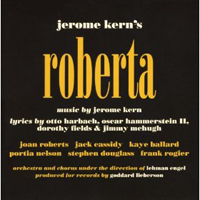 Studio Cast, 1953 (Columbia/Sony) (3 / 5) This well-cast Roberta features Stephen Douglass making wonderfully virile sounds that come close to overpowering the sweetly tentative singing of Joan Roberts. Jack Cassidy and Kaye Ballard, a pair of pros recorded early in their careers, are perfectly attuned to the lighter Kern style; Cassidy’s work in particular is effortlessly suave. Portia Nelson is a full-voiced Aunt Minnie (a.k.a. Mme. Roberta), and Lehman Engel’s idiomatic conducting ensures that, unlike the MGM film soundtrack, Kern’s work isn’t smothered by too much schmaltz here. — R.B.
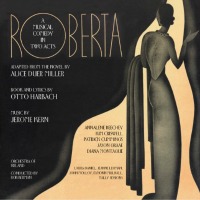 Studio Cast, 2014 (New World Records) (5 / 5) Far too many of Jerome Kern’s shows have not been fully served in the recording studio. Happily, in 2014, Kern’s divine score for Roberta was taken off that list with yet another painstaking reconstruction from the intrepid arranger/editor Larry Moore and the good folk at New World Records. From beginning to end, we are given a full sense of how the show worked, with much of the dialogue included along with the music. There are frequent reprises, among them an especially beguiling “The Touch of Your Hand” for female trio. Robert Russell Bennett’s orchestrations sound as beautiful now as they did in 1933, if not more so, and conductor Rob Berman and the Orchestra of Ireland gives them all the care and lilt they deserve. Nor is the cast any kind of a letdown: Annalene Beachey is lovely as Stephanie, and even manages a credible Russian accent; Jason Graae is swell in the Hope/Astaire role; and Patrick Cummings makes a sturdy, romantic John. The role of Scharwenka is probably impossible to underplay, and few musical theater recording mavens will be surprised at how far Kim Criswell goes with both the accent and what can gently be termed some exuberant transitions from one vocal register to another. Opera veteran Diana Montague sings a sumptuous “Yesterdays,” and Laura Daniel rates a bouquet for her purring, creamy-toned, absolutely despicable Sophie. With this much class and skill, Roberta soars as a worthy musical comedy, instead of some folderol with good tunes. Kern wins out, and so does the listener. All that’s missing is a fashion show. — R.B.
The Robber Bridegroom
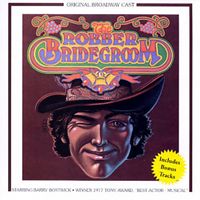 Original Broadway Cast, 1976 (Columbia/Original Cast Records) (4 / 5) Let’s face it, country music is not where Broadway shines. But this show is a happy exception to the rule. Composer Robert Waldman and lyricist-librettist Alfred Uhry came up with a fiddle-filled score that beautifully enhances Eudora Welty’s story of an innocent young lass who falls in love with the handsome, brooding anti-hero. Waldman delivers music written in various country styles, including folk-like ballads, bluegrass, square dances, toe-tappers, and comedy numbers, yet there is a theatricality to the songs that makes you glad this is a Broadway musical. Of course, it also helps greatly to have future Oscar, Tony and Pulitzer Prize-winner Alfred Uhry on hand to craft lyrics that beautifully define the characters. Many musical theater fans will view as a disappointment this recording with the 1976-77 Broadway cast — Barry Bostwick, Rhonda Coullet, Barbara Lang, Lawrence John Moss, Ernie Sabella, Stephen Vinovich, Dennis Warning — because it does not feature Patti LuPone, who played the heroine in the original 1975 cast. Another thing: Don’t you hate it when a CD lumps two songs together in one track, one of which you love far more than the other? If you want to put the track on “Repeat,” there’s no getting around having to hear the song you wish would go away. And that brings us (eventually) to “Two Heads Are Better Than One” on this recording. To get to this goodie, we must wade through 35 seconds of a just-okay song called “Suddenly the Day Looks Sunny” and then the bane of cast album guru Goddard Lieberson’s existence: introductory dialogue that you won’t want to hear more than once, if even once. Granted, there’s only 10 seconds of it, but every little bit hurts. After all that, we finally arrive at the delicious “Two Heads….,” which felicitously tells of a couple of brothers, one of whom is the brains of the operation and the other the brawn. This unfortunate tracking decision is a flaw in a generally swell album. — Peter Filichia
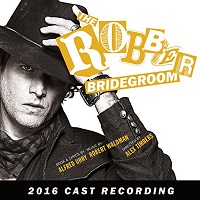 Off-Broadway Cast, 2016 (Ghostlight) (4 / 5) Here, “Two Heads Are Better Than One” happily gets an all-by-its-lonesome track, and for those of us who adore the song, that’s enough reason to acquire this recording. But it’s hardly the only motivation. The album clearly displays why the 2016 Off-Broadway production came home with three Lucille Lortel Awards, including Outstanding Revival. Other winners? Outstanding Lead Musical Actor Steven Pasquale as Jamie, the title character, who comes across as a lovable rogue in all of his half-dozen songs. Outstanding Featured Musical Actress Leslie Kritzer is a delight as a stepmother so evil that she makes Cinderella’s seem like Maria von Trapp. Alas, the recording doesn’t give you the opportunity see Kritzer making her pretty face look utterly hideous for the role, but she’ll tell you all about face values in “The Pricklepear Bloom.” Ahna O’Reilly should have taken home some prizes of her own for her portrayal of Rosamund, who gets involved with bad boy Jamie (as some lovely ladies do, instead of seeking kind gentlemen). O’Reilly’s fine rendition of “Sleepy Man” will keep even the most sleep-deprived wide-awake. This cast album sounds less “Broadway” than the previous one; not that the 1976 version will ever be confused with the work of Rodgers and either Hart or Hammerstein, but this one is rougher around the edges, with voices that growl more. In addition to music director Justin Levine, we can thank director Alex Timbers for the new interpretation, and for co-producing (with Kurt Deutsch) a Robber Bridegroom album that gives “Two Heads Are Better Than One” its full due. — P.F.
The Roar of the Greasepaint, the Smell of the Crowd
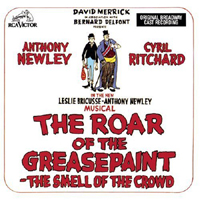 Original Broadway Cast, 1965 (RCA) (3 / 5) Is that a car with a bad muffler, or a lame rhinoceros rousing itself out of the mud? No, it’s Anthony Newley, wallowing in self-pity and vibrato as he belt-bleats, “WHOOO can I tuuhhn to ifYOUUU tuuhhnAH-WHYYYY!!I” — one of several fine songs in this unprofitable but tuneful follow-up to Stop the World, I Want to Get Off. Like that 1961 hit, Roar was a self-consciously “new-style” musical that starred Newley and featured a Newley-Leslie Bricusse score. There’s little spine to the book except for Cyril Ritchard as Sir constantly getting the better of Newley’s Cocky, with a children’s chorus spelling them from time to time. But the score is strong; it includes not only “Who Can I Turn To?” but also “On a Wonderful Day Like Today,” “Look at That Face,” “My First Love Song,” and other goodies. Ritchard’s dry prissiness works well here, and Philip J. Lang’s orchestrations are super-bright. (Love those dissonant trumpets, a half-tone apart, in “Joker.”) Gilbert Price as “The Negro” (this was a well-meaning show but a naïvely symbolic one) offers a spine-tingling, nearly a cappella rendition of “Feeling Good,” and the kids are cute in “The Beautiful Land” and “That’s What It Is to Be Young.” They help compensate for the moments when Newley’s vibrato careens off the highway. — Marc Miller
Riverwind
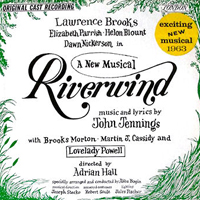 Original Off-Broadway Cast, 1962 (London/no CD) (3 / 5) After a brief instrumental prelude of the title song, the sound of crickets is heard, a soft female voice sings hauntingly in the distance, and the juvenile begins a sweet lament about the girl he loves (“I Cannot Tell Her So”). This is how Riverwind gets going, and it gradually becomes an almost-Chekhovian piece as it explores the relationships of two couples visiting Riverwind, a bucolic getaway along the Wabash River. The older couple (played by Elizabeth Parrish and Lawrence Brooks) is returning to the site of their honeymoon; the younger couple (Brooks Morton and Lovelady Powell) are not married. Also on hand are the woman (Helon Blount) who runs Riverwind, her daughter (Dawn Nickerson), and a boy (Martin Cassidy) who works there. The songs by composer-lyricist John Jennings are highly entertaining, performed by seven wonderful singing actors. Blount practically steals the recording with two contrasting duets: “Sew the Buttons On,” wherein she gives some homespun advice to her daughter, and “A Woman Must’ Never Grow Old,” a drunken, barrel-house-style number with Parrish. Nickerson is all youthful exuberance in “I Want a Surprise” and Parrish is all delicate wistfulness as she lends her sure soprano to the title song. Morton and Powell get two excellent comedy duets, “American Family Plan” and “Almost, But Not Quite.” There is also a sophisticated quartet called “Wishing Song.” The recording is well produced, with just enough dialogue to give the songs a dramatic context. (Ed. Note: Riverwind opened in December 1962, but the cast album was released in 1963.) — Jeffrey Dunn
Roadside
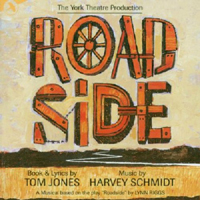 Original Off-Broadway Cast, 2001 (JAY) (2 / 5) Tom Jones and Harvey Schmidt first began work on a musical adaptation of Lynn Riggs’ 1930 play Roadside in the mid-1950s but didn’t complete it until almost a half-century later. In many ways, the musical still felt unfinished in its 2001 York Theatre production. (The cast album was made in early 2002.) It tells the meandering, bland story of a woman caught between a tough bad guy and a meek good guy, and the score is full of harmless but mostly unmemorable numbers. The recording nicely preserves the simple, country-tinged songs, but the score isn’t on a par with that of the established Jones-Schmidt hits. The title song is attractive, as is the rustic ballad “The Way It Should Be.” The bawdy “Personality Plus,” energetically delivered by James Hindman, is a real highlight. Drab performances from just about everyone else, including leads Julie Johnson and Jonathan Beck Reed, don’t help, but songs like “Here Am I,” “Smellamagoody Perfume,” and “Another Drunken Cowboy” probably wouldn’t sound great even if performed by Broadway’s best. — Matthew Murray
Rio Rita
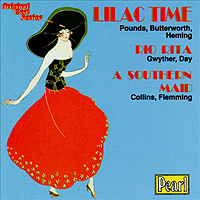 Original London Cast, 1930 (Columbia/Pearl) (3 / 5) One of the quintessential musicals of the 1920s, Rio Rita was also a bit of an oddity, poised as it was on the brink between musical comedy and operetta. It has a typically lush and improbable plot (romance and intrigue on the Texas/Mexico border), a lot of comic relief, and an excellent score by Harry Tierney with lyrics by Joseph McCarthy. Florenz Ziegfeld thought enough of the show to use it to inaugurate his colossal Ziegfeld Theater, where it opened in 1927 and ran for a year, then inspired two movies — a musical and an Abbott and Costello comedy. Since then, it has been little in evidence; with its haciendas and banditos, Rio Rita probably isn’t a candidate for a politically corrected revival. This album of six selections from the score features members of the original London cast. (“You’re Always in My Arms,” a song that Tierney wrote for the first movie version, is interpolated here.) Edith Day is fine as Rita. Geoffrey Gwyther, as her romantic Texas Ranger, is virile of voice but so implacably British in manner that’s it’s a hoot to hear him singing of his patrols along the Rio Grande. The nationality of the chorus members is just as obvious, but this doesn’t detract from their enthusiasm, or from the enjoyment these recordings still give a listener so many years after they were made. (Note: Selections from Lilac Time and A Southern Maid are also included on Pearl’s CD.) — Richard Barrios
The Rink
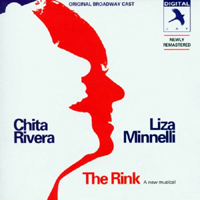 Original Broadway Cast, 1984 (Polygram/JAY) (4 / 5) For Broadway diva lovers, it’s the Fight of the Century. In this corner: Chita Rivera as Anna, a feisty, middle-aged widow who’s about to walk out on the decrepit seaside roller rink she inherited from her husband, Dino. In the opposite corner: Liza Minnelli as Angel, her estranged, ex-hippie daughter, who’s racked up plenty of mileage on the road and in the bedroom. The stage is set for wisecracks, arguments, tears, and many flashbacks as Anna and Angel relive their tormented past, battle over the rink, and finally come to terms. Critics complained that Terrence McNally’s book, with its profane leading ladies and its preponderance of ugly incidents including fraud, rape, and domestic abuse, was unpleasant and manipulative. It is a shock to hear Liza sing to Chita, “Your ass is in a sling!” Still, the show is a true original. The only possible complaint about the score by composer John Kander and lyricist Fred Ebb is that their songs are too knowingly tailored to the stars’ talents. But anyone who loves Rivera and Minnelli will find this cast album irresistible. Rivera has never been better, sardonically recalling her homemaking career in “Chief Cook and Bottle Washer” and belting her heart out in “We Can Make It.” Minnelli, cast as a wilted flower child, movingly reflects on her aimless life in “Colored Lights” and wackily imagines the rink as “Angel’s Rink and Social Center.” The stars pair up beautifully, trading barbs in “Don’t Ah Ma Me,” ogling men through a pot-induced haze in “The Apple Doesn’t Fall,” and kicking up their heels in “Wallflower.” The exclusively male supporting players, representing the wreckers who have come to tear down the rink, portray everyone in Anna and Angel’s pasts. (Included among these performers are future director Scott Ellis and future Broadway and TV star Jason Alexander.) The score reaches its peak in “Mrs. A,” featuring Anna, Angel, Lenny, and a clutch of leering neighborhood suitors; the number has the complexity of a one-act opera as it explores Anna’s loneliness and frustration, her anger at God, and Angel’s troubled awareness of her mother’s sex life. The show climaxes on a sour note with “All the Children in a Row,” a eulogy for the 1960s that sounds phony coming from Minnelli. Still, there are plenty of glitzy pleasures to be found here. — David Barbour
 Original London Cast, 1988 (JAY) (2 / 5) As Anna and Angel, Josephine Blake and Diane Langton are surprisingly good and, at times, they sound like their Broadway predecessors. Still, this is a star vehicle without stars, and the performances of the London leading ladies don’t display Chita and Liza’s tough, malicious wit and all-enveloping warmth. Blake and Langton don’t get many laughs out of “The Apple Doesn’t Fall,” but on the plus side, Langton doesn’t sound as silly as Minnelli when delivering “All the Children in a Row.” As is the case in many London cast recordings of Broadway musicals, the entire performance is a bit too slow and lacks a certain edge — a real debit in a show that’s nothing if not edgy. — D.B.
Rex
 Original Broadway Cast, 1976 (RCA) No stars; not recommended. This late-career Richard Rodgers flop, about the marital problems of Henry VIII, revealed the composer to be out of touch with contemporary Broadway. He wasn’t the only one: Librettist Sherman Yellen and lyricist Sheldon Harnick couldn’t decide if Henry, played by Nicol Williamson, was a monster of ambition and ego or a misunderstood paterfamilias like Captain von Trapp. Yellen’s big gimmick was to have Penny Fuller appear in Act I as Anne Boleyn and in Act II as her daughter, Elizabeth I; this created a neat psychological triangle with Henry, but the show’s melodies are often slow and stentorian, while the lyrics explain themselves to death. The best items are the opening madrigal “No Song More Pleasing” and the Henry-Anne ballad “Away From You.” The rest of the cast album is taken up by such awful numbers as “The Chase,” in which the men of the court keep score of Henry’s conquests, and “In Time,” a solo for Elizabeth that sounds like a first draft of “Do-Re-Mi.” (On the plus side, Irwin Kostal’s orchestrations frequently have a pleasant Renaissance patina.) Williamson croons mournfully through seemingly dozens of songs wherein he complains about the lack of an appropriate heir. Stargazer alert: Glenn Close can be heard in one or two numbers as Mary Tudor. — David Barbour
Rent
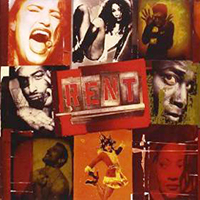 Original Broadway Cast, 1996 (Dreamworks, 2CDs) (5 / 5) Rent is a heartbreaking work in more than one sense. First, it’s a moving reimagination of La Bohème as a portrait of struggling artists on New York’s Lower East Side in the 1990s, coping with poverty, drugs, and AIDS. Second, composer-lyricist-librettist Jonathan Larson died before the first preview, depriving us of a major voice in the musical theater. Larson’s rich melodic gift is on full display here as he cunningly creates a Broadway opera in a modern musical idiom. Among the best items are “One Song Glory,” sung by the creatively blocked, HIV-positive musician Roger; “Light My Candle,” the seductive entrance for the ailing Mimi; the clever catalogue song “La Vie Bohème” (surely the only lyric to reference Maya Angelou, Stephen Sondheim, Susan Sontag, and the Sex Pistols); and the time-spanning “Seasons of Love.” But the score is filled with alluring, propulsive melodies and a fresh lyrical wit that undercuts any sentimentality. Rent has long since become a period piece, yet it remains viable because Larson captures the wounded idealism of his characters and makes you care deeply about them. The original production launched the careers of Adam Pascal (Roger), Daphne Rubin-Vega (Mimi), Anthony Rapp (Mark Cohen), Idina Menzel (Maureen), Taye Diggs (Benny), Jesse L. Martin (Tom Collins), and Wilson Jermaine Heredia (Angel). There’s not a weak performance in the bunch. The two-disc recording preserves the entire score and therefore reveals the breadth of Jonathan Larson’s ambition and talent. This is a key work that reached a new generation of young theatergoers. — David Barbour
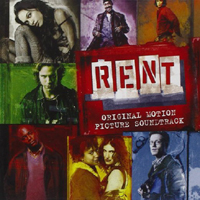 Film Soundtrack, 2005 (Warner Bros., 2CDs/1CD highlights) (3 / 5) The film is but a shadow of the show, and the soundtrack can be summed up as smother, shorter, and slighter. Gone is much of the show score’s connective tissue in the form of brief musical sequences such as the phone calls from Mark and Roger’s mothers and the predatory television producer Alexi Darling. Also regrettable is the deletion of the “On the Street” and “Contact” sequences, which reveal much about the characters. Most of the Broadway principals repeated their roles in the movie, with two exceptions: Rosario Dawson is an acceptable Mimi, but the raw immediacy of Daphne Rubin Vega’s interpretation is much missed; and Tracie Thoms as Joanne isn’t as witty a sparring partner for Idina Menzel’s Maureen as was Fredi Walker. On the plus side, Wilson Jermaine Heredia’s rendition of the percussive, rapid-fire “Today for You” is more intelligible. The decision to begin the film with the breakout hit “Seasons of Love” is an indication that something has shifted here. When Rent opened, it was already a look back at a vanishing Lower East Side; the film and, by extension, the soundtrack recording treat it as a distant era in history, and as a consequence, a lot of the excitement is lost. Still, there are some fine cuts, and this version may be enjoyable to casual fans. A bonus track, “Love Heals,” written by Larson but left out of the show, was probably added in a vain attempt at garnering an Oscar nomination for Best Song. — D.B.
Reefer Madness
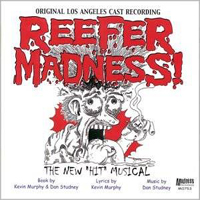 Original Los Angeles Cast, 1999 (Madness Records) (2 / 5) Musicals don’t come much sillier than the Kevin Murphy (lyrics-book) and Dan Studney (music-book) adaptation of Reefer Madness. This wacky show based on the legendary 1938 “masterpiece” of film propaganda was a big hit in Los Angeles, but an Off-Broadway production that opened shortly after 9/11 ran for only three weeks. It would seem that the tale of teenagers whose lives are corrupted and ultimately destroyed by “the green menace” of marijuana would be a natural for musicalization; the songs, though well crafted with cleverly rhymed lyrics, are largely devoid of sincerity, and the whole thing eventually gets tiresome. A few moments stand out, including the catchy title number, a strong first-act finale, and one truly great song, “Listen to Jesus, Jimmy.” The cast is uniformly terrific: Christian Campbell and Jolie Jenkins as the doomed teens Jimmy and Mary, Robert Torti as both Jack (the villainous dealer) and a Tom Jones-esque Jesus Christ, the hilarious Harry S. Murphy as the Lecturer and other roles, big-voiced Lori Alan as Jack’s pot-addled mistress Mae, Erin Matthews as self-described “reefer slut” Sally, and John Kassir as a couple of colorful characters. David Manning and Nathan Wang lead the strong six-man band. The recording ends with a pair of bonus tracks; one of them is a nice ballad from a work in progress called Valley of Kings (which, as of 2025, has not yet progressed), the other is a song cut from Reefer Madness early in its run. — Seth Christenfeld
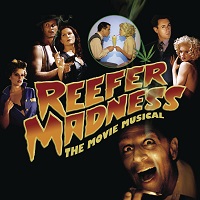 Television Movie Soundtrack, 2008 (Ghostlight) (2 / 5) Murphy and Studney were (and still are) primarily television guys, so there’s something logical about Reefer Madness making its way to the small screen in an adaptation for Showtime. The film is surprisingly sumptuous and supplied with a powerhouse cast: Campbell, Kassir, and Torti reprise their primary stage roles from the original L.A. production, Kristen Bell from the ill-fated Off-Broadway run returns as Mary, Alan Cumming chews the scenery as the Lecturer, and bad girls Mae and Sally are sung to the rafters by Ana Gasteyer and Amy Spanger. (Steven Weber appears in the movie as Jack, but is barely present on the soundtrack.) The material is still what it is, albeit with a few songs cut or switched out, but it’s fun to hear it all with a big orchestra and chorus. Note that two versions of the soundtrack album exist. A promo CD distributed at the time of the film’s 2005 broadcast has some alternate edits, while the eventual commercial release on the Ghostlight label — which includes five karaoke tracks as bonuses — was only available as a two-disc set, Disc II being a reissue of the 1999 album, and is now difficult to find. The physical edition included a booklet that is omitted from the digital version. — S.C.
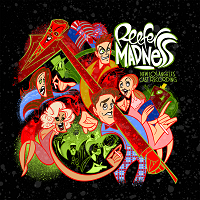 Los Angeles Cast, 2024 (Yellow Sound Label) (2 / 5) Thanks to a producing team led by its creators and the leading performers of the TV movie, Reefer Madness made a grand return to Los Angeles in 2024, in a 25th anniversary production staged environmentally in a former nightclub. This version is condensed to one act and incorporates many of the changes made for the film. The recording sounds phenomenal, and the performances are top-notch — especially Darcy Rose Byrnes as Mary and Nicole Parker as Mae — but the songs are still only solid enough to make you wish they were better. Bryan Daniel Porter was apparently spectacular on stage playing the roles originated by both Murphy and Torti, but he doesn’t have enough voice to make much of an impression on the album. A pair of cut songs, different from the one on the 1999 recording, are included as bonus tracks. The booklet is gorgeous, with fabulous cover art by cartoonist Justin “Squigs” Robertson, a detailed synopsis, full lyrics, and some two dozen production photos. — S.C.
Red, Hot and Blue
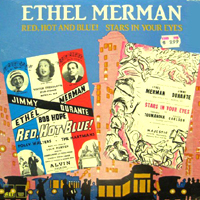 Ethel Merman With Studio Artists, 1936 (Liberty/AEI) {usr=4] Hoping for another Anything Goes, producer Vinton Freedley put Cole Porter and Ethel Merman together again, this time adding Jimmy Durante and Bob Hope to the mix. But Red, Hot and Blue, about a missing heiress who can only be identified by a waffle-iron brand on her buttock, ran only about half as long as its predecessor. Merman recorded her four major songs from the show with pianists Fairchild and Carroll and their orchestra, and she’s in top form here — belting “Ridin’ High” to high heaven, breaking your heart in “Down in the Depths (on the 90th Floor),” and swinging with insouciance through the title song and “It’s DeLovely.” Also included are a Fairchild-Carroll instrumental medley and the amusing “The Ozarks Are Calling Me Home,” performed by Ramona and her Grand Piano. (Note: AEI’s CD also contains selections from the Arthur Schwartz-Dorothy Fields show Stars in Your Eyes. Other songs from Red, Hot and Blue can be found on Ben Bagley’s Cole Porter Revisited album.) — Jeffrey Dunn