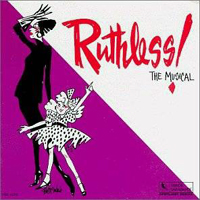
 Los Angeles Cast, 1993 (Varèse Sarabande)
  (3 / 5) Ruthless! is a very campy show, first produced Off-Broadway in 1992 and then in Los Angeles the following year, about a talented little girl named Tina Denmark (Lindsay Ridgeway), who loves to sing and dance. All of the characters in the show are women, though you can’t help wondering if some of them are being played by men. (In this cast, one of them is.) The others on hand include Tina’s mother, who most often identifies herself only as “Tina’s mother” (Joan Ryan); an aggressive talent agent named Sylvia St. Croix (Loren Freeman); Tina’s third-grade teacher, Miss Thorn (Nancy Limari), who came to New York to be an actress but was mugged before she left Penn Station; a brassy theater critic named Lita Encore (Rita McKenzie); and a few more, all of whom seem to exist only to exploit the little girl. Near the end of the first act, it seems that Tina kills someone, which we know because her mother sings: “Oh, what’s to become of my only daughter, who I have protected from croup and split ends? So many lessons that I should have taught her — like for example, to not kill her friends.” Has Tina murdered another child who got a part she wanted? That’s possible, but from the album alone, unknowable. Tina is sent away to reform school and, after that, it’s hard to understand the additional characters we meet, or anything that happens. [Ed. Note: Although the booklet accompanying the CD issue of this recording contains the lyrics to all the songs, it does not include a synopsis of the plot.] Still, Joel Paley’s lyrics are often clever and are written with real craft. The music, by veteran dance arranger, musical director and pianist Marvin Laird, is brisk. — David Wolf
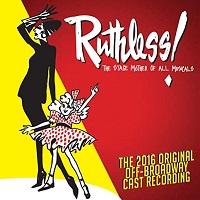 Off-Broadway Cast, 2016 (Rhino) (3 / 5) Ruthless! is a fun camp-fest of a show, but as clever as the score is, it wasn’t necessarily crying out for a second recording. That said, this album of a well received Off-Broadway production is worth at least a listen or two for its overall strong cast, pretty much equal to the original in terms of quality, and fine musical direction. Here we have Tori Murray as Tina, Kim Maresca as her mom, Andrea McCullough as her teacher, and Peter Land as her agent. One disappointment: Though its nice to have the big-and-brassy voiced Rita McKenzie, who made a career with an Ethel Merman tribute show, back in the bravura role of theater critic Lita Encore, her singing voice here has quite a wobble as compared to her performance on the previous recording. Perhaps the main reason why cast album collectors might want to purchase or at least sample this one is the presence of a few bonus tracks. One of them, also included on the 1993 album, is “I’ll Be an Unkie’s Muncle,” featuring Bernadette Peters. (Laird has played piano and conducted for that beloved musical theater star since she was 13, and this recording was used in the Off-Broadway revival of Ruthless! as a song heard on the radio during a scene change.) The album is very well produced, and the booklet that comes with the CD offers several fun color photos of the production, as well as an enjoyable and informative essay about the history of the show by music journalist James Gavin — though, here again, there is no synopsis of the plot (such as it is). — Michael Portantiere
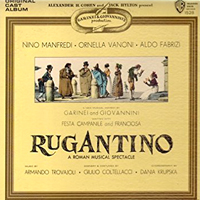
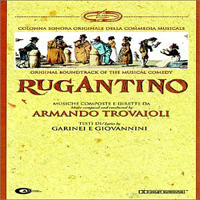
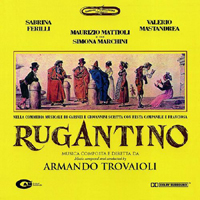
 (4 / 5) Here is the most complete recording of Rugantino. The orchestrations are new, and the inclusion of some beautiful incidental music makes the score seem more cohesive than on the previous cast albums. Valerio Mastandrea is strong in the title role. The top-billed Sabrina Ferilli is a fiery Rosetta, while Maurizio Mattioli sings the Headsman’s songs powerfully. Fabrizio Rusotto’s Troubadour is also very effective. — J.D.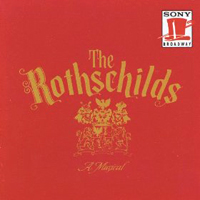
 (5 / 5) Composer Jerry Bock and lyricist Sheldon Harnick were still at the peak of their productivity, following their great success with Fiddler on the Roof, when they wrote this sort of rich-man’s Fiddler, based on the true story of the wealthy and powerful Rothschild family. Listening to the impeccable cast album today, it’s hard to believe that The Rothschilds was not a blockbuster hit. Happily, this aural document preserves the score of a musical theater masterpiece. The songs are exciting and richly melodic, full of intelligence, character, and passion. There are outstanding, Tony Award-winning performances by Hal Linden as Mayer Rothschild and Keene Curtis in multiple roles; also excellent are Paul Hecht as Nathan Rothschild and Jill Clayburgh as Hannah Cohen. The songs “Pleasure and Privilege” and “Everything” are triumphs of ingenuity. The ballad “In My Own Lifetime,” a strong comment on the futility of war, is movingly delivered by Linden, who also does a wonderful job with the funny, clever “He Tossed a Coin.” Bock’s music is orchestrated masterfully by Don Walker. This album is a great addition to any collection. — Gerard Alessandrini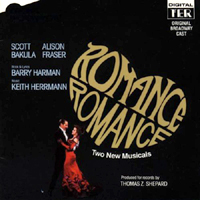
 (2 / 5) Romance Romance is intelligent and well crafted, but the score is not one you’ll necessarily be eager to hear more than once. The show consists of two one-act musicals. In the first, a rich, bored, 19th-century Viennese man and woman masquerading as members of the bourgeoisie meet, become romantically involved, and finally reveal the truth. In the second piece, two contemporary couples sharing a house in the Hamptons ponder whether one of the couples is on the verge of adultery. The problem is an absence of defined characters: In the first act, Alfred and Pepi are just a generic man and woman, while the second-act foursome have no traits to distinguish them from one another or from anyone else. The score has careful writing by lyricist Barry Harman and composer Keith Herrmann. Their songs perform the narrative functions obediently, but we always hear a lyricist at work rather than a character portrayal being built. Cast members Scott Bakula, Alison Fraser, Robert Hoshout, and Deborah Graham all sing well, which does help. — David Wolf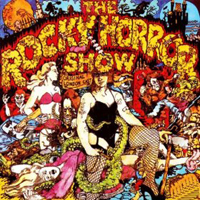
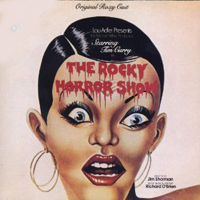
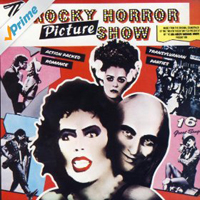
 (1 / 5) The first recording of Richard O’Brien’s kinky cult classic is weak. The cast members include O’Brien himself, Patricia Quinn, Little Nell, Jonathan Adams, Rayner Bourton, and — of course — Tim Curry. Quinn sounds unpleasant singing “Science Fiction Double Feature,” and Bourton is even squeakier in “Sword of Damocles.” Richard Hartley’s orchestrations for a five-piece band are guitar-heavy and unexciting. At under 40 minutes, this Rocky Horror cast album is shorter than any of the others that follow; missing are “Charles Atlas Song,” “Eddie’s Teddy,” and “Planet, Schmanet, Janet.” — Seth Christenfeld