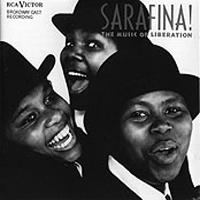
 Original Cast, 1988 (RCA)
  (4 / 5) Conceived and directed by Mbongeni Ngema, Sarafina! is the “little musical that could.” Despite considerable financial hardship in moving the show to production, it premiered in Johannesburg, South Africa and, within three months, was transported intact to New York for a limited engagement at Lincoln Center. It proved so popular there that it moved to Broadway, where it received five Tony Award nominations and ran for 597 performances. Sarafina! concerns apartheid and its repressive conditions as reflected in the lives of a group of high school students in Soweto during the 1980s. The title character is an endearing rebel who retains her zeal for civil rights despite harassment and incarceration. The score, by Ngema and Hugh Masekela, features the stomping dance rhythms, electronic keyboard, blasts of brass, and idiosyncratic vocal harmonies that are trademarks of Mbaqanga, the pop sound of South Africa’s black townships. The album offers exhilarating, letter-perfect performances that pulse and spin inexorably toward the climactic number, “Bring Back Nelson Mandela,” during which Sarafina (Leleti Khumalo) impersonates the then-imprisoned leader and imagines what he might say upon release. — Charles Wright
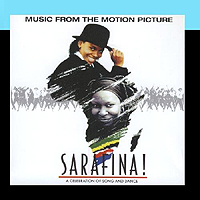 Film Soundtrack, 1992 (Next Music)
  (2 / 5) The fair-to-middling film Sarafina! The Sound of Freedom, based on the exhilarating stage show Sarafina! The Music of Liberation, was released in 1992. The original musical captivated New York audiences in part because it depicted the ongoing injustice of South African apartheid and the then-current liberation movement; the film appeared a year after repeal of the apartheid laws. This soundtrack recording features various artists performing selections from the exciting musical score by Mbongeni Ngema and Hugh Masekela: Leleti Khumalo repeats her stage role of Sarafina, the irrepressible juvenile activist; the great singer and civil rights activist Miriam Makeba is her mother, who has slaved her whole life for members of the white ruling class; and Whoopi Goldberg plays Mary Masembuko, the audacious teacher who defies the state-sanctioned curriculum in order to inspire and indoctrinate Sarafina. Ngema, who conceived and directed the original stage musical, is on hand in the role of a constable but has been displaced as director by Darrel James Roodt. The musical numbers, recorded under state-of-the-art conditions, are respectably performed but lack the exuberance and emotional range that make the original-cast recording so exciting. That’s hardly surprising; whereas the Lincoln Center/Broadway recording is like a handcrafted treasure from the workshop of a natural artisan, the film soundtrack is an aural document of a commercial enterprise trying to replicate that treasure for the masses. On stage, Sarafina! was lively agitprop that contributed appreciably to global support for the South African liberation movement. The screen version, coming after repeal of apartheid, celebrated change and anticipated the election that would make Nelson Mandela the country’s first black president two years after the movie’s premier. Almost a quarter century later, the film is a memento of concerted social action that proved things can get better. Despite the compromises necessary to get this bold material to mainstream screens, including star casting and the substitution of Roodt for Ngema, this 40-minute soundtrack recording is true to the spirit and purpose reflected in the original cast album, if not equal to it in quality or energy. – C.W.
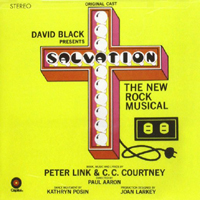
 (3 / 5) Unlike some other rock musicals of the period, Salvation had no dance or spectacle elements; the physical production was tacky, and the show played in an ungainly Off-Broadway space. Yet the songs, by Peter Link and C. C. Courtney, are uncommonly sweet and melodic. The style of the music is so time-specific that, to some modern ears, it may be meaningless. Still, there’s a touching simplicity in “Let the Moment Slip By,” all about a young woman who didn’t sleep with her boyfriend and regrets it after he’s killed in Vietnam. “Daedalus” is at once an odd and ravishing tune, especially as performed by jazz singer Yolande Bavan. “In Between,” “Gina,” “Let’s Get Lost in Now,” and “If You Let Me Make Love to You, Then Why Can’t I Touch You” are arresting ’60s rock. The cast, which includes songwriters Link and Courtney along with Joe Morton, Chapman Roberts, Marta Heflin, and Annie Rachel, is vocally strong. The CD edition of the cast album includes three songs that previously had been issued only on the eight-track tape version of the recording. — David Wolf
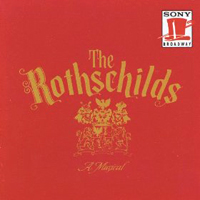
 (5 / 5) Composer Jerry Bock and lyricist Sheldon Harnick were still at the peak of their productivity, following their great success with Fiddler on the Roof, when they wrote this sort of rich-man’s Fiddler, based on the true story of the wealthy and powerful Rothschild family. Listening to the impeccable cast album today, it’s hard to believe that The Rothschilds was not a blockbuster hit. Happily, this aural document preserves the score of a musical theater masterpiece. The songs are exciting and richly melodic, full of intelligence, character, and passion. There are outstanding, Tony Award-winning performances by Hal Linden as Mayer Rothschild and Keene Curtis in multiple roles; also excellent are Paul Hecht as Nathan Rothschild and Jill Clayburgh as Hannah Cohen. The songs “Pleasure and Privilege” and “Everything” are triumphs of ingenuity. The ballad “In My Own Lifetime,” a strong comment on the futility of war, is movingly delivered by Linden, who also does a wonderful job with the funny, clever “He Tossed a Coin.” Bock’s music is orchestrated masterfully by Don Walker. This album is a great addition to any collection. — Gerard Alessandrini
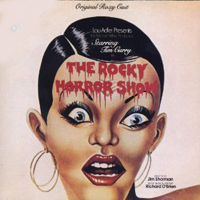
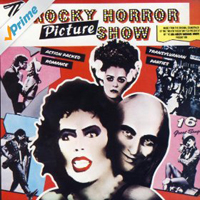
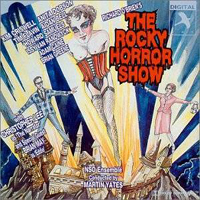
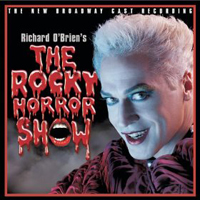
 (1 / 5) The first recording of Richard O’Brien’s kinky cult classic is weak. The cast members include O’Brien himself, Patricia Quinn, Little Nell, Jonathan Adams, Rayner Bourton, and — of course — Tim Curry. Quinn sounds unpleasant singing “Science Fiction Double Feature,” and Bourton is even squeakier in “Sword of Damocles.” Richard Hartley’s orchestrations for a five-piece band are guitar-heavy and unexciting. At under 40 minutes, this Rocky Horror cast album is shorter than any of the others that follow; missing are “Charles Atlas Song,” “Eddie’s Teddy,” and “Planet, Schmanet, Janet.” — Seth Christenfeld