 Studio Cast, 1960 (Angel/Sepia)
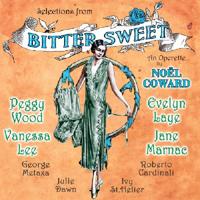
  (1 / 5) It seemed a radical idea in 1929: an operetta with believable characters, literate dialogue, first-rate lyrics, and a minimum of the coyness associated with the form. With Noël Coward providing all of the above, plus the music, a classic was born — a sentimental love story with grace, intelligence, wit, and irony. Alas, the recording industry has yet to do the show full justice. Aside from a few tracks featuring the original London cast (including Peggy Wood, whose “Zigeuner” sounds like a madwoman’s hysterics), Bitter Sweet has rated only two studio cast recordings and one stage revival cast album. The first studio effort is this atrocity, issued in over-emphatic early stereo and clocking in at a modest but by no means brisk 40 minutes. Are the singers at fault? Not really. Vanessa Lee’s Sarah has spirit and excellent top notes, while Roberto Cardinali’s sturdy tenor lends romantic presence in the role of Carl. On the other hand, Julie Dawn’s Manon — who sings “If Love Were All” and “Kiss Me” — is a sexy French kitten, not the world-weary chanteuse so superbly embodied by Ivy St. Helier in the original. But don’t blame Dawn or even Michael Collins’ turgid conducting; blame the orchestrations, by Brian Fahey and Ray Terry. Overwhelmed by violins, they spread a thick, maple sugar glaze over Coward’s delicate story. The Sepia CD compilation is far more interesting for its inclusion of the few recordings by the original cast. — Marc Miller
 Studio Cast, 1969 (EMI)
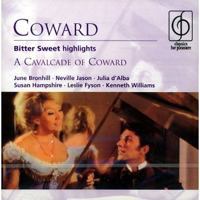
  (2 / 5) If the preceding album represents operetta performance at its most clueless, this entry isn’t far behind. Johnny Douglas’ orchestrations are a step above the primordial soup of the earlier set, but they proceed from the same premise: Disguise an operetta’s age by pretending it’s a 1960s musical, loading it up with too many strings, too many brass flourishes, and even jazz-combo drums (at the end of “Ladies of the Town”). The conducting is glacial, especially in the waltzes: “Kiss Me” is a dirge. But this disc does have a superior set of singers. The great Australian operetta soprano June Bronhill sings quite lusciously, trilling an audacious high C at the end of “What Is Love?” Opposite her, Neville Jason has more personality than most Carls. Julia D’Alba’s Manon is another purring feline, but her throaty alto is pleasant to hear. The meaningless finale, which miraculously brings Carl back from the dead to duet with Sarah on “I’ll See You Again,” is a miscalculation. Nevertheless, some of Coward’s material shines through the mishandling on this well-engineered album, like the sun through a British cloud cover. — M.M.
 Sadler’s Wells Cast, 1988 (JAY, 2CDs)
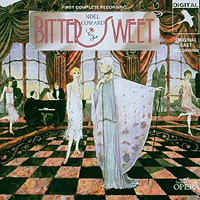
  (3 / 5) Now, this is more like it. The excellent Sadler’s Wells light opera company aimed for a complete Bitter Sweet, true to the spirit of Coward and definitive in its musical presentation. This is by far the most complete recording of the score: It lacks only an overture, a couple of incidental songs, and some underscoring. Finally, we get to hear all of Coward’s unflinching lyrics to “Green Carnation” and “Alas, the Time Is Past.” There’s also an entrancing, instrumental-only “Bitter Sweet Waltz”; its flatted thirds show Coward to be a more adventurous composer at age 29 than many realized. But Bitter Sweet needs inspired casting to catch fire, and this is merely a pretty good operetta ensemble. Valerie Masterson is a no-nonsense Sarah, vocally secure and suitably warm — yet the character is supposed to metamorphose from a willful romantic to a wise grande dame, and the singer doesn’t differentiate much between the two. As Carl, Martin Smith has scant personality and not enough voice. Rosemary Ashe is a capable Manon, up to the demands of “If Love Were All” and the saucy “Bonne Nuit, Merci,” but she’s not distinctive. The orchestrations aren’t the originals, and there’s a blandness to them, as there is to Michael Reed’s conducting. Transitional dialogue is included in over-perky line readings that never convey how much smarter Bitter Sweet is than the average operetta. The lavish, dual-CD packaging promises something special, but what’s really special about the album is Sir Noël’s material, not this hit-or-miss rendition of it. — M.M.
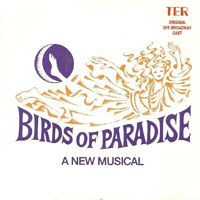
 (4 / 5) On hearing this recording, listeners are bound to wonder why the show was not more successful. The score is filled with intricate, catchy melodies by David Evans and intelligent, witty lyrics by Winnie Holtzman. From start to finish, the performers sing and act as if they have discovered a pot of gold. The opening number, “Too Many Nights,” cleverly introduces actors in a community theater awaiting the arrival of someone who’s coming to direct them in a new musical. Two other highlights are Todd Graff’s duet with Crista Moore in the exciting “Coming True,” and Donna Murphy, Mary Beth Peil, and Barbara Walsh joining their powerhouse voices in the title song. When Graff and Peil confront each other in “After Opening Night,” it’s engrossing and moving. Some of the comedic numbers may not work very well outside of the show’s context, but John Cunningham’s “Somebody,” J. K. Simmons’ “She’s Out There,” and Peil’s “You’re Mine” are among the other fine songs in this top-notch score. Also worthy of note is the lovely ballad “Imagining You.” The show was directed by Arthur Laurents, and it seems clear that he encouraged the writers to spread their wings. This album is altogether necessary for discriminating enthusiasts. — Jeffrey Dunn

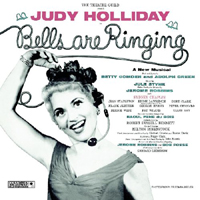
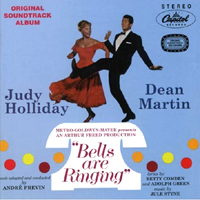
 (5 / 5) There was only one Judy Holliday, a comic genius who could make you laugh, then break your heart a split second later. Her good friends Betty Comden and Adolph Green provided her with a loving showcase in Bells Are Ringing, and this essential recording preserves one of the great Broadway performances. Holliday stars as Ella Peterson, a lonely operator for the Susanswerphone answering service, who meddles in the lives of her clients. Breaking all the rules, she helps Jeff Moss (Sydney Chaplin), a boozing, self-doubting Broadway playwright, get his career back in order — without revealing her identity. There’s more trouble brewing when another client, Sandor, posing as the head of a classical record company, uses Susanswerphone as the front for a betting ring. This less-than-magisterial plot is fitted out with the most delightful score to come from the long-running partnership of Comden, Green, and Jule Styne. Holliday is given free rein in “It’s a Perfect Relationship,” her fantasy about Jeff; “Is It a Crime?” (her defense of meddling), in which she says that if she’d been around in the days of Romeo and Juliet, “Those two kids would be alive today!”; and the number to end all 11-o’clock numbers, “I’m Going Back.” “Drop That Name,” sung by the chic guests at an Upper East Side party, is a dazzling catalog of celebrities circa 1956, and “The Midas Touch” is a typically funny Comden and Green spoof of nightclub shows. The story’s melancholy undertone comes through in the moving “Long Before I Knew You” and in that ultimate song of resignation, “The Party’s Over.” As Jeff, Sydney Chaplin has a masculine manner and boyish enthusiasm that are real ‘assets, and he partners delightfully with Holliday in the lovely “Just in Time.” Eddie Lawrence is an amusing Sandor — especially when seducing Jean Stapleton as Sue, Ella’s boss and cousin, in the comic waltz “Salzburg.” Peter Gennaro is Holliday’s playmate in the Latin dance spoof “Mu-Cha-Cha.” Robert Russell Bennett’s orchestrations are jaunty and witty. Bonus tracks on the CD include Jule Styne performing “It’s a Perfect Relationship,” “Just in Time,” and the cut song “Boogie, Woogie, Shoogie, Baby.” — David Barbour