

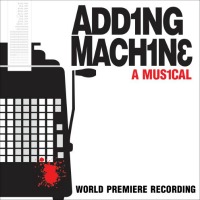
 Original Off-Broadway Cast, 2008 (P.S. Classics)
  (3 / 5) You might think The Adding Machine, Elmer Rice’s 1923 expressionist drama, an unlikely candidate for musical adaptation. It’s a bleak tale of a bigoted, downtrodden bookkeeper who kills his boss and is executed, ending up in the Elysian Fields, where recycling doesn’t mean reusing plastic bottles. Thankfully, Joshua Schmidt (music and book) and Jason Loewith (book) took on the challenge, and this recording recreates most of the largely sung-through show in all its nerve-jangling dissonance. Joel Hatch is outstanding as the bookkeeper, Mr. Zero — so obnoxious that you know he deserves his fate, yet so thick, you understand how he got that way. Hatch conveys Zero’s character through the staccato snarls of Schmidt and Loewith’s lyrics, full of blunt, monosyllabic statements. The joys in Zero’s life are few, but he relishes them, whether it’s the “Ham and Eggs” his harridan wife (the marvelously caustic Cyrilla Baer) brings for his final meal, or recalling their few moments of wedded bliss in “Didn’t We?” But rage smolders within his confused mind, crowded with endless figures. When his boss crushes his fantasy of promotion (“Movin’ Up”), telling him that he’s being replaced by an adding machine, Zero stabs him. In the afterlife, Zero encounters two souls he knew while alive: his assistant, Daisy (Amy Warren), and fellow inmate Shrdlu (Joe Ferrell). Both get songs that break up the harsh score — a gooey love ditty for Daisy, and a gospel rouser for religious nut Shrdlu, detailing his mother’s murder and the hellish torments he expects for his crime. Most of the score is intentionally jarring; piano, synthesizer, and percussion bang into the brain while the repetitive chorus provides a counterpoint of chanted numbers and echoed lyrics. It’s exactly the right tone for Rice’s piece, though you probably won’t find yourself playing this one often because of the shrillness. — Laura Frankos
All posts by Michael Portantiere
An American in Paris
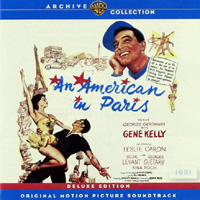 Film Soundtrack, 1951 (MGM/Rhino-Turner/Watertower Music)
  (5 / 5) In the 1990s, Turner Entertainment restored one of MGM’s greatest musicals, An American In Paris. The restoration turned up the studio session tapes of the all-Gershwin score, which led to Turner teaming with Rhino Records to release a two-disc album stuffed full of the music heard in the film as well as outtakes, underscoring, and extended and alternate versions of songs. That 1996 CD is now out of print, but in 2015, Watertower Music made it available digitally through their Warner Archives series. The songs in the film, nearly all part of the Great American Songbook, are performed by an engaging trio: Gene Kelly as Jerry Mulligan, a war vet and aspiring painter; Oscar Levant as Adam Cook, an acerbic composer; and Georges Guetary as Henri Baurel, a song-and-dance man. Kelly is at his charming best teaching English to a gaggle of Parisian kids through “I Got Rhythm” and earnestly expressing his passion for Leslie Caron in “Love Is Here To Stay.” He joins Guetary in proclaiming the joys of love (for the same girl, though they don’t know it) in “‘S Wonderful,” and goofs with Levant on “Tra-la-la.” Guetary solos in a “(I’ll Build A) Stairway To Paradise,” so rousing that you expect showgirls to parade through your room. The soundtrack is capped by the MGM Studio Orchestra, up-sized to 72 players and conducted by Johnny Green, performing the glorious 16-minute “An American In Paris Ballet.” Added material includes underscoring and medleys by the studio orchestra and Benny Green and his band, along with outtakes such as Kelly’s heartfelt “I’ve Got a Crush On You” and an incredible set of Gershwin improvisations by Levant, who was a lifelong friend of Gershwin and one of his finest interpreters. The improvs got deleted from the film in favor of another treasure, Levant’s brilliant — and in the film, highly comic — rendition of the “Concerto in F (Third Movement).” This is one of the two pieces in stereo on the album; if this album has any drawbacks, it’s the fact that most of the session tapes didn’t survive in multi-channel format, so almost all of the music is presented here in mono. But that’s a quibble. It all adds up to nearly two hours of pure Gershwin(s), and as Ira wrote, “Who could ask for anything more?” —Laura Frankos
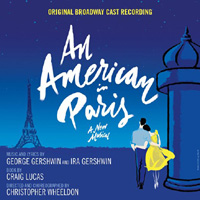 Original Broadway Cast, 2015 (Sony Masterworks Broadway)
  (4 / 5) Some Gershwin fans may have been wary when they heard of plans to turn the beloved film An American in Paris into a stage musical, filled out with other numbers by George and Ira. Previous attempts to create “new” Gershwin shows through similar methods had had decidedly mixed results; just look at My One And Only, Crazy For You, and Nice Work If You Can Get It. (On second thought, please don’t look at Nice Work If You Can Get It.) But in this case, the outcome was far better. Librettist Craig Lucas, director Christopher Wheeldon, and musical supervisor/arranger Rob Fisher crafted a show that takes its inspiration from the film but wisely doesn’t try to replicate it. Only five numbers — the “Concerto in F,” “I Got Rhythm,” “‘S Wonderful,” “Stairway to Paradise,” and the title ballet — are in both the movie and the show, and the interpolations were chosen with an eye toward how well they fit the plot and characters. In the stage musical, the time of the action is shifted to the immediate post-WWII years, with Paris recovering both spiritually and physically. That’s clear in the first ensemble number, “I Got Rhythm,” when Henri Baurel (Max von Essen) tells composer Adam Hochberg (Brandon Uranowitz), “People need to laugh. Paris needs it.” By the song’s end, Henri has brought a snappy 4/4 beat to Adam’s dirge-like melody, and the pair have become fast friends with another fellow vet, painter Jerry Mulligan (Robert Fairchild). Enter Lise Dassin (Leanne Cope), a young ballerina destined to become the love object of all three men — another departure from the film. It’s a nice touch, making Adam much more than comic relief, and Uranowitz’s heartbreaking take on “But Not For Me” is one of the cast recording’s highlights. The full trio of male leads also provides lovely harmonies, both joyful (“‘S Wonderful”) and poignant (the 11 o’clocker “They Can’t Take That Away From Me”). Fairchild has an engaging warmth that’s most evident in “I’ve Got Beginner’s Luck” and “Liza” but also comes through in the bits of dialogue on the recording. In the film, the female roles of Lise and Jerry’s patroness, Milo, don’t get any vocals, but that’s not the case here. Cope gives us a yearning “The Man I Love” and pairs well with Fairchild on one of the Gershwins’ sweetest ballads, “For You, For Me, For Evermore.” Jill Paice, as Milo, provides sophistication and sultriness in “Shall We Dance?” and a glimpse into her heart in “But Not For Me.” As in the film, it’s the concert pieces that really complete the whole, beautifully orchestrated here by Christopher Austin; the title ballet and the “Concerto in F” (the show’s opening) are joined by the “Second Prelude” and the first act finale, which includes the “Second Rhapsody” and the “Cuban Overture.” This cast album doesn’t replace the soundtrack, but it’s not meant to. It has its own merits. — L.F.
Newsies
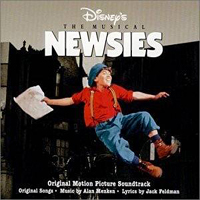 Original Motion Picture Soundtrack, 1992 (Walt Disney)
  (2 / 5) Listening to the soundtrack recording of this 1992 movie that starred a young Christian Bale (well before his days headlining much darker films) and Ann-Margret (an ever-alluring presence on screen and disc), you’d be hard-pressed to understand how it might ever be transformed into a Tony-nominated stage musical. Yes, there are small glimmers of terrific music by Alan Menken and clever lyrics by Jack Feldman, notably in such songs as “Santa Fe” and “The World Will Know.” For the most part, however, everything here feels and sounds overblown and forced, from the performers’ exaggerated “Noo Yawk” accents to the often thundering orchestrations provided by Thomas Pasatieri and Danny Troob, the latter of whom would go on to do some marvelous work for the Broadway incarnation of the tuner. Newsies was actually a flop when originally released to theaters, and only later gained great popularity through home video. For completists (and Ann-Margret fans), there are a couple of numbers, “My Lovey-Dovey Baby” and “High Times, Hard Times,” which didn’t make it to Broadway. And for the generation that fell in love with musicals because of this movie, the soundtrack recording remains something to be cherished. For everyone else, though, it’s best to stick with the Broadway cast album. — Andy Propst
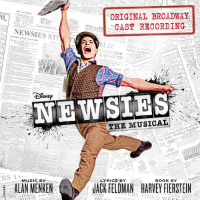 Original Broadway Cast, 2012 (Ghostlight) (4 / 5) Alan Menken employs a semi-period, semi-contemporary musical vocabulary for this stage version of the 1992 Disney film of the same title, to terrific effect, and Jack Feldman’s lyrics have a verve and wit that match the melodies beautifully. For those who grew up on the film about a newsboys’ strike against newspaper owner Joseph Pulitzer, the Broadway cast recording has most of the songs that they loved from the movie score, including the soaring “Santa Fe” and the rousing anthem “Seize the Day,” plus a large handful of new ones written specifically for the stage show. Something else this album has that the film soundtrack doesn’t is the enormously appealing presence of Jeremy Jordan, who, beyond sounding terrific from a musical/vocal standpoint, brings a great balance of streetwise toughness and vulnerability to his portrayal of the strikers’ leader, Jack Kelly. Other fine work includes Kara Lindsay’s smartly pert performance as a girl reporter who becomes Jack’s love interest, and Capathia Jenkins’ saucy turn as a music hall performer. The odd thing about the recording is that the show’s big dance numbers appear twice — once each in truncated form, then again as bonus tracks in full versions with dance breaks that feature Mark Himmel’s arrangements, excitingly orchestrated by Danny Troob. Having the complete tracks at the end of the album means that listeners who want to get a full sense of the show, or to re-experience what they saw in the theater, have to set up a special playlist with the proper run order. It’s cumbersome, and it ultimately detracts from the recording’s ability to genuinely communicate the thrill that live audiences got from this sleeper hit. — A.P.
The Wedding Singer
 Original Broadway Cast, 2006 (Masterworks Broadway) (4 / 5) Antipathy towards screen-to-stage adaptations influenced a great many reactions to this tuner that musicalized the 1998 Adam Sandler movie for Broadway. It’s a pity, really, because the score by Matthew Sklar (music) and Chad Beguelin (lyrics) is one of the most charming and tuneful of the past 15 years or so. It helps that the songs are delivered by such theater vets as Laura Benanti, Amy Spanger, Rita Gardner, and Felicia Finley — along with comedian Stephen Lynch, who, in his Broadway debut, thoroughly charmed as the title character, a guy who’s dumped by his fianceé (Finley) on the eve of their own nuptials. Naturally, he loses his taste for performing at other people’s wedding receptions, and it’s only with the help of a good friend (Benanti) that he gets back on his feet and discovers genuine romance — wth her, of course. Because the show is set in the mid-1980s, composer Sklar pays homage to the pop icons of the day in his melodies, and his work, combined with the inventive and sometimes ingenious orchestrations of Irwin Fisch, calls to mind tunes by the likes of Madonna, Billy Joel, the Go-Gos, Stevie Nicks, and Michael Jackson. Beguelin’s lyrics match the styles of songs from the era, and they also brim with a kind of colloquial wit. Not everything in The Wedding Singer is great; the biggest stumble is “Move That Thang,” a rap number for Gardner, The Fantasticks’ original Luisa. But much of the score is golden. — Andy Propst
American Psycho
 Original London Cast, 2016 (Concord Records) (4 / 5) Duncan Sheik’s score for this musical adaptation of Bret Easton Ellis’ savage (in all senses of the word), satiric novel marvelously captures the musical vibe of the go-go 1980s, when “greed was good.” It helps that interpolated into the show’s score are some of the decade’s big hits — for example, Tears for Fears’ “Everybody Wants to Rule the World,” Phil Collins’ “In the Air Tonight” — which have been terrifically re-conceived for a theatrical storytelling mode. What’s not always so successful is Sheik’s attempt to capture the book’s biting humor. In certain numbers (“You Are What You Wear,”) his work as lyricist zings, communicating the characters’ sense of entitlement while also commenting on their vapidity. Other songs — like “Mistletoe Alert” which attempts a similar dual purpose — fall flat on this original London cast recording, without the visuals that audiences encountered in the theater. As a record of the musical, the album provides an intriguing glimpse of it “in process.” Before American Psycho transferred from London to Broadway, new numbers were written and the song order was changed; for those who saw the show during its brief run in New York, it’s fascinating to listen to this OLCR and hear how the narrative became more direct in the journey across the Atlantic. (Roberto Aguirre-Sacasa wrote the book for the musical.) In the unlikely event that a Broadway cast recording is ever released, it will probably overshadow this one, thanks to the changes and Benjamin Walker’s electrifying performance as Patrick Bateman. Until then, this album will have to suffice, and listeners will find that Sheik’s energetic melodies seem to demand repeated plays. — Andy Propst
Jersey Boys
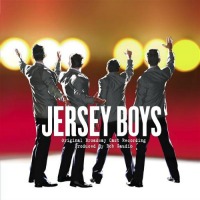 Original Broadway Cast, 2005 (Rhino) (3 / 5) Jersey Boys tells the true story of the rise of the phenomenally successful 1960s pop singing group The Four Seasons — or, at least, true to whoever is in charge of the story at whatever point in the show. Rather than presenting a straightforward narrative, book writers Rick Elice and Marshall Brickman have each member of the group — here played by John Lloyd Young (Frankie Valli), Christian Hoff (Tommy DeVito), Daniel Reichard (Bob Gaudio), and J. Robert Spencer (Nick Massi) — take turns in telling the audience their version of the group’s rise and fall. The idea works because all four men make insightful, humorous, and (due to frequent contradictions with each other) unreliable narrators, giving the show an extra edge. This recording includes much of that well-crafted narration without interrupting the musical flow of the album. All four leading men have an easy charm and a singing style that lends the recording a sense of authenticity — as does the fact that it was produced by the real-life Bob Gaudio. In particular, Young does an excellent job of adapting his voice to resemble Frankie Valli and his famous falsetto without sounding like an imitation. Ron Melrose’s vocal arrangements and Steve Orich’s orchestrations are essentially period-appropriate. Unlike other jukebox musicals, Jersey Boys doesn’t aim to do anything new with the preexisting songs but, instead, offers a fun, fresh representation with smart, dramatically compelling commentary. — Matt Koplik
 Film Soundtrack, 2014 (Rhino) No stars, not recommended. In bringing this hit jukebox/bio-musical to the screen, director Clint Eastwood remained mostly faithful to the stage material but chose to capture it through a more somber filter. This might have made for an emotionally compelling film, but in fact, it robs Jersey Boys of most of its charm and energy. The soundtrack album reflects this, despite the efforts of the talented quartet representing the Four Seasons: John Lloyd Young is back as Valli, with Vincent Piazza as Tommy DeVito, Erich Bergen as Bob Gaudio, and Michael Lomenda as Nick Massi. Oddly, the album’s producers opted to insert the real-life Frankie Valli’s renditions of certain songs in various places, giving the listener whiplash as we go from Valli to Young to Valli and back. There are also some excerpts from the Broadway cast album, which makes things even more confusing. Young is still in strong voice, and Bergen, Lomenda, and Piazza do a fine job of filling out the quartet — although, without any of the characters’ dialogue included here, Bergen is the only one of the remaining three to get a chance to shine (in “Cry For Me”). Because of the lack of dialogue and any sense of narrative, this soundtrack pales in comparison to the Broadway cast recording of Jersey Boys or any “Best of The Four Seasons” compilation album. — M.K.
A Gentleman’s Guide to Love and Murder
 Original Broadway Cast, 2014 (Ghostlight) (3 / 5) Based on a novel by Roy Horniman that also inspired the film Kind Hearts and Coronets (1949), A Gentleman’s Guide to Love and Murder is pure wit and charm, but at a slight cost. The musical tells of an English Everyman, Monty Navarro, who discovers that he’s an heir to the prestigious D’Ysquith family’s fortune and then schemes to bump off each member of the family who stands in the line of succession before him. Though this may sound like nasty stuff, songwriters Robert L Freedman and Steven Lutvak present the story in a highly affected, proper-British, light-operetta manner: Agatha Christie meets Gilbert and Sullivan meets Oscar Wilde. They succeeded in making a fun and clever musical, one for which Lutvak composed many hummable melodies and, with Freedman, some exceptionally witty lyrics. Yet the cast album is a bit of a slow burn for the listener; early songs such as “You’re a D’ysquith” and “Foolish to Think” demonstrate Lutvak and Freedman’s difficulty in creating a strong narrative structure for much of the show’s first act. But as Monty (here played with dewy innocence by Bryce Pinkham) gains more confidence with his schemes, so does the show, and by the time we get to the door-slamming farce “I’ve Decided to Marry You” in Act Two, A Gentleman’s Guide to Love and Murder has risen from commendably intelligent to wonderfully hilarious. The recording boasts a stellar cast: Pinkham glides easily through the score with his silken voice, Lisa O’Hare is perfect as the shallow Sibella, and Lauren Worsham brings operatic flair to the role of the goodhearted Phoebe. Best of all is Jefferson Mays, clearly having a ball playing all eight moribund members of the D’Ysquith family. (This device was carried over from Kind Hearts and Coronets, in which Alec Guinness plays the victims.) With sophisticated yet daffy orchestrations by Jonathan Tunick to boot, this album offers a great deal of fun to any musical theater fan who’s willing to put in the time and listen through to the end. — Matt Koplik
Spring Awakening
 Original Broadway Cast, 2006 (Verve) (4 / 5) Even with the success of such shows as Hair and Rent, the original pop/rock musical theater score has had a spotty history on Broadway, but it saw a major comeback in 2006 with the raw and highly charged Spring Awakening. Based on Frank Wedekind’s expressionist play, the musical tells of young teenagers in 19th century Germany on the verge of sexuality, and the adults who refuse to explain to them what their newfound urges mean. On stage, Spring Awakening crackled and even exploded with energy, but while the cast album offers a pristine presentation of the score, it lacks some of the energy and spirit that made the show itself so moving. The cast — including future stars Jonathan Groff, Lea Michele, and John Gallagher, Jr. — still provides impressive vocals, but they are less expressive than they were on stage. “My Junk,” “Totally F****d,” and a few other high-powered songs lose some of their edge, although the quieter, more intimate numbers (“Whispering, ” “The Guilty Ones”) remain haunting. In truth, if any show called for a live cast recording, it was this one. Still, the Duncan Sheik-Steven Sater score is exceptionally strong. Sheik has provided many gorgeous, infectious melodies and orchestrated them well to season the score’s alternative rock sensibility with small nods to the show’s 19th German setting. Sater’s lyrics have a flair for the poetic, even if there are some frustrating false rhymes (e.g. “sweet and unknown/longing for a home” “all this/my lips”). To date, this is the only cast album of Spring Awakening, and it’s a good one. But let’s hope that future recordings capture a bit more of the show’s spark. — Matt Koplik
The Little Mermaid
 Film Soundtrack, 1989 (Disney) (4 / 5) After a decades-long dry spell, Disney film animation finally sprang to life again with The Little Mermaid, a musical adaptation of the children’s story by Hans Christian Andersen. Thanks in large part to its fantastic score by Little Shop of Horrors team Howard Ashman and Alan Menken, Mermaid single-handedly revived the animated musical. And in its main character, Ariel — a mermaid daughter of King Triton, desperate to join the human world — the film also birthed the first really spunky and smart Disney princess. As Disney has progressed to even more feminist stories and even stronger princesses, certain elements of The Little Mermaids’s plot have come under scrutiny, but the score has stood the test of time. Ashman and Menken created a charmingly magical work; Menken’s music ranges from funky calypso (“Under the Sea”) to sassy Broadway (“Poor Unfortunate Souls”), with Ashman bringing his usual touch of unpretentious intelligence to the lyrics. And the vocal cast of the film is still definitive. Best known to musical theater fans for her powerhouse vocals in Crazy For You and Smile, Jodi Benson here produces a purer, smoother, more intimate sound that allows “Part of Your World,” Ariel’s finely crafted “I Want” song, to deeply resonate with the listener. Pat Carroll, Samuel E. Wright, and René Auberjonois are wonderful in other roles, and the score is smartly but not overly lushly orchestrated by Thomas Pasatieri. — Matt Koplik
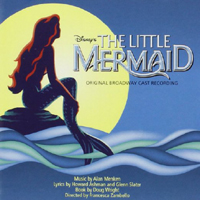 Original Broadway Cast, 2008 (Disney)
  (1 / 5) Howard Ashman sadly died at the height of his career, and he never saw any of his work with Alan Menken make it to Broadway. The legacy he left behind may be relatively small, but it is substantial in quality and much beloved. When Disney brought Beauty and the Beast to the stage with financially successful results, it was only a matter of time before The Little Mermaid, the movie that started it all, would make the transition as well. Unfortunately, in this case, Disney should have left well enough alone. With Ashman gone, Glenn Slater was brought in to contribute lyrics for new songs to expand the score for a full-length stage musical, and while he managed to come up with a few good fish puns, none of his work here matches the heart and inventiveness of Ashman’s work. Menken wrote some lovely melodies for the additional songs, though some of them are recycled from incidental music heard in the movie. The cast — Sierra Boggess, Sean Palmer, Sherie Rene Scott, Tituss Burgess, Norm Lewis, et al. — is talented and, in a few cases, vocally superior to their film counterparts, but most tend to go for vocal tricks, making the majority of the score sound over-sung. While Danny Troob’s orchestrations add the necessary flashes of Broadway brass to the Menken-Ashman material without going overboard, they don’t bring as much flair to the Broadway additions. Even though this recording has more songs and offers vocal flair from some Broadway favorites, you’re better off sticking to the movie soundtrack. — M.K.
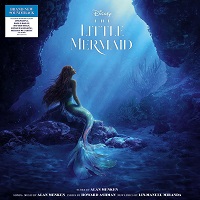 Film Soundtrack, 2023 (Walt Disney Records) (1 / 5) Another year, another Disney remake. To be fair, the soundtrack for this “live action” adaptation of the 1989 animated classic is less bad than some of the other cinematic cash grabs that The Mouse House has made — but that still doesn’t make it “good.” From the very first track, almost all sense of fun, magic, and whimsy has been sucked out of Alan Menken’s iconic score, here polluted with overblown orchestrations and self-conscious performances. Songs such as the Oscar-winning “Under the Sea” don’t inspire nearly the same level of joy as the versions heard on the original film soundtrack recording. and while Menken is once again on hand to provide new songs for the film, with lyrics by Lin Manuel Miranda, they can’t compare to those he wrote with Howard Ashman. (The less said about “The Scuttlebutt,” the better.) On the bright side, we have the most vocally well-equipped cast of any of the Disney remakes so far. Though “Wild Uncharted Waters” isn’t much of a song, Jonah Hauer-King holds his own as Prince Eric, and if Daveed Diggs is not as bubbly and charismatic a Sebastian as Samuel E. Wright was, he at least keeps his numbers afloat. The two best performances belong to Melissa McCarthy, properly camping it up as Ursula, and Halle Bailey, who as Ariel is given numerous opportunities to showcase her wide range and crystal-clear voice. Like Sierra Boggess in the Broadway recording, Bailey sometimes over-sings her material (particularly the first half of “Part of Your World”), but her work here in general is very strong. She and McCarthy keep this otherwise unnecessary recording from being totally skippable. — M.K.
Billy Elliot
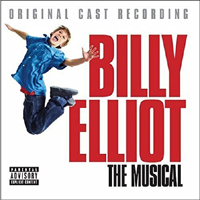 Original London Cast, 2006 (Decca Broadway) (2 / 5) Based on the film written by Lee Hall, who did double duty for the stage musical as librettist and lyricist, Billy Elliot tells of a Northern English boy who discovers a love for ballet but has to hide it from his family — including his father and brother, who are on strike with the miner’s union at the height of Thatcherism. A smash hit in London (this cast album represents that production) and on Broadway, Billy Elliot was a moving, theatrically exciting piece due in large part to its thrilling staging by director Stephen Daldry, who also directed the film, and choreographer Peter Darling. What becomes clear on the cast album, however, is the obstacle that Hall and Elton John faced with this project: How does one write a compelling musical theater score when your leading character only feels comfortable expressing himself through dance? Their answer was to create a score that more or less provided a platform for Daldry and Darling to leap from. This is not to say that the songs are bad; they do exactly what they need to do. Without the umbrella of Disney, Elton John produced some inventive melodies (e.g., “Solidarity”) that are given extra character by Martin Koch’s orchestrations, even if John occasionally tends to lean back into his specialty of pop power ballads that don’t quite fit the piece. Hall, a first time lyricist, does an admirable job of keeping the songs in the language of the working class characters. Due to the physical demands of the title role, three young actors rotated as Billy in the original London production (and on Broadway), though only one, Liam Mower, is heard on this recording. Mower does a fine job, as does the rest of the cast, most notably a crackling Hayden Gwynne as the dance teacher who guides Billy out of his shell. Listeners who haven’t seen the show may wonder why Billy Elliot was such a phenomenon; the answer is that this musical, even more than most others, truly needs to be seen to be experienced. — Matt Koplik
Next to Normal
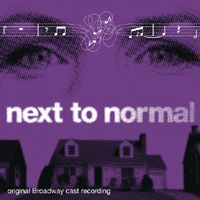 Original Broadway Cast, 2009 (Sh-K-Boom) (5 / 5) If Spring Awakening marked the successful comeback of the original pop/rock musical theater score, then Next to Normal helped insure its future. Part of the reason for the show’s success is that, despite its vibrant energy, it’s a very intimate piece that wears its large heart earnestly on its sleeve. The musical tells of the inner turmoil of a suburban family due to the mental instability of the mother, Diana, who has struggled with bipolar disorder ever since a traumatizing event years earlier: Her son, Gabe, whom she still imagines to be present, died when he was a baby. Although the plot at times borders on being that of a Lifetime Movie, the smart, pulsating score, given a crisp representation on this recording, keeps Next to Normal fresh and inventive. Brian Yorkey’s lyrics are strong and well defined, often bringing a touch of humor to cut the tension in the plot (for example, “My Psychopharmacologist and I”). Tom Kitt composed a score with both fire (“You Don’t Know,” “Didn’t I See This Movie”) and sweet sadness (“I Miss the Mountains”) that he orchestrated excellently with Michael Starobin, making the work electric yet still inherently theatrical. The cast, on the whole, is excellent. Alice Ripley tears into the role of Diana with an abandon that’s fearless, thrilling and at times unnerving. Occasionally, the performer seems so at one with the part that you might fear she won’t even make it to the end of the number — but she always does. J. Robert Spencer is very moving as the silently suffering husband, Dan, and so is Jennifer Damiano as daughter Natalie. Because of the surprises in the plot, listeners who haven’t seen the show will find it especially important to read the synopsis included in the CD booklet in order to make full sense of the story and songs such as “I’m Alive” and “There’s a World,” both sung by Gabe (Aaron Tveit). But they’ll have no problem understanding the emotional potency of each song. — Matt Koplik
 London Cast, 2025 (Ghostlight Records)
  (4.5 / 5) Almost 15 years after its Broadway bow, Next to Normal finally came to the West End, in a new production directed with searing intensity by Michael Longhurst. It first played at the Donmar Warehouse, transferred to Wyndham’s Theatre, then received a pro-shot video that aired a year later on PBS. Fans will quickly notice that this “cast recording” is simply the lifted audio of that video, with the audience response muted and, thankfully, Yorkey’s uncensored lyrics retained. As such, the balance of the music and vocals heard here is not as polished as one has come to expect from modern cast recordings, and since we have a primarily British cast, there are one or two faux-American accents that can be jarring. But even with those caveats, this is a thrilling recording. Thanks to singing actors who are vocally exceptional as well as emotionally raw, this Next to Normal pulsates with energy and feeling that practically seeps into your bloodstream. Leading the way is Caissie Levy as Diana. Levy starts out at a more subdued emotional and vocal level than Alice Ripley on the OBC recording, but she quickly builds herself into a manic frenzy, crashing into devastating brokenness, all while maintaining a soaring belt that gives the score a fresh exuberance. She’s equally matched by Jamie Parker’s gregarious Dan (though his American affect is perhaps the most egregious), as evidenced by their explosively combative rendition of “You Don’t Know/I Am the One.” Jack Ofrecio is sweet as the supportive Henry, and Trevor Dion Nicholas brings gravitas to the dual doctor roles. But the ultimate standouts of this recording are Eleanor Worthington Cox as Natalie and Jack Wolfe as Gabe. Cox feels like a weeping, open wound with a pristine singing voice, while Wolfe is more menacing as Gabe than Tveit had been in the original production, and he flies through his songs with a light pop sound that never feels mannered or put on. More balanced audio and some slight accent tweaking would have made this a perfect recording. But, in a way, being “almost perfect” makes Next to Normal even more stirring. — Matt Koplik
The Drowsy Chaperone
 Original Broadway Cast, 2006 (Ghostlight) (3 / 5) This might be the first Broadway musical with commentary written into the script. Alone in his apartment, a musical theater devotee anonymously named Man in Chair plays the recording of one of his favorites, the (fictional) 1920s romp The Drowsy Chaperone. He then proceeds to provide footnotes on the stars and writers as we watch the show come to life in his apartment. On stage, it all worked beautifully and hilariously. With its dynamic original cast and inventive staging, The Drowsy Chaperone was unique in that it allowed those of us who adore musicals to see ourselves depicted on stage, while also giving us the benefit of watching a delightfully silly musical. But when taken out of the frame of the production, the score, by Lisa Lambert and Greg Morrison, proves to be merely decent. Though the songs are cute in their reminiscences of the jazzy musicals of the ’20s, they don’t move beyond hommage. The lyrics can be daffy and quirky (“Show Off”), but they never really channel the wit and sophistication of Lorenz Hart or Ira Gershwin. The music is light but fun, much helped by Larry Blank’s peppy, period appropriate orchestrations. The ensemble, clearly having a blast, revels in old school camp and bravado, and elevates the lyrics so that they seem more humorous than they are. Danny Burstein tastefully hams it up in “I Am Aldolpho,” Beth Leavel gleefully warbles Garland-style in “As We Stumble Along,” and Sutton Foster uses her star power to great effect in “Bride’s Lament.” But it’s co-librettist Bob Martin as the Man in Chair who shines brightest here. Though he has no song of his own, Martin offers anecdotes and opinions on the show within the show and its performers throughout the album. His commentary is hilarious and inventive, delivered with just the right touch of knowledge and enthusiasm. Overall, The Drowsy Chaperone is a highly enjoyable show and a fun album, but to quote the Man in Chair, “just ignore the lyrics.” — Matt Koplik
The Light in the Piazza
 Original Broadway Cast, 2005 (Nonesuch) (5 / 5) The Light in the Piazza seemed to re-open the door for lush scores and musicals of honest sentiment of the type not seen since Rodgers and Hammerstein, at a time when modern musical theater writers were for the most part shying away from works of pure romance. Based on Elizabeth Spencer’s novel of the same title, the musical tells of Margaret Johnson, a Southern socialite, who takes her adult daughter, Clara, on vacation to Florence, Italy in the 1950s — only to have a local young man and Clara fall in love, despite Clara’s stunted mental maturity due to an accident in her childhood. For his Broadway debut, Adam Guettel wrote an overwhelmingly romantic score, rich in musical complexity and tender in its poetically precise lyrics, a fair percentage of which are in Italian in order to properly dramatize the native characters. Guettel uses the language and cultural barriers between the Johnsons and the Italians to his advantage by employing a musical language that is distinctly modern in structure, yet traditionally sweeping in sound. (Guettel and Ted Sperling are responsible for the fluid orchestrations.) Piazza is moving in its beauty, whether in its more intimate moments (“Dividing Day,” “The Beauty Is”) or its grander songs (“Il Mondo Era Vuoto,” “Say It Somehow”). The cast is exceptional, with Kelli O’Hara and Matthew Morrison providing touching, lovely performances as the two young lovers. But it’s Victoria Clark as Margaret who defines the album. Her delivery of the final song, “Fable,” in which Margaret prepares to finally let Clara go, would be reason enough to own this recording. The Light in the Piazza is a masterwork given a definitive presentation on the cast album — Matt Koplik
Memphis
 Original Broadway Cast, 2009 (Rhino) (3 / 5) Winner of 2010 Tony Awards for Best Musical, Book, Original Score, and Orchestrations, Memphis charts an enjoyable journey through the pioneering days of rock ‘n’ roll, when rhythm and blues morphed into a new musical genre mixing black and white influences and exciting young, integrated audiences. Set in the 1950s, when racial segregation was still the norm in much of America, the energetic musical’s plot centers around a Memphis-based, white DJ, Huey Calhoun (Chad Kimball), who is enamored of and daringly promotes African-American music. He soon falls in love with a black female singer (Montego Glover) and jump-starts her rise to stardom. Joe DiPietro’s serviceable book frames an invigorating score, with music by Bon Jovi’s David Bryan and lyrics by Bryan and DiPietro. The songs recall iconic rock performers, sounds (guitar riffs, doo-wop harmonizing, soulful blues), and hits of the period; at least three numbers sound remarkably like “Jailhouse Rock.” Yet these references are packaged within a score that’s structured Broadway-style, featuring dramatic solos enhanced by solid ensemble singing, colorful orchestrations, wordy (sometimes overly so) lyrics, and infectious dance breaks. The cast album highlights come at the beginning and the end. The opening jump blues number, “Underground,” is followed by the searing ballad “The Music of My Soul,” and these songs let us know we’re in for a rebellious ride through rough racial terrain, while the catchy “Everybody Wants to Be Black on a Saturday Night” gets us gleefully on board. Heightening the show’s bittersweet climax, when the lovers part, “Memphis Lives in Me” salutes Huey’s hometown and all it represents emotionally, culturally, and musically. The upbeat finale, “Steal Your Rock ‘n’ Roll,” exemplifies the score’s accessible if unimaginative blend of pop appeal, Broadway pizzazz, and early rock sensibilities. Throughout, Kimball sings Huey’s songs with scratchy grit and raw expressiveness; his superb acting contributed immeasurably to the musical’s success on Broadway. As Felicia, the singer who captures Huey’s heart, Glover offers dramatically nuanced versions of the showpieces “Colored Woman” and “Love Will Stand When All Else Fails.” — Lisa Jo Sagolla
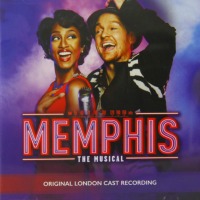 Original London Cast, 2015 (First Night) (3 / 5) Five years after it opened on Broadway, Memphis played for a year on London’s West End. Though one can detect slight differences in the arrangements, orchestrations, and tempi of several songs, the only significant dissimilarities between the Broadway and London cast albums lie in the singing of the lead performers. As Huey, a character loosely inspired by the trailblazing, Memphis-based, white DJ Dewey Phillips (who championed black music), Killian Donnelly offers smoother, prettier, more technically polished singing than Chad Kimball in his renditions of the heartfelt “The Music of My Soul” and “Memphis Lives in Me,” as well as the wild “Crazy Little Huey.” Beverley Knight sings Felicia’s songs with greater authority than Montego Glover, perhaps too much authority for the vulnerable character. Overall, the Broadway album proves more effective as theater music; there’s more variety among the vocal qualities of the cast members, so their characters come through with greater distinction. “She’s My Sister,” a heated duet between Huey and Felicia’s brother, generates less tension on the London album and is harder to follow because the performers’ voices don’t contrast as forcefully as do those of their Broadway counterparts. But whereas the Broadway album offers a superfluous bonus track of Memphis composer/co-lyricist David Bryan singing “The Music of My Soul” over his own too-loud piano accompaniment, the London recording’s bonus is an impressive performance by Bryan of “Memphis Lives in Me.” — L.J.S.
Natasha, Pierre & The Great Comet of 1812
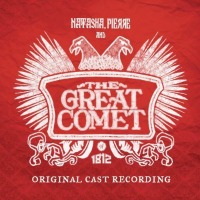 Original Off-Broadway Cast, 2013 (Ghostlight) (4 / 5) Some musical theater writers have had great difficulty adapting epic, classic novels for the stage: Doctor Zhivago, Jane Eyre, East of Eden, etc. The trouble is, how do you sing a thousand pages or so in two and half hours (or even three hours) without rushing through the story and shortchanging the emotional gravity of the characters? In adapting Tolstoy’s War and Peace as a musical, writer/performer Dave Malloy chose to solve this problem by focusing on a single chapter of the huge novel and expanding it, rather than attempting to condense the entire work. The result is Natasha, Pierre & The Great Comet of 1812, one of the most fascinating and fulfilling scores in recent years. Malloy’s music weaves an elaborate tapestry of wildly varied colors and styles, with influences ranging from Rachmaninoff to ’80s club beats and including everything in between. Songs like the beautiful “No One Else,” the pulsating “Balaga,” or the intense “In My House” couldn’t be more different from each other in many ways — and yet, thanks to Malloy’s smart storytelling and endlessly inventive orchestrations, they all seem part of one score and one vision. As a lyricist, Malloy is quite good, if not as audaciously adventurous as he is musically. His lyrics flexibly move from recitative to poetically mystical musings to characters singing their own stage directions (examples: “Anatole followed in his usual jaunty step,” “I blush happily”). Malloy is also smart enough to know when to directly quote Tolstoy’s vivid prose, and indeed, that’s when the lyrics are at their best. The cast, headed by a pre-Hamilton Phillipa Soo as Natasha and Malloy as Pierre, is fantastic. They craftily embody Tolstoy’s characters with the contemporary spin Malloy has written for them. Soo, in particular, leads the way with a performance that’s stunning in its vocal beauty and non-cloying innocence. Natasha, Pierre enjoyed a successful run Off-Broadway (the basis of this recording) and, after a few false starts, finally came Broadway in the fall of 2016. The Great White Way is more exciting for it. (See review below.) — Matt Koplik
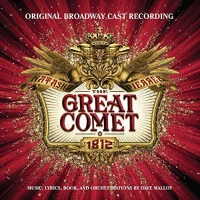 Broadway Cast, 2017 (Reprise) (5 / 5) Natasha, Pierre & the Great Comet of 1812 was slightly revised for its transfer to Broadway. Dave Malloy performed some minor surgery on the score, primarily in Act 1, where certain sections are shortened (“The Private and Intimate Life of the House”), tweaked (“The Duel”), or rewritten altogether (“Sunday Morning”). The changes are relatively small in sum, but their impact is immense. Only the expansion of “The Abduction” (adding an extra three minutes) is a slight misstep, as that sequence now overstays its welcome before finally plunging into “In My House.” Malloy also appropriately expanded his vocal arrangements for a larger ensemble, and did some light re-orchestrating for a more sizeable orchestra; the sound is now even more lush than before, but not overwhelming. The majority of the supporting cast is the same here as on the Off Broadway recording, and having now lived with their roles for three years (on and off), most have improved their performances. Brittain Ashford, especially, makes a stronger impression here with a more defined, energetic Sonya, and Lucas Steele provides an even more exotic Anatole, bringing extra heat to the recording. The biggest casting changes are in the two title roles: singing superstar Josh Groban is Pierre, and newcomer Denee Benton is Natasha. Though Benton has a smooth, clear voice, it doesn’t reach the same heights as Phillipa Soo’s; nor is Benton’s performance as endearing as her predecessor’s, and she tends to emphasize Natasha’s naiveté in broad strokes. Still, she does well in quieter moments such as “No One Else,” and in “Pierre and Natasha” with Groban, who brings a great deal of soul to the recording. While Malloy more fully inhabits the “everyman” characteristic of Pierre on the Off-Broadway album, Groban’s voice is stronger and more passionate, his performance deeply moving. Groban also gets a wonderful new song: “Dust and Ashes,” Pierre’s fierce plea to wake from his existential coma. Though some fans of the previous recording may miss Soo’s performance, this one is the definitive representation of Dave Malloy’s masterwork. — M.K.
The Book of Mormon
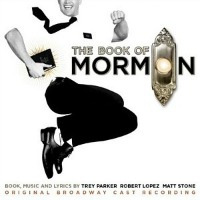 Original Broadway Cast, 2011 (Ghostlight) (4 / 5) When it was announced that the creators of South Park were writing a Broadway musical, with one of the songwriters of Avenue Q, no less, everyone expected that the show was going to be both shocking and hilarious. But the surprise here was that Trey Parker and Matt Stone (South Park) and Robert Lopez (Avenue Q) wrote a stellar musical comedy that was traditional in many ways. Yes, it’s shocking in its profanity and contemporary in its subject matter: two missionaries go to Uganda in the hope of converting villagers to Mormonism. But rather than try to reinvent the wheel with The Book of Mormon, Parker, Stone, and Lopez chose to adhere to tried and true musical theater structure in the style of the Golden Age, and to have fun within it. The cast is strong, each member giving a fully defined, wonderfully well sung performance. Andrew Rannells and Josh Gad, as the two central Mormon characters, make a good team, with Rannells doing the majority of the vocal heavy lifting. Gad is also a strong singer, though his comedic antics can occasionally be grating. Robert Lopez proved with Avenue Q that he has an ear for melody, but here his work is even more inventive while being filled with musical pop culture references to everything from the Osmonds in “All-American Prophet” to The Lion King (a running joke in the show) in “Hasa Diga Eebowai.” Each song has a distinct flavor, and yet the score doesn’t feel disjointed. Stephen Oremus’s orchestrations –played by 23 musicians on the cast album, as compared to nine in the production — match Lopez’s level of invention. As is the case with the best musical comedies, because the score is so reliant on the book, not every song shines as brightly on the recording as it does in the theater (for example, “Making Things Up Again”). But this a minor gripe. The lyrics — by Parker and Stone, with contributions from Lopez — are crass, colorful, and hilarious, yet with a surprising amount of heart. The show wouldn’t have worked if the creators had decided to be condescending to their characters and to the audience, but thankfully, this was not the case. — Matt Koplik
Kinky Boots
 Original Broadway Cast, 2013 (Sony Masterworks Broadway) (3 / 5) Kinky Boots marked 80’s pop icon Cyndi Lauper’s debut as a Broadway songwriter. Based on the film of the same title, the musical is about the owner of a struggling shoe factory in England who revives his business by teaming with a transvestite and making shoes for men who love to don heels. Though it may sound like indie fare, the show became an instant success, winning the Tony Award for Best Musical and nabbing Lauper a Tony for her work, as well. For a freshman effort, it’s a fun, admirable score, but there is still some room for Lauper to grow as a musical theater writer. Musically, she is very gifted, and her pop sound provides the cast album with many catchy tunes. With the help of crisp arrangements and orchestrations by Stephen Oremus, songs such as “Everybody Say Yeah” and “In This Corner” create a sense of heat and fizz, allowing the cast to let loose and show off their vocal dynamics. As a lyricist, Lauper is at her best when cheeky; songs like “Land of Lola” or “Sex is in the Heel” work because of their sly flirtatiousness (e.g., “We give good epiphany”). However, when Lauper becomes more earnest, as in “Son of a Man” and “Take What You Got,” she has trouble conveying the characters’ thoughts without the lyrics feeling on the nose and sometimes generic. One exception is “Not My Father’s Son,” a moving ballad in which the two main characters, Charlie and Lola, played well by Stark Sands and Billy Porter, realize that they share a common trait in diverting from the paths that their fathers had wanted them to follow. This song exhibits a lyrical and musical restraint that allows the audience to connect with Charlie and Lola on a relatable, human level. Although Kinky Boots shines most brightly when it presents its sassy side, it could have used more songs like that. — Matt Koplik
Matilda
 Original London Cast, 2013 (RSC) (5 / 5) This recording reflects the Royal Shakespeare Company’s world premiere production of the musical Matilda, based on Roald Dahl’s book about a precocious, five-year-old British girl. A rather dark, cerebral show that also happens to be wickedly funny, charming, and moving, Matilda is in some ways the antidote to Annie; whereas the redheaded orphan patiently waited for the sun to come out tomorrow, Matilda fights to change her life and the bad deck of cards she has been dealt, including a moronic family that doesn’t care about her and a fearsome headmistress who hates children in general. For his first musical theater work, Australian comedian Tim Minchin has written a stellar score, one with playfully odd melodies and deliciously smart lyrics that fit the wonderfully twisted world of Dahl perfectly. There’s much fun to be had in “Naughty,” “Telly,” and other songs; and when Matilda shows its heart, it thankfully doesn’t wear it on its sleeve like so many children-centered shows. Songs such as “Quiet” and “My House” are simple and understated (a rarity in modern musical theater), allowing the actors to live in them and explore their dramatic potential. Christopher Nightingale’s orchestrations are by turns playful (“Miracle”), funky (“Revolting Children”), and beautiful (“I’m Here”). The cast of this recording is wonderful, with three young performers covering different tracks of Matilda (because they rotated in the role on stage). Special praise goes to Bertie Carvel, who plays the headmistress, Miss Trunchbull. Avoiding camp, Carvel instead performs like a dry, British piranha, making the character’s evilness funny yet still menacing. Perhaps the greatest song on this album is “When I Grow Up, ” by far the most uplifting number in the score: “When I grow up / I will be brave enough to fight the creatures / That you have to fight beneath the bed / Each night to be a grown up.” It reveals that, for all its cleverness and mischief, Matilda is at its core an optimistic show. — Matt Koplik
 Original Broadway Cast, 2013 (Yellow Sound Label/Broadway Records) (3 / 5) Here we have a rare situation: a London cast album is actually preferable to the recording of the Broadway incarnation. While all of the new performers are as talented as their predecessors, and much is the same in terms of material (there is more dialogue included on the OBC recording, and there are some minor lyric changes), something is slightly off here. In trying to “Broadway-ize” the piece, Matilda’s creators made the show a difficult listening experience. Perhaps the biggest problem is/are the new orchestrations by Christopher Nightingale; brassy and brash, they frequently overpower the singers (even on the recording), making it hard to understand Minchin’s brilliant lyrics. Perhaps to compete with the orchestra, the performances of this cast are broader and less human than those of the British company. Even Bertie Carvel, repeating his role of Miss Trunchball, seems less funny and more fidgety than before. On the bright side, Lauren Ward as Miss Honey, also returning from the London production, is just as touching and perhaps even stronger vocally than on the previous recording. She is the sole caring adult character, and the beating heart of the show. All of the Matildas here — four of them, as opposed to the British three — are smart actresses and talented singers. Thankfully, for their tracks, Nightingale chose to remain faithful to his original orchestrations. — M.K.
 Film Soundtrack, 2022 (Masterworks Broadway) (4 / 5) When Matilda was being developed as a film, the entire original creative team was brought on to head the adaptation, which turned out well. Extremely well. As evidenced by this soundtrack album, Roald Dahl’s Matilda The Musical — the official title given to the movie by its distributor, Netflix — is just as sweet, edgy and unapologetically weird as the stage version. Christopher Nightingale has expanded his original orchestrations, and this recording is mixed in such a way that those orchestrations are not overwhelming, as they sometimes are on the Broadway cast album. Also, a much larger chorus of child actors bolsters major ensemble numbers such as “When I Grow Up” and “Revolting Children.” Since this is a movie with no rigorous, eight-shows-a-week performance schedule, only one actress is called on for the title role: 11-year-old Alisha Weir, who displays a perfect balance of precociousness and innocence as Matilda. In a departure from the stage version’s British panto approach to the character Trunchbull, Emma Thompson has stepped into the evil headmistress’ shoes. More overtly menacing than Bertie Carvel, Thompson appears game for anything and throws herself into the role, giving “The Hammer” and “The Smell of Rebellion” the proper mix of danger and hilarity that they require. Lashana Lynch is a lovely Miss Honey, making the most of “My House” and “Still Holding My Hand,” an effective new finale that Tim Minchin wrote for the film as a duet between Miss Honey and Matilda. There are some minor gripes with this recording: Though the cutting of the songs “Loud” and “Telly” isn’t an offensive choice, Andrea Riseborough and Stephen Graham make such a strong impression as Matilda’s horrible parents in “Miracle” that one wishes they had more opportunities to shine. And while the soundtrack includes the music for each of Matilda’s chapters on the Acrobat and Escapologist story, for some reason it doesn’t include any of Weir’s narration — a mistake, as the tracks now play more like background music than theatrical storytelling. So in order to hear Weir’s charming performance of these stories, you’ll have to watch the movie, which isn’t a hardship by any means. — M.K.
The Bridges of Madison County
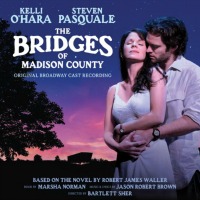 Original Broadway Cast, 2014 (Ghostlight) (4 / 5) Robert James Waller’s novel about an Italian war bride’s brief affair with a photographer who passes through her Iowa town, later adapted as a film that starred Meryl Streep and Clint Eastwood, became a cultural phenomenon and something of a joke in the mid ’90s. While some were swept up in the romance of the story, others rolled their eyes at the corniness of the dialogue and proceedings. The fact that Jason Robert Brown was able to mine a great deal of musical theater gold from this source material — so much so that he won a Tony Award for his efforts — speaks very well of his craft. In the role of Francesca, the Italian housewife, Kelli O’Hara is in top form on the cast album. She wraps her silvery soprano around Brown’s gorgeous melodies, all the while giving a mature, grounded performance that makes songs like “Almost Real” and “Look at Me” particularly moving. Steven Pasquale is every bit her equal as Robert, the photographer with whom Francesca falls deeply in love; his glorious baritone is rich, strong, and masculine, bringing to mind classic leading men of the Golden Age. Together, these two make the recording essential. Their voices blend to such rapturous effect that their duet “One Second and a Million Miles” is not only the highlight of the whole album, but one of the best love duets written for musical theater in recent years. That said, while the entire score is gorgeous to listen to, the musical loses dramatic steam when Brown and librettist Marsha Norman expand the story to focus on several other characters — and the songs for those characters, though catchy and technically well done, reflect this. The twangy “State Road 21” is a jarring follow up to the wistful “Falling Into You” and is skippable on the album, as are “Something From a Dream” and “Get Closer.” One fine exception is “Another Life,” sung beautifully by Whitney Bashor as Robert’s first wife; the ballad chronicles the couple’s courtship, marriage, and divorce, and it’s the only song that competes with those written for Francesca and Robert. Brown’s orchestrations, for which he won another Tony, are lush without being sentimental, and they have a slight country edge. Even with a few substandard songs, Bridges is true romance whenever O’Hara and Pasquale are front and center. — Matt Koplik
In the Heights
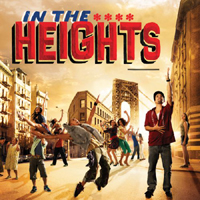 Original Broadway Cast, 2008 (Ghostlight, 2CDs) (4 / 5) Winner of 2008 Tony Awards for Best Musical, Best Original Score, and Best Orchestrations, In the Heights was the first Broadway musical hit to use rap as an essential storytelling component in a score that blends Latin musical styles with hip-hop sensibilities. Set in the Latin-American community of Manhattan’s Washington Heights, the show nestles sentimental stories of first- and second-generation immigrants pursuing their various American dreams and romances amid larger themes concerning notions of home and gentrification. The Grammy Award winning cast album, a two-disc set, preserves the entirety of a dynamic score with both music and lyrics by Lin-Manuel Miranda, who also conceived the show and played the leading role of bodega-owner Usnavi. Fueled by high-octane horns and propulsive percussion, the passion-filled orchestrations by Alex Lacamoire and Bill Sherman support Miranda’s dramatic rapping and the superb singing of the other leads. If you don’t like salsa, merengue, Latin jazz, and hip-hop, you’re out of luck here; but even if the score overall is somewhat lacking in variety, the lengthy individual numbers are built of different-sounding sections. They mix diverse styles, tempi, rhythms, instruments, dynamic levels, and vocal qualities (both spoken and sung), constituting variegated musical journeys unto themselves. Most of the songs also integrate lots of funny, interestingly detailed, and/or emotionally touching dialogue, lending a potent theatricality to what is essentially a pop-music score. Album highlights include “When You’re Home,” a snappy duet performed by Mandy Gonzalez and Christopher Jackson as the show’s young lovers, Nina and Benny; the tear-jerkers “Everything I Know” and “Inutil,” gorgeously sung by Gonzalez and Carlos Gomez, respectively; “Benny’s Dispatch,” a rhythmic treat; and the exciting ensemble number “Carnaval del Barrio.” — Lisa Jo Sagolla
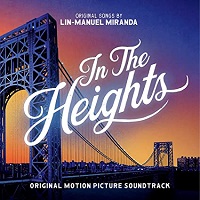 Original Motion Picture Soundtrack, 2021 (Atlantic) (4 / 5) Retaining the Broadway show’s heart-warming plot lines, likable characters, and Lin-Manuel Miranda’s infectious rap and Latin-pop score, the movie adaptation of In the Heights shifts the focus of the musical’s exploration of “home” from the inter-personal dynamics of a family unit to the larger sense of community shared within their urban neighborhood. The film excises six of the show’s bittersweet, family-related and character-developing solos and duets, and evolves most of the remaining songs into huge production numbers that fill the screen with hordes of dancing bodies. The resulting soundtrack album is, thus, an invigorating collection of mostly upbeat, similarly structured tracks of pop music that may launch quietly but build into full-blown ensemble excitement. Produced by Miranda, Alex Lacamoire, Bill Sherman, and Greg Wells, these percussion-heavy tracks often strike an imperfect balance, volume-wise, between vocals and instrumentals. Unlike the original cast album, with its bright Broadway voices bursting out amid lots of brassy punctuation, here we have thinner pop-style singing competing with louder, fuller orchestrations. One often wishes the words were easier to discern, as the soundtrack CD’s accompanying booklet provides no lyrics. Though shorter than the Broadway recording by about 30 minutes, the soundtrack album contains one newly-written song by Miranda, “Home All Summer.” Featuring the singing of Latin-music superstar Marc Anthony, it exudes a Latin dance-club sensibility as it plays over the film’s closing credits. The soundtrack outshines the Broadway album on two tracks: “The Club,” with electrifying instrumental dance breaks arranged by Oscar Hernández; and “When the Sun Goes Down,” its shimmering orchestrations enriching the ballad’s romantic qualities. Otherwise, one’s choice of the more satisfying album may depend largely on whether one prefers Miranda’s bitingly rhythmic, musically exhilarating rapping or the less-stylized, emotion-laden delivery of Anthony Ramos, who in the film portrays the leading role of Usnavi, created onstage by Miranda. In the climactic “Finale” on the Broadway recording Miranda’s rapping thrills with sharp, spine-tingling musicality, while on the soundtrack, Ramos’s more actorly approach makes one genuinely feel the musical’s celebratory message. — Lisa Jo Sagolla